
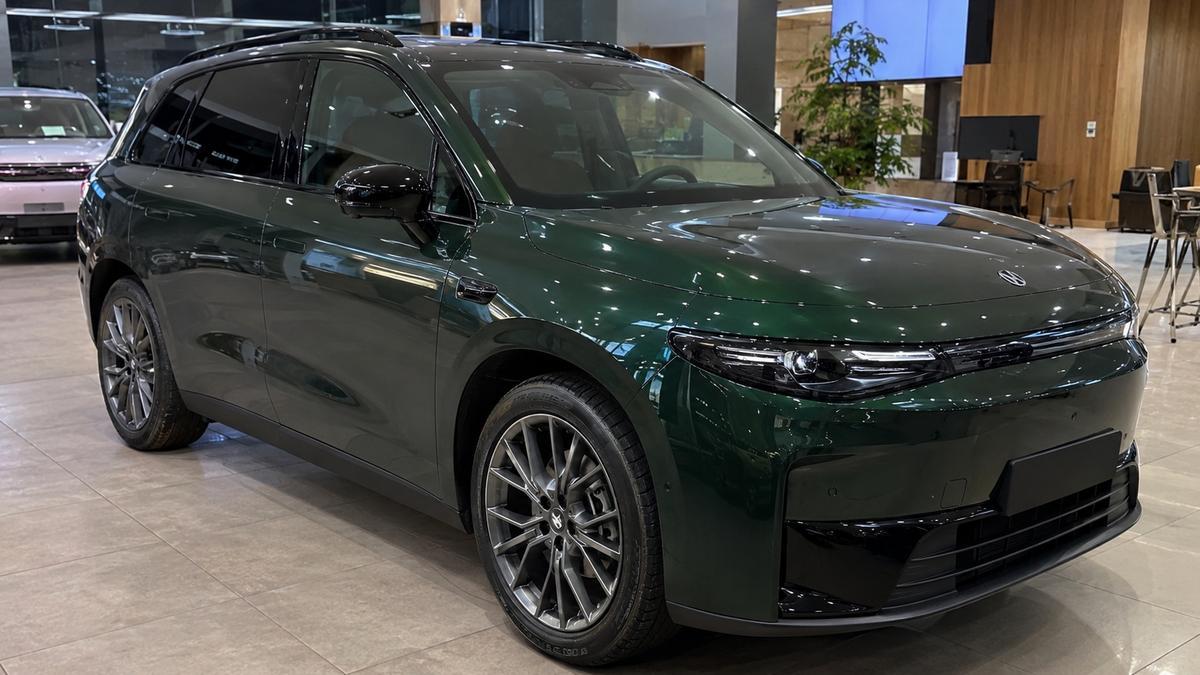
With a discount of R$ 30.8 k for corporate sales and special financing terms, the Leapmotor C10 REEV 2027 intensifies the competition in Brazil’s electrified SUV market.
The electrified sports‑utility segment in Brazil has just entered a new chapter of intense commercial rivalry. Leapmotor, the Chinese brand operating in the country in partnership with Stellantis, has applied significant reductions to the Leapmotor C10 2027 lineup.
With a R$ 30,800 discount, the ultra‑hybrid REEV version’s entry price was lowered to R$ 189,190 for direct invoicing to companies. The move aims to sharpen competition against established rivals in the mid‑size SUV category.
The strategy reinforces the offensive of models equipped with range‑extender technology, offering a robust alternative for consumers seeking electric mobility without exclusive reliance on charging stations.
Promotion rules and options for individuals
The special condition that sets the vehicle price at R$ 189,190 is primarily aimed at corporate customers. The direct sales mode includes valid CNPJ numbers, covering eligible micro‑entrepreneurs and registered rural producers.
For the end consumer who wishes to purchase via CPF, the manufacturer keeps the advertised list price at R$ 219,990. However, there is a financing plan with a nominal rate of 0% per month designed for individuals.
Under this installment option, the buyer makes an initial payment of R$ 132,134.58 and settles the remaining balance in 36 monthly payments of R$ 2,619. The total accumulated cost of the transaction reaches R$ 226,418.58 at the end of the contract.
The swing between the cash price and the total installment cost reflects the impact of operating expenses and taxes. For this reason, a Total Effective Cost analysis is essential before signing the contract.
Operation of the range‑extender motor
The mechanical assembly of the Leapmotor C10 REEV differs from conventional hybrid architectures. The utility’s traction is provided solely by the electric motor mounted on the rear axle, delivering 215 hp of power and an instant torque of 32.6 kgf·m.
Under the hood, the 1.5‑liter gasoline engine serves solely as an electric generator to recharge the battery pack. The combustion unit has no mechanical linkage to drive the vehicle’s wheels.
The electric storage component holds 28.4 kWh, giving a range of 111 kilometers in pure electric mode, according to official measurements certified by Inmetro.
When the combined range with the gasoline generator running is considered, the total estimated mileage reaches 950 kilometers. This figure varies with road conditions, speed, and driving style.
Standard Equipment and Onboard Technology
Inside, the mid‑size SUV places a premium on connectivity and occupant comfort. The cabin features a 14.6‑inch multimedia center paired with a fully digital 10.25‑inch instrument cluster.
The onboard tech package includes Level 2 semi‑autonomous driving aids. The list includes adaptive cruise control, lane‑keeping assist, and autonomous emergency braking.
Passenger safety is enhanced by seven airbags and a 360‑degree camera system. The interior trim offers front seats with power adjustments, heating, ventilation, and a panoramic glass roof.
Scheduled Maintenance Costs and Warranty
Beyond the initial purchase price, the cost of periodic service represents a key factor for buyers. The brand has set maintenance intervals every 20,000 kilometers or 12 months of use.
The service schedule calls for the first visit at R$ 1,362, the second at R$ 1,889, the third again at R$ 1,362, and the fourth at R$ 1,889. The fifth service reaches R$ 3,618.
The total accumulated cost for the first five services is R$ 10,120. The manufacturer offers a factory warranty of six years or 150,000 kilometers for the 2027 models, with dedicated coverage for the high‑voltage battery pack.
The significant commercial discount applied to the Leapmotor C10 2027 strengthens the Chinese brand’s presence in the competitive domestic market. The strategy attracts fleets and business owners seeking electrification with extensive range.
For individual consumers, decision-making should weigh financing conditions, maintenance costs, and the availability of a technical support network, ensuring a choice that aligns perfectly with daily usage patterns.