
The growth of Brazil’s electric vehicle fleet is opening doors for fuel stations to diversify revenue through strategic partnerships for installing chargers without upfront costs.
The Brazilian automotive market is undergoing a profound transformation. With the historic milestone of 1 million electrified light vehicles on the country’s roads since 2012—surpassed in September 2026—the charging infrastructure has become the new focus of investment. This rapid electrification presents a logistical challenge, but also offers a strategic opportunity for traditional fuel stations.
These establishments, which enjoy prime locations and a steady flow of drivers, are being seen as ideal points for expanding the charger network. The adaptation allows stations not only to keep pace with technological evolution but also to create new revenue streams and increase customer dwell time in their convenience spaces while batteries charge.
The zero-investment strategy
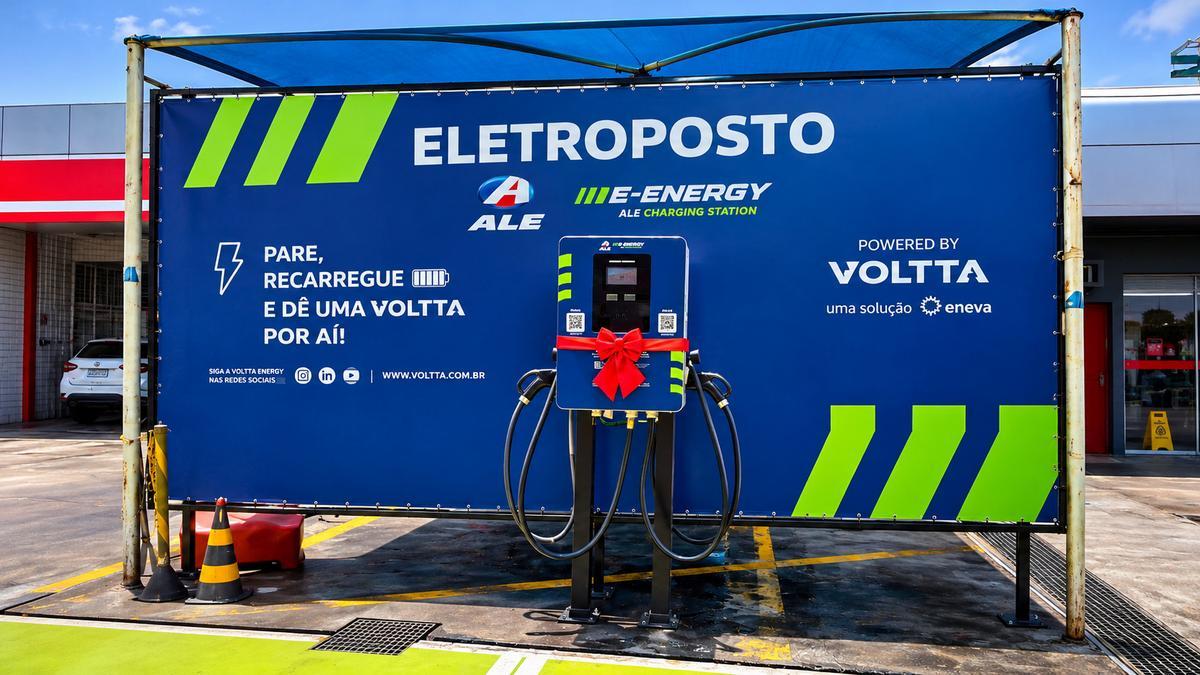
To facilitate this transition, companies such as Voltta Energy, a solution linked to Eneva, have implemented the “Zero Investment Electric Station” model. The concept is simple: station owners lease idle areas of their property, while the operator takes full responsibility for the financial investment, installation, and technical maintenance of the equipment.
By eliminating the upfront investment barrier, the model enables fuel retailers to enter the electric mobility market without operational risks. The station owner’s return comes from a share of the revenue generated by charging, as well as indirect income from increased customer time spent in the store.
“Whether by electron or molecule, the station remains the vehicle refueling point. What changes is the energy source and the technology used.” highlights Leonardo Burgos, partner at Voltta Energy.
Infrastructure and the Future of Highways
The data from the Brazilian Electric Vehicle Association (ABVE) highlight the urgency of this expansion. In September 2026 alone, the country recorded more than 53,000 new registrations of electrified vehicles, an impressive jump of 148.9% compared to the same month last year. With nearly 30,000 charging points mapped by August, the network still needs to scale to meet the growing long‑haul demand.
Voltta Energy is already operating in 11 Brazilian states, having completed over 290,000 charges. The company’s reach shows that, beyond major urban centers, infrastructure must extend to travel routes, turning stations into multimodal convenience hubs.
The success of this integration depends on rigorous technical analysis that evaluates the electrical capacity of each point and the viability of regional demand. As the electrified fleet becomes predominant, adapting fuel stations will shift from a competitive advantage to a basic requirement. The sector’s future points to a hybrid convenience model, where traditional fueling and electric charging will run side by side in the daily routine of Brazilian drivers.