

Five electric sector associations back the approval of Bill 3.716/2026 to repeal burdensome requirements on generators. Entities warn that maintaining the current rule could create legal uncertainty and lead to contract litigation in the national market.
In a strategic move in Brasília, five of Brazil’s leading electric sector entities joined forces to support the approval of Bill 3.716/2026. Authored by federal deputy Arnaldo Jardim (Cidadania/SP), the proposal seeks to resolve a regulatory impasse that has strained relations between investors and the public sector: the requirement that generation agents independently cover the costs of battery storage systems for capacity reserve.
The urgency of the agenda is clear. With the voting deadline looming—only two weeks left before the next capacity reserve auction—the sector warns that keeping the current legislation not only distorts competitiveness among sources but also paves a dangerous path toward litigation.
The debate centers on economic sustainability and the equity needed to keep the country attractive for new investments in clean energy.
Seeking equality in the electric sector
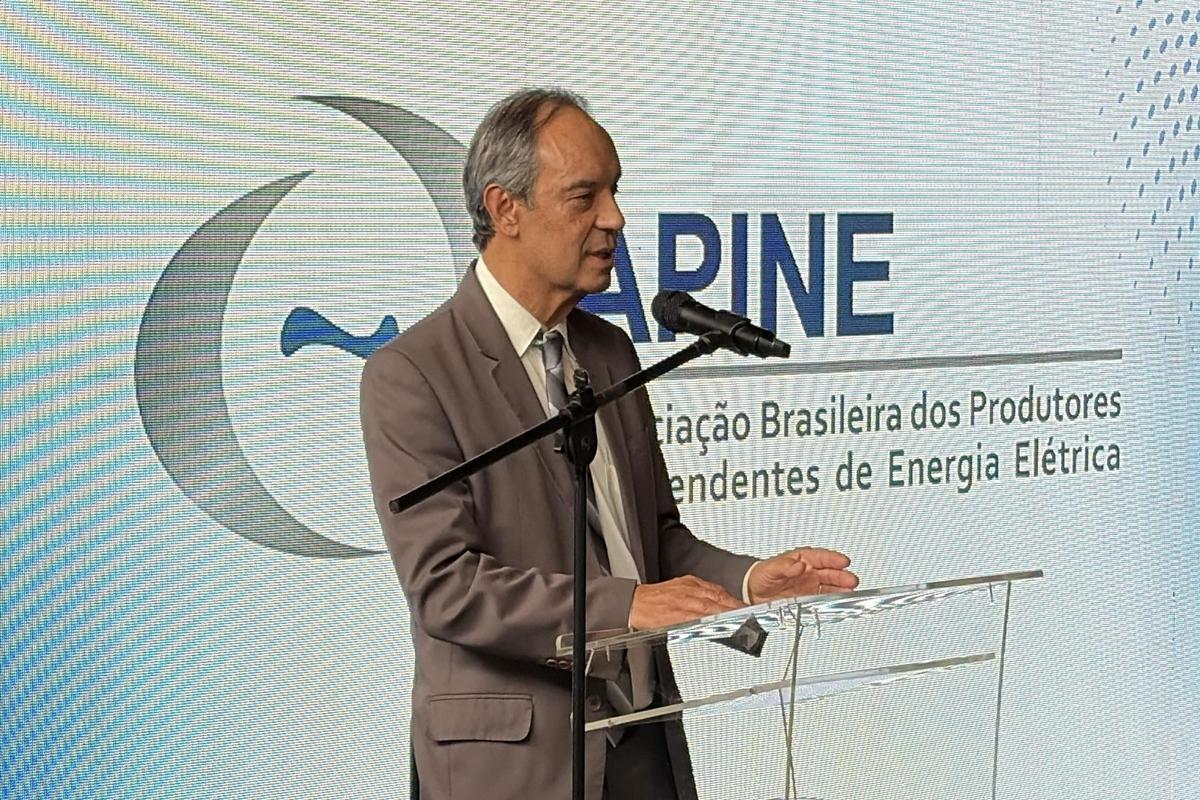
The associations—ABIHV, ABRAGE, ABSAE, ABSOLAR and APINE—argue that capacity reserve is a systemic service essential to grid stability. Therefore, the burden of this contract should not fall exclusively on one category of generators.
The goal is to ensure all sources compete on equal footing, avoiding regulatory privileges or discrimination that could drive capital away from the market.
Rui Altieri, president of APINE, stated:
Our mantra is: we do not privilege or discriminate any of the sources; they must compete on equal terms. And today that is not possible because of paragraph six of Law 15.269. So, it is essential that this problem be resolved.
The real risk of litigation
The issue of legal certainty was one of the most sensitive points discussed by experts. According to Rui Altieri, the current rule, by imposing new costs on agents already operating under established models for more than a decade, ignores acquired rights and contractual stability.
The regulatory unpredictability is seen as a risk factor that will inevitably lead market players to turn to the judiciary to protect their investments.
Moreover, the sector highlights a serious governance gap. Without clear technical criteria to define the mix of technologies—such as batteries, reversible or thermal plants—in power provision, the cost of the energy transition could become inefficient, raising constant questions about the viability of auctions.
Direct impact on the consumer
Representative Arnaldo Jardim emphasized that the time to avoid losses to the firm energy schedule is limited. The parliamentarian, who has the support of rapporteur Danilo Forte (PP/CE) in the urgent procedure, countered the argument that maintaining financial responsibility with generators protects the citizen’s wallet.
For the representative, any additional cost inserted into the production chain ends up being passed on to the final price.
Arnaldo Jardim stated:
No transfer is neutral. There are administrative costs, there are tax costs, so it keeps growing. Therefore, our conviction is that the cost will be higher, the impact will be greater on the consumer.
Paths to the future
To consolidate the demands, the entities delivered a formal letter to the competent authorities, including the Casa Civil and several strategic ministries. The document reinforces that improving energy regulation is vital for the success of decarbonization policies and for the future of Brazil’s electricity grid.
The sector expects that the approval of PL 3.716/2026 will bring the necessary balance for the next stages of expanding energy supply. The solution, which involves correcting Law 15.269/2025, is seen as the only way to ensure system reliability and guarantee that Brazil continues advancing toward robust and predictable energy sustainability.