Despite the historic growth of solar and wind energy, an Irena report warns that global carbon emissions continue to rise, driven by transition bottlenecks and political setbacks in North America.
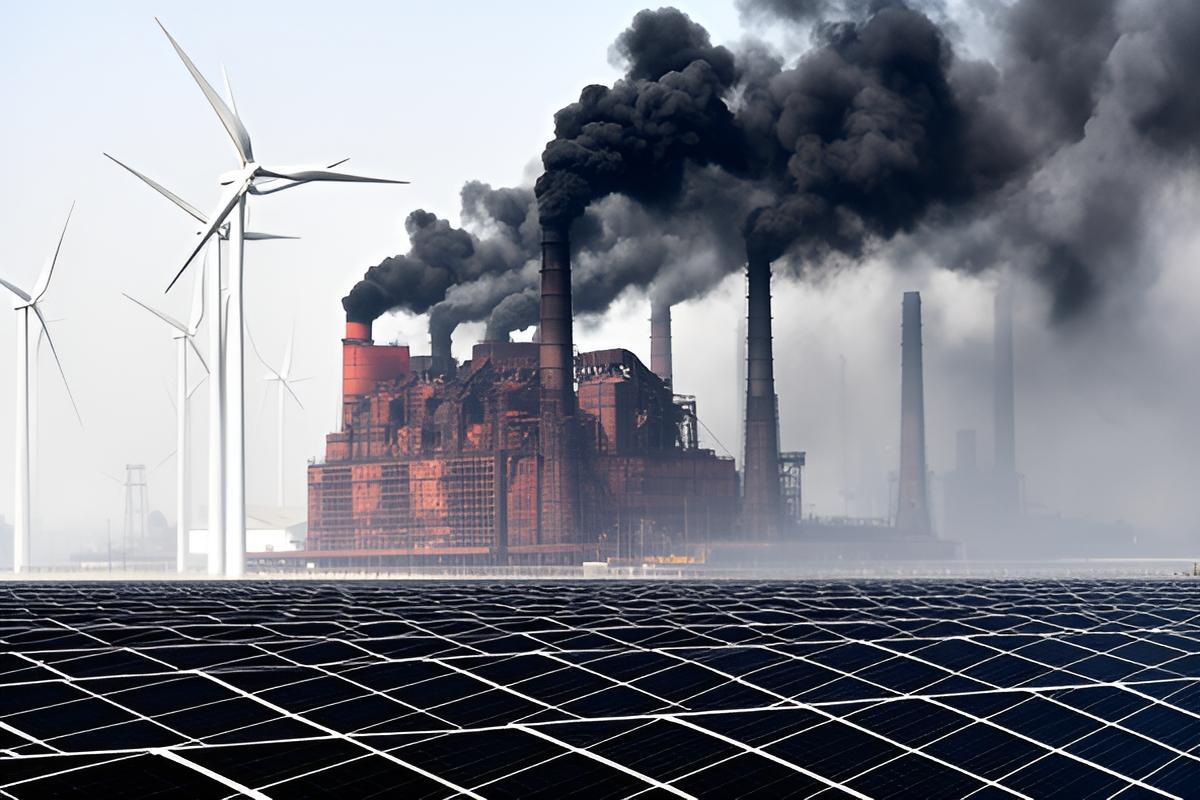
The global clean energy market is experiencing a worrying paradox. While investments in renewable sources are hitting historic milestones, the trend of polluting emissions is moving in the opposite direction. According to the latest survey released by the International Renewable Energy Agency (Irena), the current pace of technological expansion is still insufficient to curb global warming.
The study notes that even with the proliferation of wind and solar farms, carbon dioxide emissions linked to fossil fuels have been advancing at a steady annual average since the 1990s. Last year, the indicator hit a new negative record, driven primarily by a continued reliance on traditional energy matrices. Experts warn that the remaining carbon budget to keep global temperature increases within the safe limit of 1.5ºC is rapidly depleting.
The infrastructure challenge and new energy demand
The main obstacle to decarbonization does not lie solely in green electricity generation, but in the complexity of the entire supply chain. The transition requires simultaneous modernization of transmission grids, storage systems, and efficiency gains—all while the planet grapples with an explosion in electricity demand.
New technologies, such as the expansion of data centers for artificial intelligence, the mass adoption of electric vehicles, and the intensive use of cooling due to extreme heat waves, are putting pressure on power grids. However, investment in enabling infrastructure remains stagnant as government priorities shift toward geopolitical conflicts and trade disputes over critical minerals.
The core challenge lies increasingly in the speed of implementation: expanding renewable energy, electrification, energy efficiency, grids, storage, and flexibility in tandem, all while maintaining energy security, affordability, and public acceptance, the Irena report highlights.
Political setbacks in North America
The transition landscape is also suffering severe impacts due to shifting political winds in major powers. Recent analyses by the Climate Action Tracker (CAT) have raised a red flag regarding policies adopted in the United States and Canada, whose current targets put the planet on a dangerous trajectory toward warming of over 3ºC.
In the North American context, the dismantling of federal environmental policies promoted by the Donald Trump administration has focused on maximizing oil and gas extraction, which resulted in the country’s withdrawal from the Paris Agreement. In parallel, the Canadian government has admitted it will fail to meet its reduction targets for the next decade, following a retreat from climate mitigation measures in favor of the fossil fuel industry.
Accelerating the global energy transition requires not only the massive infusion of trillions of dollars into power grids and industrial electrification but also regulatory firmness. Without effective geopolitical alignment and a genuine commitment to decarbonization, the progress of sustainable sources will continue to be neutralized by an insatiable appetite for fossil fuel resources.