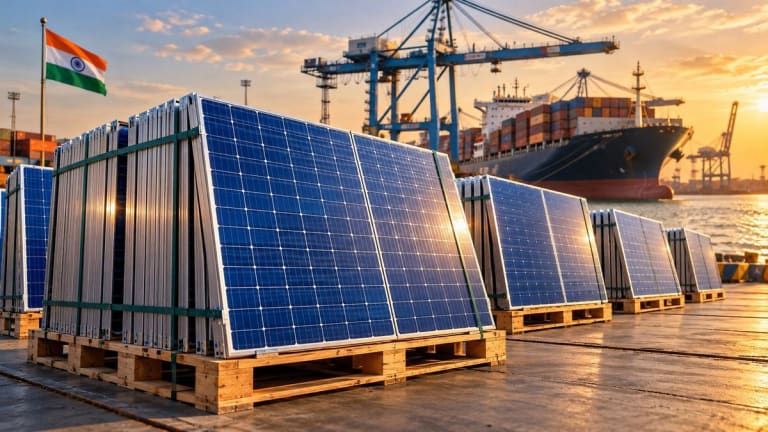
The clean energy sector will require massive investments running into the trillions of dollars by 2050 to modernize infrastructure, expand the energy transition, and meet crucial global climate goals.
Accelerating the global energy transition demands much more than simply scaling up the manufacturing of solar panels and wind turbines. A recent study released by Irena indicates that the planet will need to inject tens of billions annually into new projects through the middle of the century.
The primary objective is to keep global warming within the safe limit of 1.5°C, completely redesigning the production matrix and electricity consumption worldwide.
The detailed survey, featured in the publication World Energy Transitions Outlook 2026, highlights that current electrical infrastructure runs the risk of becoming obsolete in the face of accelerating electricity demand.
To avoid operational bottlenecks, governments and the private sector will need to direct efforts and financial resources toward smart grids, robust storage systems, and assertive consumption efficiency policies.
Ambitious targets for global renewable capacity
To achieve a truly sustainable scenario, installed renewable energy capacity must jump exponentially over the coming decades.
The technical projection indicates that current volumes must rise drastically to reach tens of terawatts by 2050, with solar and wind technologies accounting for the overwhelming majority of electricity generated globally.
In addition to generation, society’s final consumption will need to rely heavily on the electrification of industrial sectors and transportation. However, Irena Director-General Francesco La Camera emphasizes that the success of this transformation depends directly on deep structural reforms and integrated planning.
The global energy transition is under pressure. Record growth in renewables is not enough on its own: energy efficiency is lagging behind, grids are struggling to keep pace, and global energy demand continues to grow rapidly. We cannot transition simply by adding renewable sources to an unchanged energy system. We need reforms to build the infrastructure of a new energy system that is electrified, efficient, flexible, and powered by renewable sources.
Economic return and new strategic priorities
Despite the magnitude of the financial inputs required, the projected economic benefits far outweigh the initial operating costs.
The restructuring of the global matrix has the potential to boost world Gross Domestic Product, create millions of new skilled jobs in the sustainable energy supply chain, and significantly reduce bills for end consumers in the coming decades.
To mitigate risks and ensure the effectiveness of these measures, Irena has established fundamental guidelines focused on long-term planning, international cooperation, and social inclusion. The next decade will demand rigorous implementation of public policies from global leaders, turning climate pledges into real infrastructure and ensuring energy security for future generations.