A pioneering floating solar energy project in the Chilean Patagonia eliminates the use of thousands of liters of diesel, transforming the routine of salmon farms in sustainable aquaculture.
The energy transition in South America has just reached a major milestone in the cold waters of the Los Lagos region in Chile.
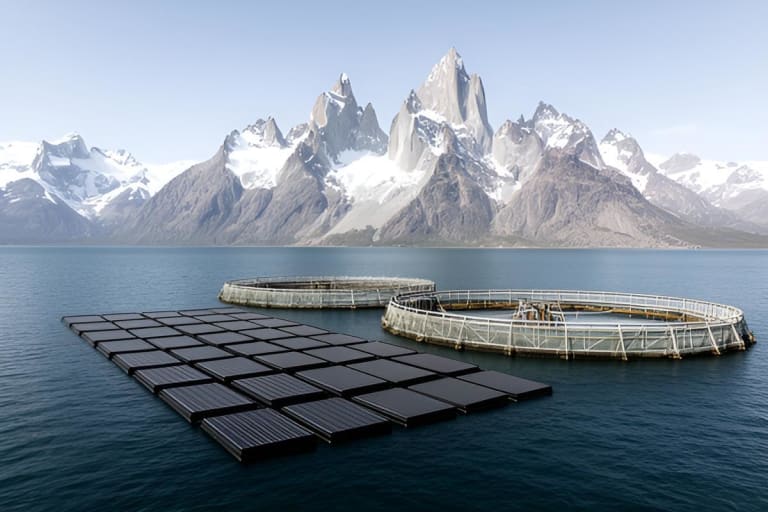
For the first time in the country, a floating solar energy structure has been integrated into a salmon farming site, combining cutting-edge technology and environmental conservation in one of the most remote zones of the southern coastline.
Developed to revolutionize local electricity supply, the system began operating in March 2025 at the Huar Norte site.
The initiative is the result of a collaboration between AKVA Group, Alotta Energy, and Fjord Maritime, designed specifically to withstand the strong winds and harsh tides of Patagonia.
Autonomy and environmental impact
With an installed capacity of 300 kWp, the photovoltaic plant on the water has taken over 57% of the salmon farm’s energy demand.
The partial replacement of traditional diesel generators is expected to save about 139,200 liters of fossil fuel annually, cutting approximately 350 tons of carbon dioxide emissions.
Beyond the financial and ecological relief, the model drastically reduces reliance on supply vessels.
Fewer maritime trips mean a lower risk of accidents and spills in sensitive ecosystems, ensuring greater operational safety for the aquaculture industry.
Industry experts state:
The transition to clean sources in remote units is not only a decarbonization goal, but an indispensable logistical evolution for the sustainability of our production.
Engineering adapted to the sea
Installing photovoltaic panels in a marine environment required advanced engineering solutions.
The floating bases were built with flexible polymers, capable of absorbing the constant impact of waves without cracking.
At the same time, the electrical components received special shielding against salt moisture and corrosion.
Real-time monitoring ensures efficient load distribution, optimizing joint use with traditional backup generators.
Indirect benefits for production
Lower dependence on noisy engines has brought a valuable side effect to animal management.
With reduced noise around the pens, the stress levels of the fish have dropped considerably.
The solar platforms also create beneficial areas of shade on the water’s surface.
This shading mitigates extreme thermal fluctuations, helping to stabilize the environment and favoring the uniform development of the schools of fish.
The success of this arrangement sets a promising precedent for other isolated industrial sectors, such as mining and commercial fishing.
By demonstrating the viability of distributed generation over saltwater, the Chilean project signals a future where the energy transition goes hand in hand with production efficiency.