The contrast between land lease rates for wind turbines in the United States and Brazil reveals significant disparities, with American farmers receiving substantially higher income.
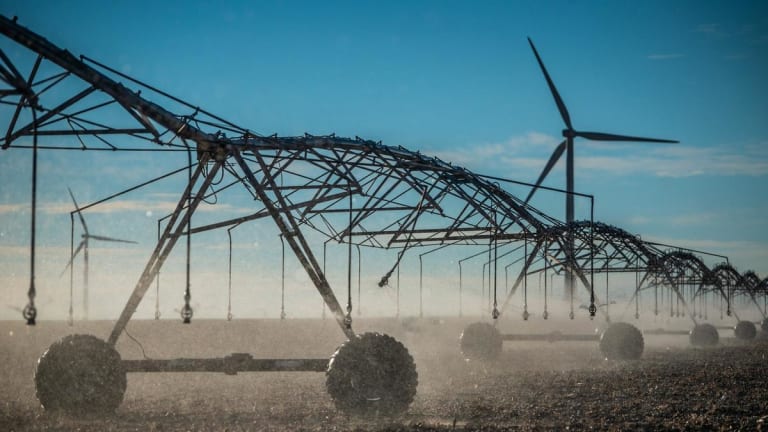
The disparity in compensation for leasing land for wind farms has caught the attention of experts and rural producers. While farmer John Dollinger, who owns land in Grundy County, Illinois, earns approximately 600,000 BRL annually from ten turbines on his property, the reality for producers in the Brazilian Northeast is quite different. Compiled data reveal that the monthly earnings per turbine in the U.S. significantly exceed the averages observed on Brazilian soil.
The business model adopted by Dollinger exemplifies the integration of agricultural production and renewable energy generation. Each unit installed on his farm generates approximately 12,000 dollars per year, an amount adjusted for inflation. Converting this figure to the exchange rate of October 2026, it averages nearly 5,000 BRL per month per turbine, a value that serves as a benchmark for understanding the international clean energy market.
Market differences and contractual confidentiality
In Brazil, the lack of transparency in contracts makes it difficult to measure the exact profit of landowners. Market reports indicate that lease rates in regions of the Northeast fluctuate, on average, between 600 BRL and 2,000 BRL per turbine monthly. The absence of official bodies to centralize this information creates uncertainty for rural producers when negotiating with energy companies.
ABEEólica, the association representing the sector, emphasizes that it does not have access to contractual terms, as these are private negotiations. Regarding the variations in value, the entity’s executive president, Elbia Gannoum, highlights the complexity of these partnerships:
Negotiations are direct between the company and the landowner, which makes it difficult to standardize or monitor earnings, since turbine capacities and local conditions vary drastically.
Land use impact and perspectives
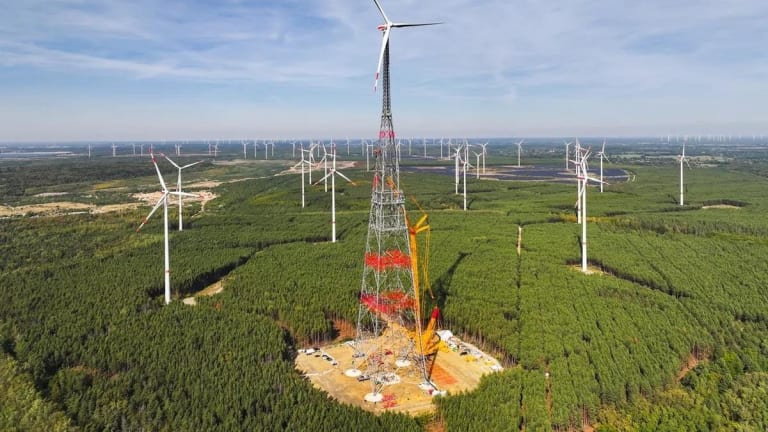
Despite the presence of the massive metal structures, land use for agriculture remains high. In the United States, studies by the USDA (Department of Agriculture) indicate that the vast majority of leased land continues to be cultivated normally, with turbines occupying a minimal fraction of the terrain. For many American producers, the lease acts as a form of guaranteed and stable retirement income.
However, the scenario is not without criticism. There are reports of resistance in rural communities, where producers fear the encroachment of productive land by access roads or the visual and noise impact on the surrounding area. In Brazil, academic studies point to contracts with strict confidentiality clauses and high termination penalties that sometimes disproportionately burden the rural landowner.
As the wind energy sector grows, contract transparency emerges as a critical necessity. The Illinois case serves as a benchmark for economic efficiency, but technical differences—such as the power output of each generator and the compensation model, which may be fixed or a percentage of the energy generated—must be carefully evaluated by farmers before making any long-term commitments.