The stalemate over the inclusion of natural gas in the incentive regime for data centers is stalling investments, while the government prepares the ground for major energy storage auctions.
The regulatory dispute surrounding Redata (Special Taxation Regime for Datacenter Services) has revealed a deep division within the federal government.
What was supposed to be a milestone to accelerate the country’s digital infrastructure has stalled due to a strategic disagreement:
while the Ministry of Mines and Energy (MME) advocates for flexibility, the Ministry of Finance resists classifying natural gas as a low-emission source for tax benefit purposes.
This legal tangle keeps companies seeking security to establish data processing centers in Brazil in a holding pattern.
The sector is awaiting the signing of a decree detailing the eligibility criteria for the planned exemptions, an essential step to ensure the country becomes competitive in attracting global technology and cloud computing investments.
The Role of Natural Gas and State Pressure
The controversy is not restricted to the federal capital.
The National Forum of State Secretaries of Mines and Energy (FNSME) intervened directly, sending an official letter to President Lula.
The entity argues that excluding natural gas from the scope of incentivized sources would create an imbalance among federation units, making it harder to attract new capital to regions that depend on this matrix to sustain the intensive energy consumption typical of data centers.
“The recognition of natural gas as a low-emission source is essential to promote fair market conditions among states and ensure the economic viability of large-scale projects.”
For the signatory states, technological neutrality is the only path to enable infrastructure that, in addition to being efficient, requires uninterrupted energy availability—something that only a combination of renewable and base-load thermal sources can currently offer.
Auctions and the Future of Batteries
While the fiscal issue remains murky, the MME has charted a clear route for the future of energy security.
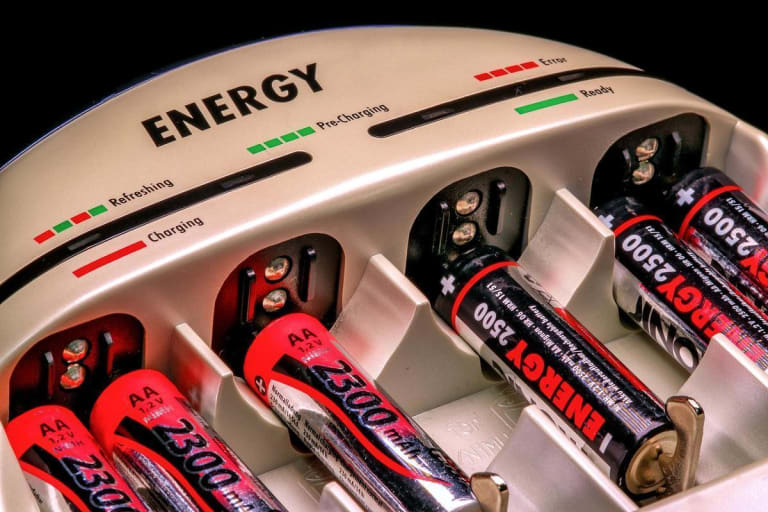
The schedule for Capacity Reserve Auctions (LRCAP) has been set through 2029, making room for disruptive technologies such as pumped-storage hydroelectric plants, waste-to-energy thermoelectric plants, and, notably, large-scale battery parks.
The first bidding round focused specifically on storage is scheduled for December 2026.
The technological neutrality proposal is seen as progress by the market, but it is not without challenges.
The main friction point now is how the cost allocation for these new technologies will be handled.
The productive sector is intensely debating whether the charge should be diluted among all consumers or if there should be a differentiated cost-sharing model with generators, a point that will define the real attractiveness of the projects.
Infrastructure Challenges on the Horizon
The government’s strategy, however, faces an immediate technical obstacle: grid infrastructure.
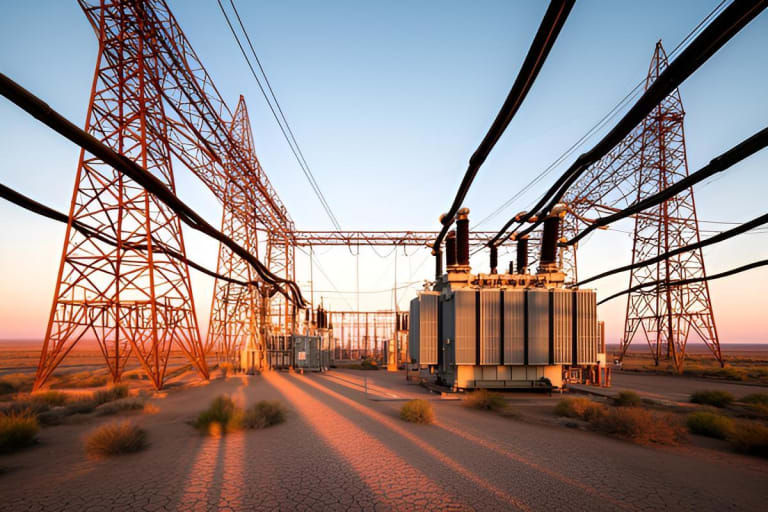
The ONS (National Electric System Operator) has already issued an alert regarding connection restrictions in five states.
This bottleneck could compromise a significant portion of the more than 6,000 projects registered for the auctions, signaling that the expansion of installed capacity will require not only cutting-edge technology, but also rigorous transmission planning.
The outcome of these auctions and the resolution of Redata will serve as a barometer for the sustainability of Brazil’s energy transition.
In the coming years, the ability to harmonize the integration of storage and conventional sources will determine whether the country can balance technological growth with its ambitious decarbonization goals.