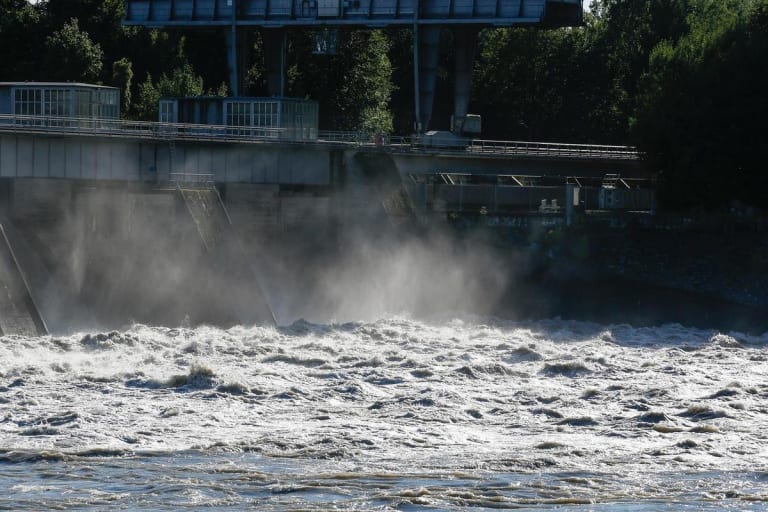
The federal government plans to utilize the Itaipu Dam reservoir as a strategic measure to reinforce the security of Brazil’s power grid in response to the effects of El Niño.
To prevent power supply fluctuations, the Electricity Sector Monitoring Committee (CMSE) has defined a plan that prioritizes the use of the hydroelectric plant’s strategic reserve over the coming months. The initiative, discussed in early September 2026, aims to ensure the stability of the National Interconnected System (SIN) during a period of expected high demand.
Strategy for the National Interconnected System
According to the National Electric System Operator (ONS), the measure is essential to ensure the necessary power across the country, maintaining grid reliability even under challenging hydroelectric conditions. In addition to mobilizing Itaipu’s water reserves, the government’s planning includes integrated power generation management, which combines the use of thermoelectric plants with optimized management of power stations located in the São Francisco River basin.
The committee stated in recent reports regarding operations:
The use of the Operational Power Reserve—a portion of energy held in reserve—will be applied especially during the months of September, November, and December 2026.
Climate impacts and the future of the grid
The El Niño phenomenon significantly alters Brazil’s rainfall patterns, impacting the productive capacity of several hydroelectric plants. While the South of the country, where Itaipu is located, is experiencing a significant increase in rainfall, other regions may face reductions that require caution and preventive planning by regulatory bodies.
The government is maintaining constant monitoring regarding the need to extend these measures into early 2027. The final decision will depend directly on the evolution of rainfall patterns in the main river basins that supply the SIN, ensuring that climate shifts do not compromise the nation’s electricity supply.