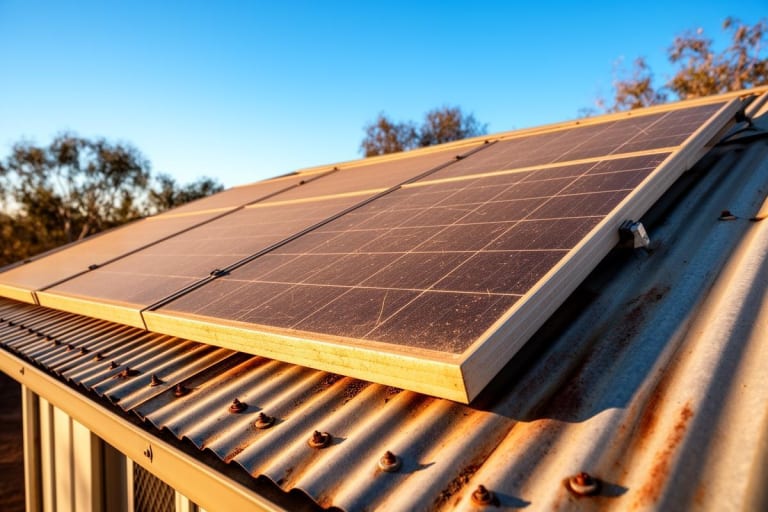
The Australian government has launched an A$11 million pilot project to equip social housing with solar technology, focusing on tenants who rely on the conventional power grid.
The government of New South Wales, Australia, has unveiled an innovative initiative aimed at democratizing clean energy. The project will allocate A$11 million — A$10 million from the federal government and A$1 million from the state government — for the installation of photovoltaic panels and storage systems in social rental homes located in Illawarra.
This measure is strategically relevant as it targets a demographic that, despite bearing monthly consumption costs, rarely has the autonomy to implement structural improvements in their homes. By centralizing the management of these assets, the government aims to offer financial relief to families and strengthen the resilience of the regional electricity system.
How Virtual Power Plants Work
The distinguishing feature of this model is the connection of household systems to a Virtual Power Plant (or VPP). With this architecture, energy generated and stored in individual batteries can be integrated in a coordinated manner, allowing the collective to act as a single power plant to stabilize electricity grid demand during peak periods.
Technical and operational feasibility is currently in a public consultation phase. The government has invited industry companies and solar technology experts to submit suggestions on implementation by the end of October.
This process is crucial for defining how the generated savings will be passed on to tenants and what technical criteria will ensure the safety and efficiency of the installed devices.
Challenges in Democratizing Solar Energy
The initiative seeks to break a common barrier in the sustainability sector: the conflict of interest between landlords and tenants. In many scenarios, the property owner has no incentive to invest in solar energy, while the tenant, who would pay the bill, is not permitted to modify the infrastructure.
As one industry expert points out:
“Coordinating large-scale installation and ensuring the economic benefit directly reaches vulnerable families is the great strength of this policy, although battery management still requires a delicate balance between consumer needs and grid demands.”
Impacts and Perspectives
While the Australian program offers an inspiring model, it serves as a public policy reference and does not have immediate application in the Brazilian context. In Brazil, access to solar energy for those living in rented properties or collective housing still depends on models such as shared generation, which has its own rules established by local distributors.
The success of the initiative in Illawarra will be measured not only by the number of panels installed but also by the clarity of battery control rules and the real impact on reducing monthly utility bills. The current phase is preparation; projections for savings and the final scale of the project are expected to be detailed after the market consultation stage concludes and tenders are published.