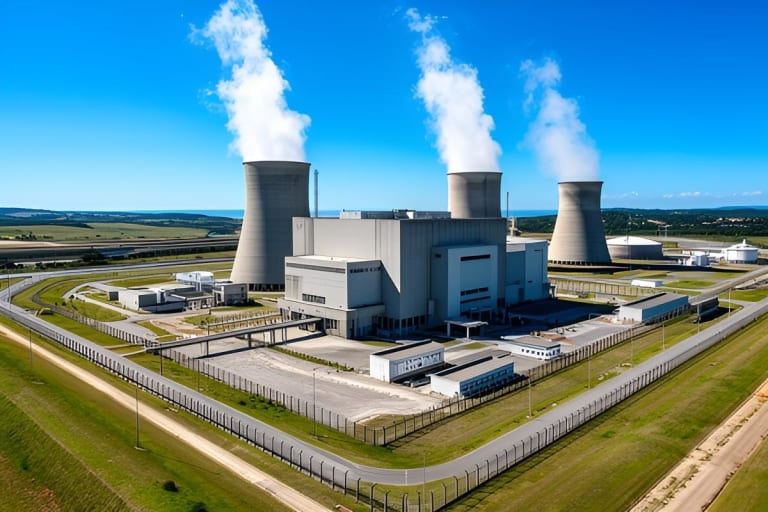
The Federal Government has formalized the creation of a working group focused on expanding uranium production and structuring the nuclear sector as a pillar of Brazil’s energy transition.
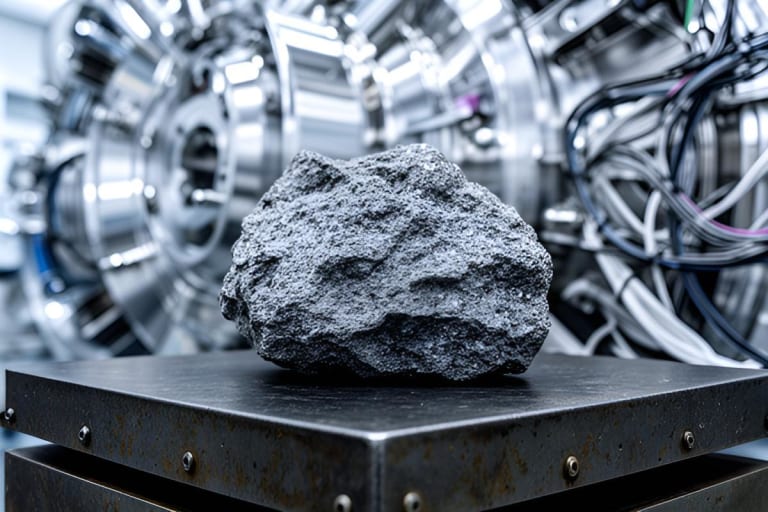
In a strategic move to strengthen energy sovereignty and national defense, the Ministry of Mines and Energy (MME) has established a working group dedicated to mapping and boosting the exploration of nuclear minerals. The measure, published this Thursday (9/24), aims to integrate uranium production with the objectives of the Brazilian Nuclear Program and the country’s decarbonization goals.
The country sees nuclear technology as a robust alternative to ensure the stability of its electricity matrix. Evidence of this is the recent revision of the National Energy Plan 2055 (PNE 2055), which raised the projected expansion of this energy source to 14 GW, a significant increase compared to the previous estimate, which ranged between 8 and 10 GW.
Strategies for the Nuclear Sector
The newly formed committee will be tasked with diagnosing current uranium reserves in the national territory and defining pathways to expand geological knowledge of these areas. Additionally, the technical team will calculate the productive potential and assess how the financial gains from this activity can enable essential projects for Brazil’s defense and nuclear infrastructure.
The initiative comprises ten members, bringing together specialists from various agencies, including the Civil House, the Institutional Security Cabinet, the Ministry of Defense, and the Brazilian Navy. The coordination will be handled by the MME, ensuring that the planning aligns with public energy policies and the sector’s technological development.
“The working group acts as a strategic hub, uniting the needs of the energy transition with the security of state programs, which are fundamental for the country’s sovereignty.”
Repurposing and Sustainability in Mining
Simultaneously, the government has launched the National Program for the Reduction and Repurposing of Mining Waste (PNRRM). This second group, led by the Ministry of Environment (MMA), focuses on the environmental liabilities of the mining sector. The objective is to establish guidelines for the recovery of degraded areas and encourage the economic reuse of tailings.
With the participation of agencies such as the ANM and Ibama, the PNRRM aims to improve the regulatory framework so that the Brazilian mining sector adopts more circular and sustainable practices. Both groups have an initial operational period of 150 days, with their mandates potentially extended if necessary.
The success of these work fronts will be crucial for Brazil in the coming years, serving as a barometer for the feasibility of new nuclear plants and for mitigating the environmental impacts caused by extractive activities. The sector anticipates that the proposals will form the basis for incentives that attract new large-scale investments and consolidate national energy security.