The waste-to-energy sector, often misunderstood, proves to be a crucial component in mitigating methane emissions and achieving zero-landfill goals, dispelling long-standing misconceptions.
At a time when the climate crisis demands innovative and effective solutions, the waste-to-energy (WtE) sector has emerged as a frequently misunderstood player. Labels such as “dirty” or “obsolete” obscure its fundamental role in addressing the methane crisis and waste management—a critical conversation for those striving for a cleaner and more sustainable future. While the world searches for alternatives, the reality remains that landfills and open dumpsites continue to be prolific sources of methane, a greenhouse gas with a global warming potential 81 times higher than CO₂ over a 20-year period.
The truth is that no one in the WtE industry advocates for burning materials that can be avoided, reused, recycled, or composted. The waste management hierarchy is clear: top priority goes to prevention at the source, followed by separation, recycling, composting, and anaerobic digestion. However, a significant fraction of non-recyclable waste always remains, for which energy recovery stands out as the most efficient and globally proven solution. Dismissing WtE as a viable tool, ironically, perpetuates the problem of methane generation in landfills—the true environmental threat.
Debunking the Myths of Waste-to-Energy
Several misguided narratives surround waste-to-energy, undermining its recognition as a viable and beneficial solution. It is crucial to debunk these myths for a more accurate understanding of its potential.
It is not dirty; it is efficient
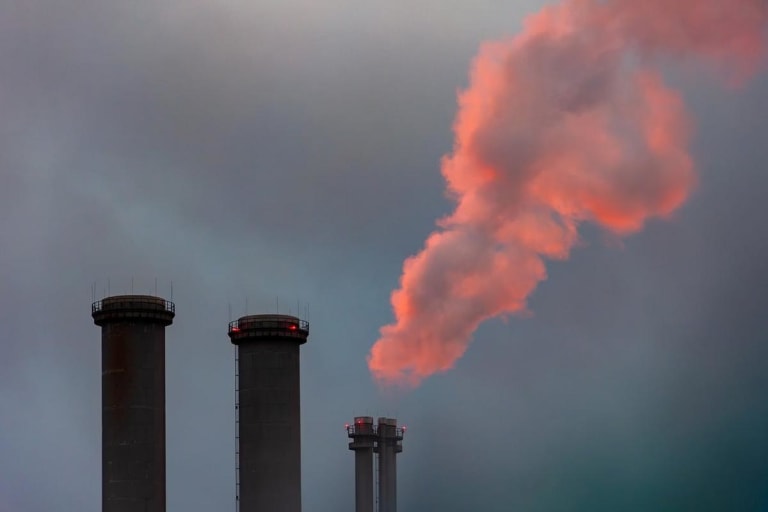
The notion that WtE is a “dirty” and “toxic” process is readily refuted by evidence. Modern energy recovery plants are designed to recover ferrous and non-ferrous metals from municipal solid waste (MSW)—materials that would otherwise be lost in landfills. Studies in the United States demonstrate that dioxin emissions from these plants are negligible, and gases like NOₓ and SO₂ are strictly regulated. Furthermore, Carbon Capture and Storage (CCS) technology can even render CO₂ emissions negative. The issue is not the absence of emissions—as no route is entirely free of them—but rather the superior performance of WtE compared to landfills and dumpsites.
A complement to recycling, not competition
Another frequent myth is that separation and biological waste treatment make WtE unnecessary, especially in the Global South, where the organic portion of MSW can reach 50% to 60%. While composting and anaerobic digestion are vital, there will always be a residual fraction (approximately 50% to 60% of the total) that benefits from WtE treatment. Cities like Milan, with a 52.7% recycling rate, achieve “zero-landfill” status by diverting residuals to energy recovery. Hangzhou, in China, with over 40% recycling and biological organic treatment, also achieves zero-landfill goals and creates formal jobs. Germany, since the landfill ban in 2005, recycles 69% and sends 31% to energy recovery, demonstrating that WtE complements other strategies rather than competing with them.
The “lock-in” myth and integration
The concern that large WtE plants might inhibit recycling by creating a capacity “lock-in” does not hold up when these facilities are sized only for residual volumes. Experiences in Europe and China show that when WtE is integrated into robust biological treatment and recycling systems, recycling rates effectively increase. The World Bank and the European Union corroborate this synergy. In Japan and Scandinavia, recycling success is so high that WtE capacity is even filled with imported waste, proving that investment is driven by the need for treatment, not by the inhibition of recycling.
Methane is a real and growing problem, and waste-to-energy represents a significant part of the solution to mitigate this potent greenhouse gas.
Volume reduction and inert materials
The criticism that WtE does not eliminate landfills because it generates its own waste ignores significant volume reduction. Thermal treatment reduces the volume destined for landfills by up to 90%, and the treated material is inert. Fly ash, for example, can be washed, dechlorinated, and co-processed in cement kilns, recovering industrial salts and contributing to the construction industry. Advanced processes in Scandinavia and Switzerland, which have been in operation for over twenty years, prove that with proper technology and regulation, it is possible to minimize and even eliminate the need to landfill MSW.
Focus on waste management, not just energy
The misconception that closing incinerators would help decarbonize the power grid confuses the primary purpose of WtE: treating waste. Although it provides reliable energy and heat, stabilizing the grid, electrical decarbonization is achieved by replacing sources like coal and gas. Furthermore, to reach “net-zero,” carbon sinks will be necessary, and WtE with CCS could be an important part of that strategy.
Methane and Silent Exclusion
The most serious myth is the exclusion of WtE from discussions on methane mitigation. Many climate models assume that only inorganic fractions are sent to WtE, presupposing a perfect separation of organic waste—which is practically unfeasible. A relevant portion of organic material invariably reaches energy recovery plants, and its methane reduction potential must be recognized and quantified with the same rigor applied to commercial and industrial waste. The omission of WtE in influential assessments regarding methane ignores a proven and responsible solution for residual waste disposal.
The waste management hierarchy is not in question. The real debate is not between WtE and recycling, but rather about the fate of the residual fraction that cannot be recycled or composted. Energy recovery not only captures energy and materials but also controls emissions, driving the zero-landfill goal and even carbon negativity. Strategic decisions in this field require clear evidence and an honest analysis of the waste lifecycle. The proof of its effectiveness and viability is already in full operation in various parts of the world, from Milan to Hangzhou, from Germany to Florida, and from Scandinavia to Switzerland. Energy recovery is a fundamental piece in the complex equation of waste management and environmental sustainability, offering a robust path to deal with the methane problem.