MDF manufacturer Placas do Brasil partners with Engie, acquiring a 40% stake in seven solar power plants in Rio Grande do Norte, projecting annual savings of R$ 10 million on electricity bills.
The energy transition in Brazil is taking on new dimensions with strategic investments from major industries in renewable sources. Wood panel manufacturer Placas do Brasil has finalized a significant agreement with energy sector giant Engie, securing a stake in a portfolio of photovoltaic power plants located in the Northeast region.
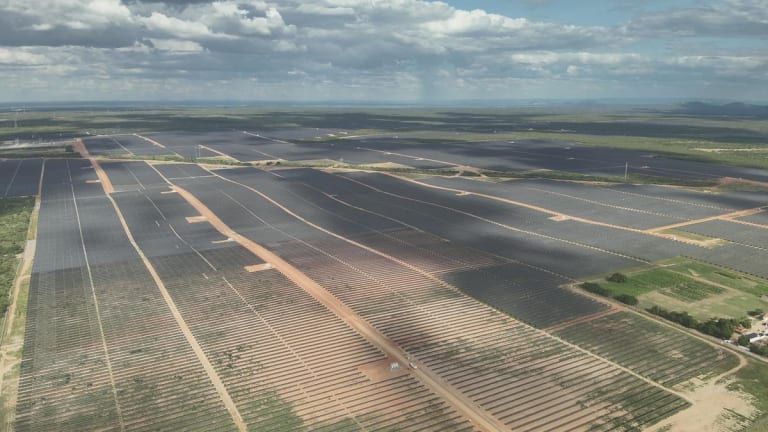
The arrangement involves an installed capacity of 340.5 megawatts (MW) from seven units within the Assú Sol complex in Rio Grande do Norte. Through the energy self-production model, the Espírito Santo-based company aims to shield its manufacturing operations from electricity tariff volatility, ensuring greater competitiveness in the national market for furniture and wood-derived products.
Self-Production and Significant Electricity Bill Savings
The equity acquisition in the power plants was structured through a holding company, in which the MDF manufacturer holds a 40% stake. According to data from the consultancy US Capital, which facilitated the partnership, the expectation is an annual reduction of approximately R$ 10 million in electricity expenses for the factory located in Pinheiros, Espírito Santo.
This amount represents approximately 16.7% of the company’s annual budget allocated to energy supply, estimated at R$ 60 million. To enable this transition without contractual breaches, the operation required the application of energy swap mechanisms, aligning the company’s prior commitments with the new sector regulations.
The structuring process required months of regulatory and corporate alignment to ensure the self-production model fully met the demands of the Espírito Santo industry and current standards, stated experts involved in the negotiation, which also received approval from Cade (Administrative Council for Economic Defense).
The Significance of the Assú Sol Complex in the National Landscape
The assets traded are part of the colossal solar project developed by Engie in the municipality of Assú, in Rio Grande do Norte. The complete complex comprises 16 parks with a total installed capacity of 753 MW, resulting from an investment of approximately R$ 3.3 billion. Full commercial operation was announced at the beginning of 2026, a consolidation that required nearly three years of construction and the installation of over 1.5 million photovoltaic modules.
Although the wood panel factory is geographically distant from the generating plants, the energy supply occurs virtually through the national interconnected grid. The regulatory model of self-production by equivalence allows industries with high-voltage consumption to participate directly in renewable generation assets, optimizing costs and reducing their carbon footprint.
Movements like the one led by Placas do Brasil and Engie demonstrate an irreversible trend in Brazil’s industrial sector. The pursuit of clean energy sources is no longer merely a corporate environmental goal but is becoming central to financial survival strategies, transforming solar energy into a shield against rising tariffs in the country.