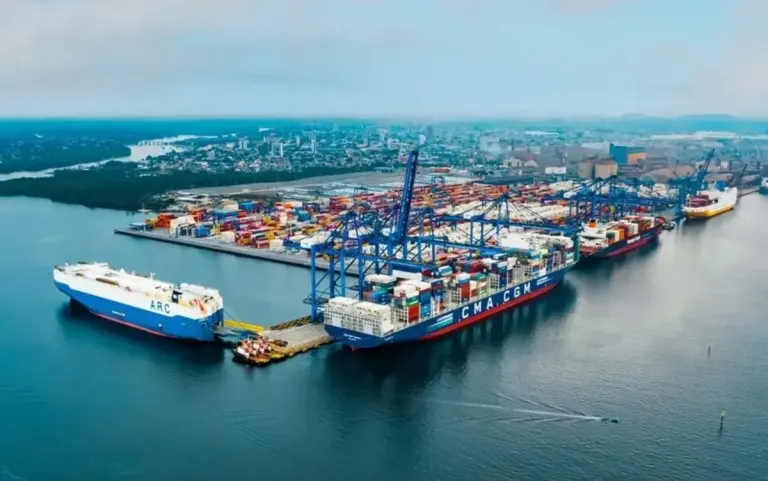
Brazil’s logistics sector showed renewed momentum in 2026, with a 4.9% increase in container exports, driven by the strengthening of global partnerships and trade agreements.
Brazilian container exports consolidated an upward trajectory in the first eight months of 2026. According to a survey by consultancy firm Datamar, total volume reached 2.16 million TEUs, surpassing the 2.05 million recorded in the same period of the previous year. This advance signals significant resilience in the country’s foreign trade.
Growth was primarily supported by two pillars of the Brazilian trade balance: the meat sector and the cotton supply chain. Together, these segments accounted for about 70% of the positive balance in shipped cargo volume, highlighting the strength of national agribusiness in maritime logistics.
Expansion and Global Partnerships
The international scenario presented strategic variations among major trading partners. China maintained its leading role with a 14.4% increase in purchases, while the European market demonstrated renewed appetite. The Netherlands posted a 20.4% surge and Italy jumped 25.1%.
Experts point out that the opening of the European market is directly connected to the start of the provisional application of the agreement between Mercosur and the European Union, in effect since May. This movement facilitated the flow of products and adjusted export dynamics on transatlantic routes.
Andrew Lorimer stated:
Meat and cotton were the main drivers of this growth. Tariff changes and logistics uncertainty may have influenced shifts in the composition of shipments.
South American Continental Dynamics
In addition to major intercontinental routes, regional trade within South America also delivered expressive results. Argentina stood out with 17.7% growth, reaching 401 thousand TEUs, while Uruguay kept pace with a 10.7% increase, totaling 122 thousand TEUs handled.
These figures reinforce the importance of regional logistical integration and the operational efficiency of exporting companies. For the remainder of the year, the sector maintains a cautious outlook, observing how tariff fluctuations and global demands will shape upcoming shipments. The challenge now will be to sustain this growth curve in the face of potential bottlenecks in global port infrastructure.