On World Car-Free Day, TCP reports a 47% increase in ridership of its chartered bus service in Paranaguá, reinforcing the company’s commitment to decarbonization and sustainable mobility for its employees.
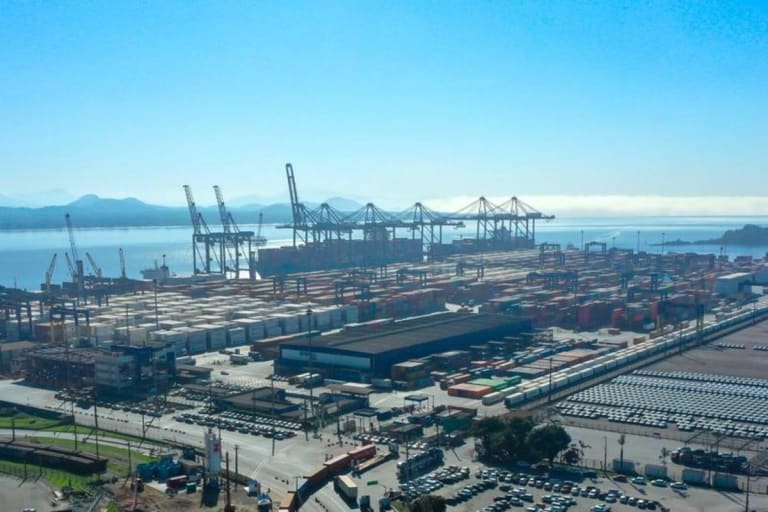
This Tuesday (22), in celebration of World Car-Free Day, TCP — the company that manages the Container Terminal of Paranaguá — is reaping the rewards of a sustainability-focused initiative. Since early 2025, the chartered bus service offered to employees has shown significant growth.
The number of passengers grew from 264 in the first month of operation to an average of 388 users in the first half of 2026, a 47% increase.
The project, which connects the terminal to key urban transport hubs in the city, emerged from a direct demand from employees for greater comfort and safety.
Beyond its impact on quality of life, the initiative is a strategic pillar for the company to reduce individual vehicle traffic and the greenhouse gas emissions associated with the daily commute of its workforce.
Commitment to Sustainable Mobility
The chartered service has been continuously improved through internal surveys, resulting in precise adjustments to shift schedules and more efficient routes.
According to the company, the growing ridership validates the importance of offering solutions that integrate well-being and environmental responsibility.
Kayo Zaiats, TCP’s Environmental Superintendent, stated:
When we think about decarbonization, we need to look at different possibilities for reducing emissions, including how people get to work. The chartered service also emerged from a demand from our employees and combines environmental, safety, and quality-of-life benefits. The increase in ridership shows that we have successfully offered an alternative that makes sense for those who use the service.
Electrification and Energy Efficiency at the Port
TCP‘s emissions reduction agenda, as a signatory of the UN Global Compact, extends beyond personnel transport.
Within the terminal, electrification is a growing reality. Currently, two electric buses already operate in the internal yard for transporting the more than 1,600 employees.
The operational sector is also undergoing a profound transformation. Of the 40 RTG cranes, three have already been converted to electric power, preventing the emission of 771 tons of CO₂ per year.
TCP‘s goal is ambitious: to electrify the remaining 37 pieces of equipment by 2028, aligning port productivity with clean energy practices.
Certifications and Sustainable Future
The company’s energy efficiency journey reached a historic milestone in 2025 by becoming the first Brazilian port terminal to obtain ISO 50001 certification.
Energy management is accompanied by the use of 100% renewable sources, guaranteed by the International Renewable Energy Certificate (I-REC).
Kayo Zaiats explained:
Decarbonization is a continuous process and must keep pace with operational development. The electrification of equipment is one of the main fronts of this strategy and allows us to advance in emissions reduction while preparing the Terminal to meet the growing cargo movement in the coming years.
With these actions, TCP reaffirms that the transition to a greener business model is inseparable from operational growth, envisioning a future where port logistics and positive environmental impact go hand in hand.