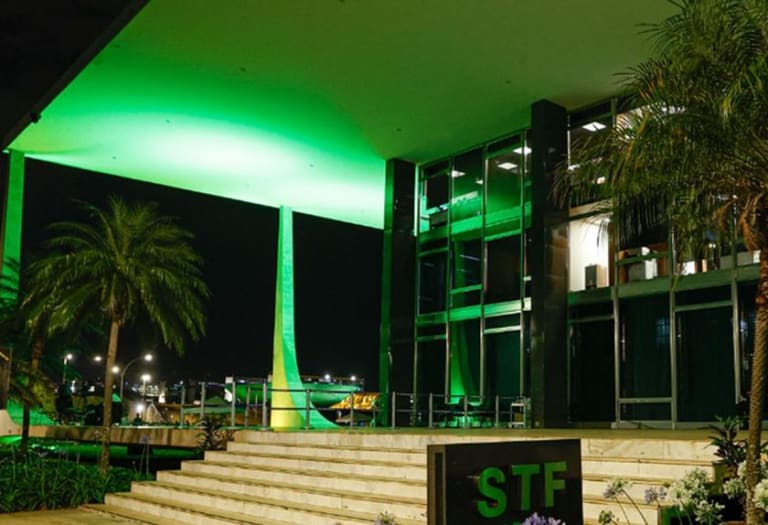
The Supreme Federal Court (STF) is evaluating, under the general repercussion regime, whether real estate companies are entitled to ITBI tax immunity when integrating properties into their share capital.
The Supreme Federal Court has initiated a pivotal trial for the real estate market and the tax management of Brazilian municipalities. Under discussion is the scope of the Property Transfer Tax (ITBI) immunity in operations involving the integration of share capital, specifically when a company’s primary activity is the sale or rental of properties.
The debate gained prominence in September but was temporarily halted by a request for review filed by Justice Alexandre de Moraes. The final decision on Topic 1.348 of general repercussion will have a direct impact nationwide, serving as a guideline for courts and city halls in disputes over the collection of this municipal tax.
The Conflict Over Tax Immunity
The Federal Constitution establishes that the ITBI does not apply when a shareholder transfers a property to the assets of a legal entity to form or increase its share capital. However, the constitutional text includes a specific exception for companies whose corporate purpose involves real estate operations, creating a gray area that the STF is now attempting to clarify.
Currently, the rapporteur, Justice Edson Fachin, advocates for an interpretation favorable to taxpayers. According to him, immunity should be granted regardless of the company’s line of business. For the magistrate, the constitutional restrictions on real estate activities apply only to complex corporate reorganizations, such as spin-offs or mergers, but not to the simple formation of initial capital.
The constitutional exception related to real estate activities covers other forms of corporate reorganization, such as mergers, acquisitions, spin-offs, or dissolutions, but not the integration of capital.
Divergences in the Court’s Plenary
The rapporteur’s position is supported by Justices Cristiano Zanin, André Mendonça, Nunes Marques, and Luiz Fux. This group argues that even if immunity is applied, it must be strictly limited to the value that is actually integrated into the company’s capital, preserving the municipalities’ power to audit potential fraudulent maneuvers or simulations.
On the other hand, Justices Gilmar Mendes and Flávio Dino present a restrictive view. In their dissenting opinion, companies predominantly engaged in the purchase, sale, or lease of real estate should be excluded from the tax benefit. Their argument is that the constitutional exception would prevent immunity precisely to avoid real estate companies circumventing municipal tax payments under the guise of capitalization.
Projections and Future Impacts
High anticipation surrounds the outcome, as the result will directly impact the financial health of municipal coffers and the strategic planning of corporations in Brazil. Since the case has general repercussion, the prevailing thesis will put an end to the legal uncertainty surrounding various current tax disputes over property integration.
The sector now awaits the return of the case by Justice Alexandre de Moraes for the vote to be concluded. Regardless of the verdict, the trial will mark a watershed moment in how Tax Law perceives the boundaries between companies’ freedom of asset organization and municipalities’ revenue-raising powers.