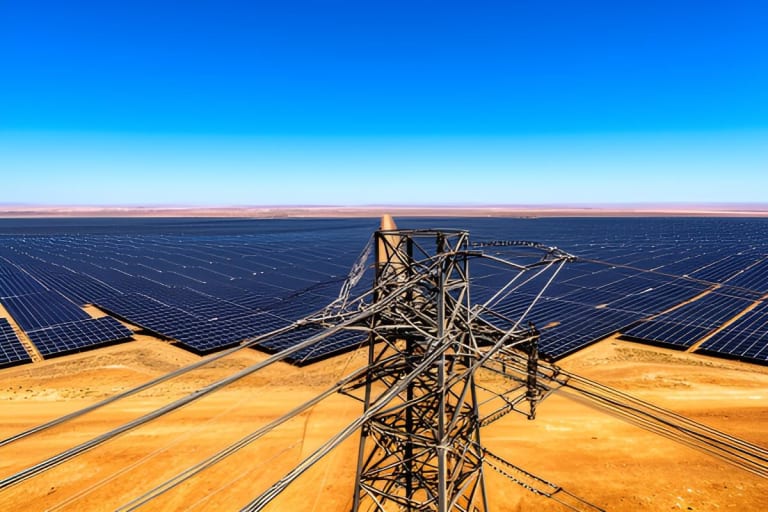
Brazil’s energy planning has included a new transmission line to help relieve congestion for solar and wind farms in the Northeast.
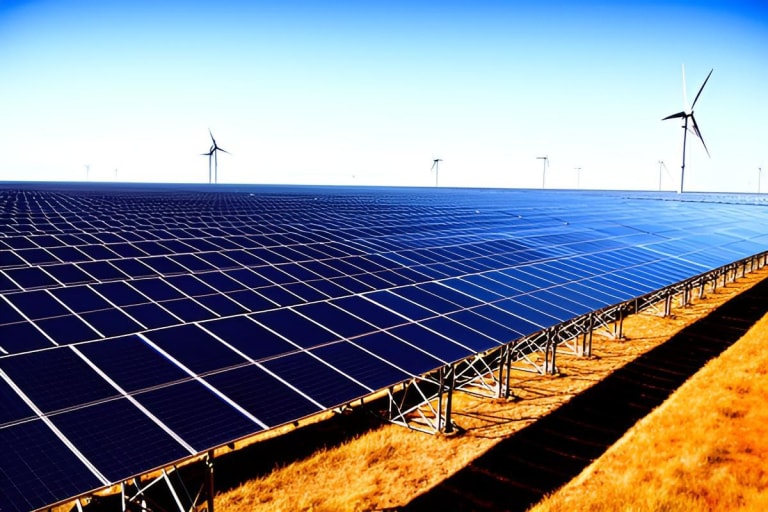
The expansion of Brazil’s clean energy matrix frequently hits a hurdle invisible to the average consumer: the transmission capacity of the power grid. When generation outpaces available infrastructure, the National Interconnected System (SIN) is forced to impose curtailments on solar and wind farms. To mitigate this chronic bottleneck, the Energy Research Office (EPE) presented its new grant plan on October 2, highlighting the project dubbed Bipolo Nordeste II among its proposals.
The planning initiative aims to provide greater flexibility for the transmission of renewable energy produced in the Northeast, a region that hosts large-scale farms. However, experts point out that the announcement represents only an infrastructure guideline, and its real impact on project revenues will depend on crucial steps, such as bidding auctions, the completion of physical construction, and the actual start of operations in the future.
The transmission bottleneck and financial impacts
The rapid growth of solar and wind generation in the region has exposed a mismatch between the pace of new plant installations and the modernization of transmission lines. Without sufficient capacity to transport the generated megawatts to major consumer centers, the system operator is forced to order reductions in output. Industry associations, such as ABSOLAR, have repeatedly warned about the multi-billion dollar losses accumulated by investors due to these operational restrictions.
For the financial market and project developers, the evaluation metric has changed. It is no longer enough to calculate the nominal capacity of photovoltaic panels; one must audit the energy that actually reaches the market.
Investors should ask how many megawatt-hours a plant can effectively deliver, not just what its nominal capacity is.
As a result, risk analyses now require conservative scenarios that account for the history of curtailments before finalizing any financing contracts.
Innovative technology and future outlook
The technical differentiator proposed for Bipolo Nordeste II lies in the use of high-voltage direct current transmission technology, known as HVDC-VSC. This is a pioneering application for this purpose in the country, designed to optimize power flow control and integrate new storage resources and loads. The promise is for greater stability and reduced operational costs associated with the waste of green energy.
Despite the optimism brought by the EPE plan, consumers should not expect immediate reductions in electricity bills, as infrastructure progress requires long lead times. The immediate focus is on the risk management of corporate solar energy contracts. The recommendation for the coming years is to strictly monitor the line’s bidding and construction schedule, ensuring that business models do not rely on short-term promises to remain financially viable.