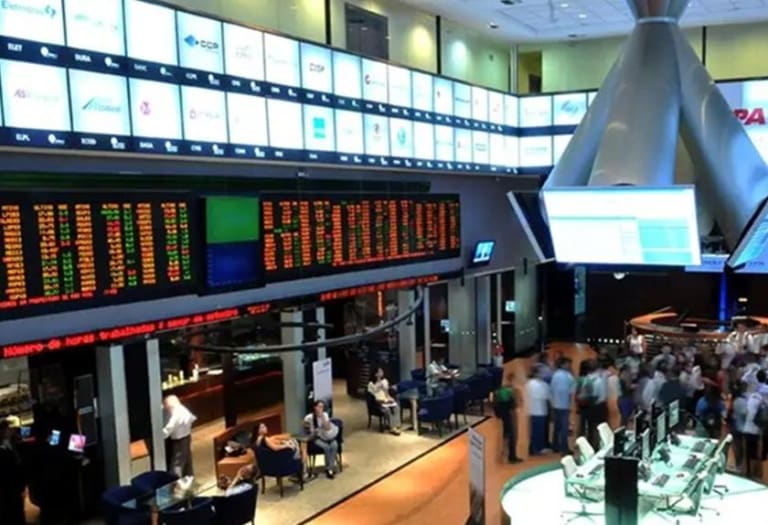
The financial market started the week optimistically: the Ibovespa rose, boosted by a positive external outlook, while the dollar retreated significantly against the Brazilian real and other emerging currencies.
The Brazilian financial market began the week with a recovery, tracking the optimism seen in international stock markets. With falling oil prices and stabilizing global sovereign bond yields, Brazil’s main stock index, the Ibovespa, closed up 0.74%, reaching 186,595.60 points.
Domestically, investors’ attention is focused on the unfolding electoral scenario. The presidential race remains on the radar, especially after the release of the BTG Pactual/Nexus poll, which shows a competitive landscape between President Lula da Silva (PT) and Senator Flávio Bolsonaro (PL), keeping the market alert to potential impacts on future economic policies.
Currency Relief and Global Influence
The performance of the U.S. currency offered temporary relief to investors. The spot dollar ended Monday’s (21) session down 0.72%, trading at R$ 5.20. This movement mirrored the depreciation of the U.S. currency against other emerging market currencies and a drop in Treasury yields, U.S. government bonds.
Meanwhile, on Wall Street, optimism prevailed, with the Nasdaq index hitting new historic highs. This advance was driven by enthusiasm for artificial intelligence and the prospect of normalization in global energy flows, which helped sustain investor confidence worldwide.
The stabilization in energy commodity prices, coupled with an environment of reduced pressure on debt securities, created a favorable scenario for a pursuit of higher-risk assets, benefiting the performance of the Brazilian stock market and the currency adjustment.
Oil Prices Under Pressure
The energy market also saw significant changes. Brent, the international benchmark, traded lower, pressured by news of resumed flows in key oil pipelines in Saudi Arabia and expectations of progress in negotiations between the United States and Iran.
November Brent crude closed trading on the ICE in London down 3.40%, quoted at US$ 100.34 a barrel. Similarly, WTI crude retreated 3.86% on the Nymex, ending the day at US$ 92.37 a barrel. The drop in these prices was crucial in reducing perceived global inflation, providing an extra boost to global financial markets at the start of the week.