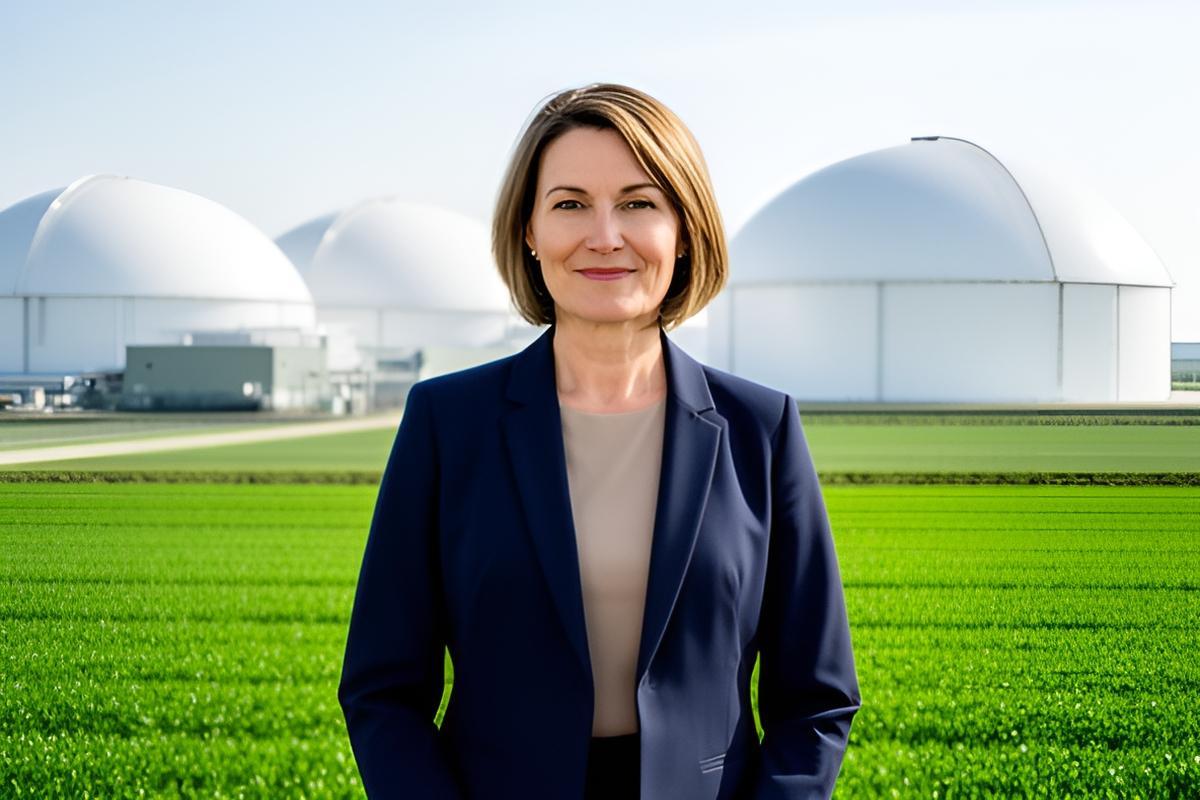
Female leadership in the clean energy sector gains prominence with the inclusion of Josiani Napolitano, president of ABiogás, on Forbes’ list of the 100 Most Powerful Women in Agriculture.
The Brazilian energy landscape celebrates a significant recognition of women’s contributions and the potential of renewable gases. Josiani Napolitano, president of the Brazilian Association of Biogas and Biomethane (ABiogás), is now featured among the “100 Most Powerful Women in Agriculture” according to the renowned publication Forbes Brasil. This distinction underscores the strategic relevance of biogas and biomethane, segments that transform waste into clean energy solutions.
Napolitano’s appointment comes at a crucial time for the advancement of decarbonization policies in the country. The renewable gas sector, driven by initiatives like the Future Fuel program, seeks to consolidate its position in the national energy matrix. The expansion of this market is strongly linked to a favorable regulatory environment that stimulates demand, the economic viability of new projects, and access to adequate financing mechanisms.
Biogas and Biomethane: Pillars of the Energy Transition
Biogas production, derived from the decomposition of organic matter, is already an established reality for electricity and heat generation. Its purified version, biomethane, is emerging as a high-capacity renewable fuel, capable of replacing fossil natural gas in various applications. Agriculture, with its vast availability of livestock and agro-industrial waste, is positioned as a source of raw material for these energy pathways.
Beyond clean energy production, the utilization of this waste represents significant progress in the environmental management of rural activities. The president of ABiogás highlights the importance of this recognition:
“Being on the Forbes list alongside so many female leaders transforming Brazilian agriculture is an honor and a recognition of the strategic value that biogas and biomethane hold for the future of agriculture and energy. The sector has ceased to be a promise and has become a profitable and indispensable reality for carbon neutrality goals and Brazil’s energy transition.”
Regulation and Market: The Next Steps for Expansion
The Future Fuel program is a fundamental driver in expanding the use of lower-carbon intensity fuels. For biomethane, regulatory evolution, raw material availability, distribution infrastructure, and consumer consolidation are decisive factors in attracting new investments. The energetic utilization of waste also opens doors for new revenue streams in rural areas, adding value to agricultural and agro-industrial production.
The viability and scale of these projects are intrinsically linked to production and purification costs, as well as integration with existing gas and electricity infrastructure. Monetizing environmental benefits, such as waste management, through origin certificates or carbon credits, is also a promising area, dependent on clear certification criteria and methodologies.
Josiani Napolitano’s inclusion on the Forbes list not only celebrates female leadership in agribusiness but also highlights the growing importance of renewable gases. The promising future of this market lies in the ability to transform raw material potential into economically competitive and sustainable projects, aligned with Brazil’s energy transition and carbon neutrality objectives.