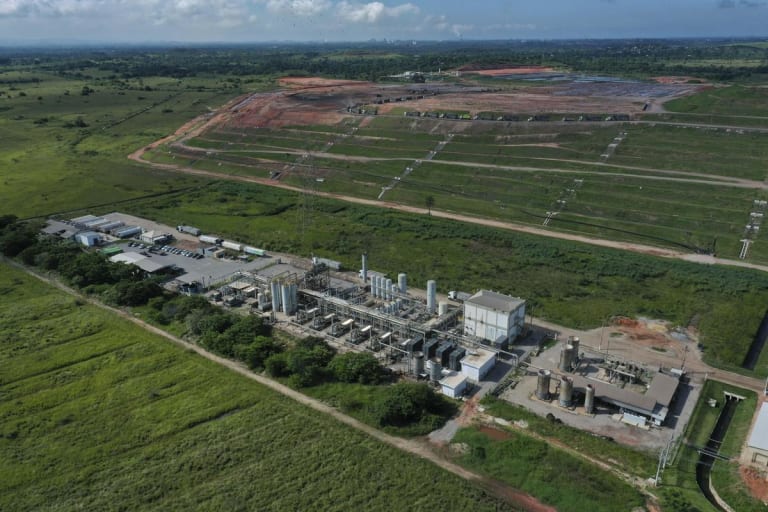
The federal government is working with the Superior Court of Justice (STJ) to authorize hydraulic fracturing, or “fracking,” seeking to centralize the activity’s technical regulation under the Ministry of Mines and Energy to stimulate new investments.
In recent weeks, the federal administration has intensified its dialogue with the Superior Court of Justice (STJ) in an effort to unlock the use of fracking—a hydraulic fracturing technique used to extract unconventional oil and gas—within Brazilian territory.
The push, led by the Ministry of Mines and Energy (MME) in partnership with the Chief of Staff’s Office, aims to establish a legal framework that shifts the final decision on the technique’s viability away from the courts and into the administrative sphere.
The trial, which began in September and is expected to resume on October 14, is seen as a watershed moment for the energy sector.
Currently, the stalemate regarding environmental safety and the regulation of the practice prevents companies from committing to large-scale investments.
For the government, transferring decision-making authority to technical bodies is essential to ensure the legal certainty required by oil and gas industry operators.
The strategic role of hydraulic fracturing
The fracking technique involves injecting fluids under high pressure to fracture low-permeability rock, releasing previously inaccessible hydrocarbons.
Renato Dutra, the Secretary of Oil, Natural Gas, and Biofuels at the MME, argues that operational and environmental procedures should follow industry guidelines and those of competent regulatory bodies, avoiding the excessive litigation that currently inflates project costs.
The Ministry of Mines and Energy stated:
“The Ministry of Mines and Energy has taken a very firm stance over the last 12 months to provide the rapporteur with a government position that prioritizes keeping decisions on economic activity out of the judiciary. Instead, these should be decided administratively, using appropriate technical procedures, both for environmental matters and for the operational processes of the oil and gas industry.”
Pelotas Basin as a new frontier
Beyond the pursuit of unconventional methods, the government reaffirmed the importance of the Pelotas Basin, located between Rio Grande do Sul and Santa Catarina, as a pillar of national energy expansion.
Official expectations are ambitious: the MME is working with the Ministry of the Environment and Climate Change to facilitate the offering of over 50 exploratory blocks in the region in the coming months.
The effort aims to create a predictable environment for the National Agency of Petroleum, Natural Gas and Biofuels (ANP), which organizes area auctions.
With the definition of new production frontiers and the resolution regarding hydraulic fracturing, the government intends to solidify Brazil as an increasingly relevant player on the global energy stage, balancing production goals with the challenges of transitioning to more sustainable and efficient energy sources.