
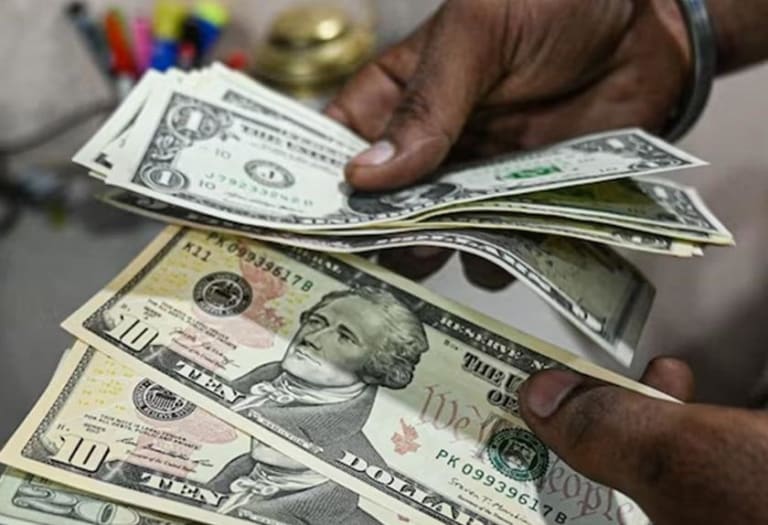
The financial market saw a mixed session: the dollar rose, the Ibovespa saw a slight decline, while the clean energy sector looks toward strategic investments.
The Brazilian Stock Exchange closed last Friday with a modest decline, amid a cautious environment that saw the dollar appreciate against the real. The fluctuations in the financial market reflected a combination of domestic factors, such as the intense electoral landscape, and global movements of the American currency, consolidating a bullish trend for the exchange rate at the end of the day, despite an accumulated weekly contraction.
However, for observers of the clean energy and sustainability sectors, the performance of traditional indicators is mixed with promising signs of investment in a greener future. While financial quotes adjust, there is a horizon of commitments to the ecological transition that continues to gain momentum, offering a positive counterpoint to daily volatility and pointing to a strategic allocation of capital in favor of long-term solutions.
Market in Flux: Exchange Rates and Equities
This Friday, the dollar closed at R$ 5.1308, an increase of 0.52% in the spot market. This movement was aligned with the global behavior of the currency, with the DXY index, which compares the dollar to six other major currencies, recording a gain of 0.23%. Despite the daily rise, the American currency accumulated a 1.26% drop against the real throughout the week.
Meanwhile, the Brazilian Stock Exchange‘s main indicator, the Ibovespa, had a nearly flat close, with a slight 0.02% drop, reaching 185,147.15 points. Despite the small setback in the session, the index demonstrated resilience by accumulating an impressive 5.4% gain for the week, showing the market‘s ability to absorb pressures and seek medium-term gains.
Political and Economic Landscape in Focus
Investor attention remained fixed on politics, with the latest presidential voting intention polls revealing a tight race between candidates Luiz Inácio Lula da Silva (PT) and Flávio Bolsonaro (PL). This electoral uncertainty adds a component of volatility to the market, influencing investment decisions and risk perception.
In parallel, the Brazilian economy showed positive data in the August trade balance. The month closed with a surplus of US$ 7.394 billion (equivalent to R$ 37.93 billion), exceeding financial market expectations. The figures, released by the Secretariat of Foreign Trade (Secex) of the MDIC, indicate US$ 33.158 billion in exports and US$ 25.764 billion in imports—a robust balance that reflects the vitality of foreign trade.
Oil and Global Tensions
In the commodities segment, oil futures contracts ended Friday on the rise, driven by growing concern over geopolitical developments in the Middle East. The exchanges of attacks in the Persian Gulf were a determining factor for the price increase, with fears over potential interruptions to oil flows in the region.
The WTI for October rose 0.2%, closing at US$ 91.48 per barrel on the Nymex, while Brent for November advanced 0.8%, reaching US$ 96.28 per barrel on the ICE. Both contracts recorded significant weekly gains, with WTI accumulating 9.7% and Brent9.3%, marking the largest weekly advance since mid-July for both benchmarks.
Green Horizon: Investment and Ecological Transition
Despite the fluctuations and traditional focuses of the financial market, Brazil is reinforcing its commitment to sustainability. In a strategic move to boost clean energy, the government is in the process of contracting a US$ 1 billion loan from the Inter-American Development Bank (IDB). These funds will be entirely earmarked for accelerating the sustainable ecological transition through the Eco Invest Brasil – Novo Brasil program.
This type of initiative highlights how, even in a scenario of exchange rate volatility and political uncertainty, the sustainability and clean energy agenda is consolidating itself as an essential pillar for long-term economic development.
The resilience of the market, combined with strategic investments in clean energy, demonstrates that the pursuit of a greener future is an undeniable economic driving force, transcending daily volatility.
Looking Toward a Sustainable Future
The recent movements in the market, with the dollar rising and the Stock Exchange seeing a punctual decline, reflect the complexity of the current economic scenario, marked by elections and global tensions. However, the significant trade balance surplus and, above all, the advancement of investments directed toward the ecological transition, such as the IDB loan for Eco Invest Brasil – Novo Brasil, serve as important benchmarks for the clean and sustainable energy sector.
These developments underscore the growing perception that sustainability is not merely an environmental issue, but a vector for economic growth and future stability. The commitment to clean energy and decarbonization continues to attract capital and shape the next stages of national development, signaling that despite momentary challenges, the path to a greener future is charted and in full execution.