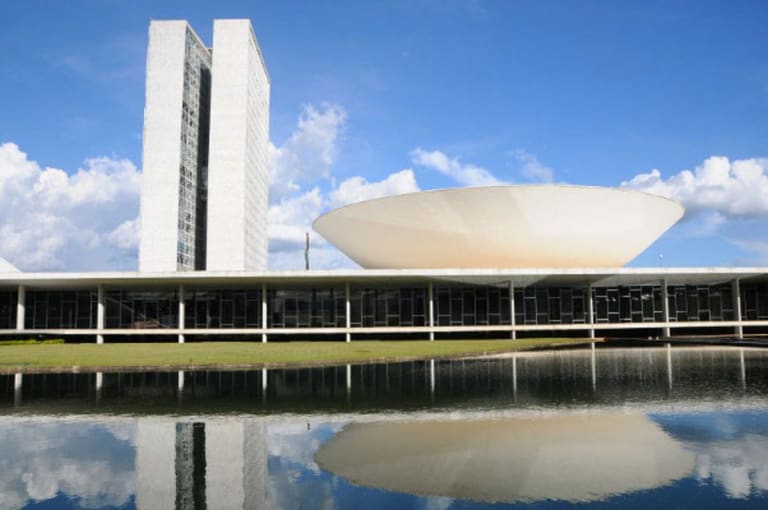
The Chamber of Deputies has accelerated the progress of a bill debating the division of battery costs, a crucial issue for the future of clean energy and storage auctions in Brazil.
The Chamber of Deputies took a significant step forward on Tuesday night by approving an urgent regime for the processing of a bill that redefines the charging model for electricity storage.
This measure directly influences the direction of the clean energy sector and critically impacts the planning of the country’s first auctions for this technology, scheduled to take place in December.
With this procedural advancement, the proposal gains priority on the agenda, potentially being voted on directly in the Chamber‘s plenary session without needing to go through thematic committees.
However, behind the scenes in the Legislative Branch, the prevailing assessment is that the definitive review of the bill’s substance will only occur after the electoral period, putting pressure on the federal government‘s official timeline.
Impact on December Auctions and the Electric Sector
The auction scheduled for early December anticipates the contracting of supplies with fifteen-year terms, with commercial operations slated to begin in August 2028.
Representatives from the Aneel (National Electric Energy Agency) had previously signaled that any changes to legal guidelines on the eve of a public tender could necessitate a thirty-day adjustment to the schedule, ensuring sufficient time for investors to recalculate their bids.
Authored by Congressman Arnaldo Jardim, the text of Bill 3.716/2026 aims to overturn a provision established the previous year, which obligates generating companies to bear the costs of reserve batteries alone.
Should the amendment be endorsed by the National Congress, these expenses would revert to the traditional model, being shared among all users connected to the SIN (National Electric System Interconnection).
The Clash Between Generators and Distributors
The issue divides opinions among the main players in the national energy market.
On one side, entities linked to solar energy, wind energy, and the battery subset argue that the provisions bring stability to the entire grid, justifying that the financial burden be shared collectively.
On the other hand, distribution companies, represented by Abradee (Brazilian Association of Electricity Distributors), advocate for preserving the current model.
According to the association, generators should continue to cover operational costs, arguing that the public’s electricity bills already absorb a significant volume of subsidies for renewable expansion.
The approval of the urgency measure represents a fundamental step towards consolidating legal certainty for investments in storage, although the legislative debate should not rush the schedule of auctions planned for this year.
Concerns about potential supply risks during peak consumption periods are another factor driving regulatory discussions.
Experts warn that any delay in the schedule could postpone the operational startup of flexibility assets, compromising the reliability of Brazil’s energy supply in the coming decade.