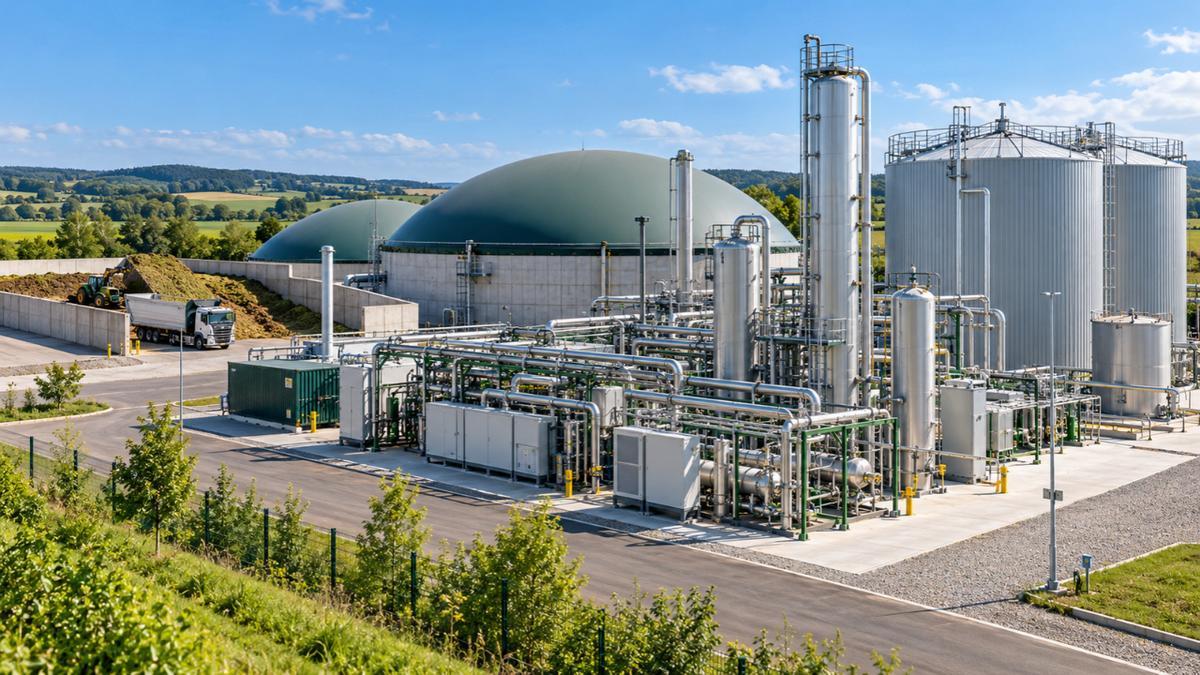
The state of Goiás is solidifying its potential in sustainable energy with three major biomethane projects, totaling a daily production capacity of 51,520 Nm³ derived from agro-industrial waste.
The renewable energy sector in Brazil’s Center-West region is gaining momentum following a recent mapping initiative by the state government, which highlights three strategic biomethane ventures. Located in the municipalities of Edéia, Rio Verde, and Guapó, these projects represent a significant advancement in the valorization of industrial and agricultural byproducts, converting environmental liabilities into a high-demand clean energy source.
Although the total volume of 51,500 Nm³ per day paints a promising picture for the regional energy transition, it is essential to note that these figures reflect installed capacity at various regulatory stages. The ultimate success of these projects depends directly on the approval of the ANP (National Agency of Petroleum, Natural Gas and Biofuels), which is responsible for ensuring operations comply with the technical and safety standards required for commercialization.
The path to commercial viability
Transforming this production capacity into available fuel requires companies to clear rigorous federal authorization hurdles. Technical feasibility is not enough; firms must meet a series of requirements involving quality standards, volumetric measurement, and safety certification.
State-level monitoring provides valuable insights into the development of these initiatives, serving as an industry thermometer, though it does not replace the need for definitive permits issued by the federal regulatory agency.
This monitoring acts as a compass for investors and market stakeholders. By centralizing information, the state allows the private sector to identify bottlenecks and opportunities, accelerating the integration of biomethane into logistics fleets and replacing diesel in industrial processes.
Synergy between agribusiness and energy
One of the most compelling aspects of the projects in Goiás is the diversity of raw materials utilized. In Edéia, the focus is on vinasse, a typical byproduct of sugar-ethanol plants, while in Guapó, the focus involves waste from slaughterhouses and the food industry. Rio Verde, meanwhile, uses a combination of organic waste sourced from its robust agro-industrial network.
This reach demonstrates that the state possesses a solid foundation to consolidate a circular economy ecosystem. Integrated into the Goiás Mais Energia Rural program, the monitoring of these projects aims not only to reduce operating costs for local producers but also to position Goiás as a benchmark for national biogas and derivative production.
The expectation for the coming months is that, as proceedings with the ANP advance, a portion of this production capacity will effectively enter the energy market. Continuous oversight by state agencies will be essential to measure the pace of this transition and the actual impact of biomethane on the Goiás energy matrix, paving the way for a low-carbon economy.