
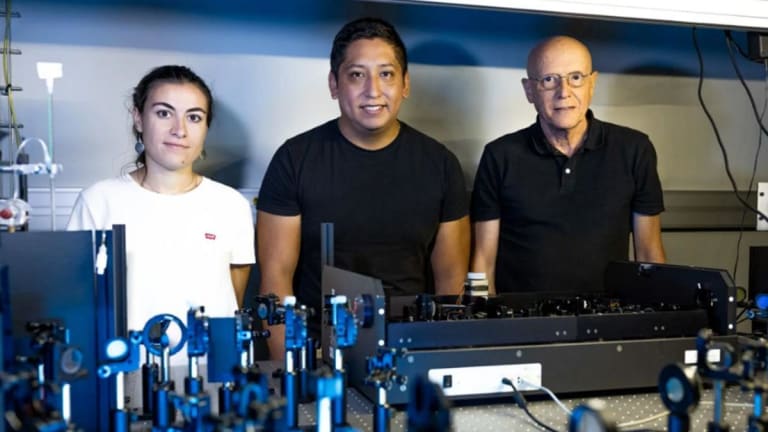
Scientists improve organic solar cells with silver electrodes, paving the way for record-breaking efficiencies.
A promising breakthrough in the field of organic solar energy is gaining attention, as researchers at ICFO (The Institute of Photonic Sciences) have developed a new approach to minimize energy losses. The technique, which employs carefully engineered silver electrodes, has the potential to significantly increase the efficiency of converting sunlight into electricity, surpassing long-standing theoretical barriers.
The secret lies in controlling the way organic solar cells emit light. While sunlight hits the device in a directed spectrum, traditional cells radiate energy in a much wider angular range. This dispersion results in so-called “Boltzmann losses,” which compromise the amount of useful energy extracted. The ICFO team successfully reversed this scenario by transforming the cell into a refined optical cavity.
Silver Electrodes: The Heart of the Innovation
The innovative structure introduces silver electrodes at strategic points. A front electrode, combined with specific layers and a rear electrode, also made of silver, forms a cavity that directs light emission. This configuration prevents energy from being dissipated at unfavorable angles while ensuring high transmission of incident sunlight.
The experiment, detailed in the prestigious journal Energy & Environmental Science and published on October 5, 2026, utilized a cell based on the PM6:Y6 blend, a promising organic material for solar energy harvesting.
Theoretical Potential and Next Steps
Although the experiment demonstrated a tangible improvement in efficiency, the lead researcher, Jordi Martorell, points to an even greater theoretical potential. He suggests that this technology could pave the way for efficiencies approaching 43%, a significant milestone that is still under investigation.
Martorell‘s group is engaged in ongoing research with nanophotonic structures, aiming to improve the conversion of sunlight into various forms of energy. The combination of advanced computational tools, the study of electromagnetic propagation, and the experimental implementation of new configurations reinforces the commitment to the advancement of clean and sustainable energy. This work is a crucial step toward making organic solar cells an even more viable and efficient alternative in the global market.
RELATED NEWS
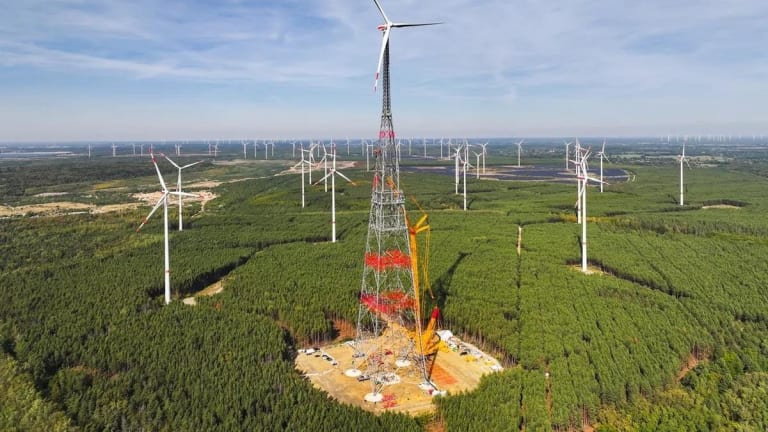 Germany builds world’s tallest wind turbine at 365 meters, promising to double energy output
READ MORE
Germany builds world’s tallest wind turbine at 365 meters, promising to double energy output
READ MORE
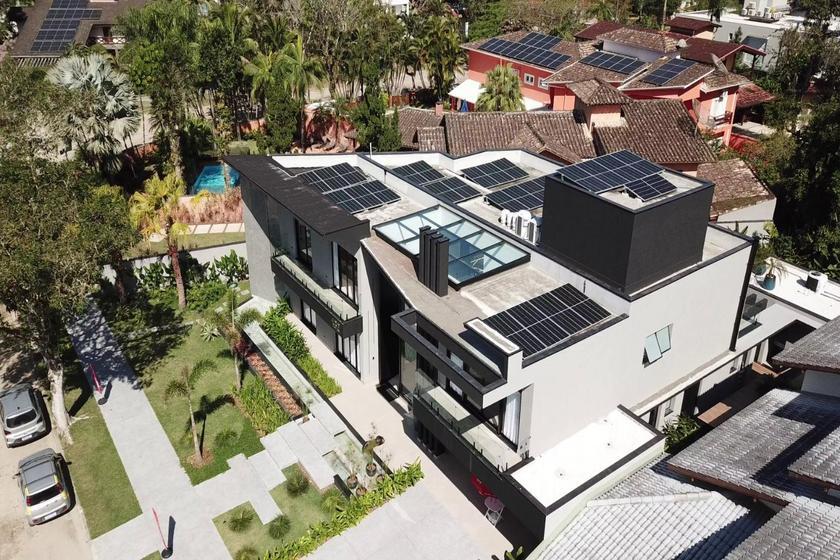 Solar energy advances in Alto Tietê as Mogi das Cruzes leads demand for systems
READ MORE
Solar energy advances in Alto Tietê as Mogi das Cruzes leads demand for systems
READ MORE
 Austria: 43,000 applications in 10 minutes for solar subsidies and comparison with Brazil’s Fio B
READ MORE
Austria: 43,000 applications in 10 minutes for solar subsidies and comparison with Brazil’s Fio B
READ MORE