
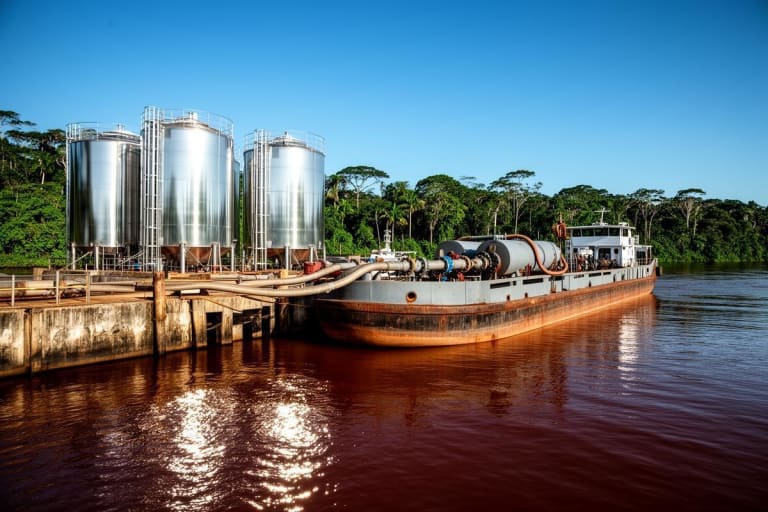
Amazonas secures $308 million to reinforce fuel reserves, preemptively mitigating the impacts of El Niño and drought on energy security for isolated power systems.
Brazil’s Northern region, particularly the state of Amazonas, is bracing for challenges posed by drought and the El Niño phenomenon, both of which threaten energy security. In response, the National Electric Energy Agency (Aneel) has approved a critical measure: the early release of approximately $308.4 million from the Fuel Consumption Account (CCC). The objective is to enable power generation companies located in isolated systems to build strategic fuel reserves.
The Aneel initiative, deliberated on September 8, authorizes companies Powertech, Oliveira Energia, and Aggreko to receive early reimbursement for the acquisition of up to 42.36 million liters of fuel. This advance is considered vital to maintaining electricity supply in remote areas, where river transport is the primary logistics route and is at high risk of disruption due to receding water levels.
The Resource Prepayment Strategy
The allocation of funds was carefully planned. The largest portion, approximately $266.2 million, is earmarked for Aggreko for the purchase of 36.43 million liters. Powertech will receive roughly $30.2 million for 4.24 million liters, while Oliveira Energia will gain access to $12 million to build an additional reserve of 1.69 million liters.
This exceptional measure allows companies to acquire fuel while river navigation conditions remain favorable. Aneel justified the decision by noting that the cost of pre-stocking is significantly lower than the expenses that would be incurred by emergency solutions, such as air transport, the use of smaller vessels, or the mobilization of additional generation during a supply crisis. The advanced funds will be returned to the CCC in five monthly installments, adjusted by the IPCA (Consumer Price Index).
Logistical Challenges and the Vulnerability of Isolated Systems
The urgency of the approval reflects growing concern over the drastic reduction in the navigability of Amazonian rivers. In June, an Aneel inspection task force, which included distributors, generators, and public agencies, discussed severe logistical challenges and the need for robust contingency plans.
Areas such as the Madeira River and its connection to the BR-230 highway, as well as regions of the Upper and Middle Solimões, Javari, Juruá, Purus, and Negro rivers, were identified as critical points. Currently, the fuel autonomy of some thermal power plants ranges from 30 to 60 days—a period considered insufficient in the face of current climate projections—prompting discussions about a 120-day autonomy target. The authorizations cover localities such as Manicoré, Pauini, and Santa Isabel do Rio Negro, seeking to ensure supply until the beginning of 2027.
Aneel‘s assessment highlights that “pre-stocking has a lower cost than the alternatives that might be necessary should supply be compromised, such as air transport, the emergency use of smaller vessels, or the mobilization of additional generation.”
Transparency and Financial Next Steps
The release of funds is conditional upon proof of fuel purchase, which must be presented to the Electric Energy Commercialization Chamber (CCEE) by September 18. The actual amount advanced will be limited to the lesser of the amount proven by invoices or the CCEE calculation, in accordance with regulatory parameters.
From a financial standpoint, Aneel’s technical staff evaluated that the CCC has the capacity for this advance. However, the decision was partial and does not cover extraordinary logistical costs. Expenses related to barge rentals and transshipment will require further guidance from the Ministry of Mines and Energy (MME) and the National Energy Policy Council (CNPE), in addition to a detailed analysis to differentiate exceptional costs from ordinary ones.
Aneel‘s measure represents a fundamental step toward strengthening Amazonas‘ energy security and ensuring the stability of electricity supply. By allowing the anticipation of resources for fuel stockpiling, Brazil aims to mitigate the impacts of drought, highlighting the importance of robust and adaptable planning in the face of climate change.
RELATED NEWS
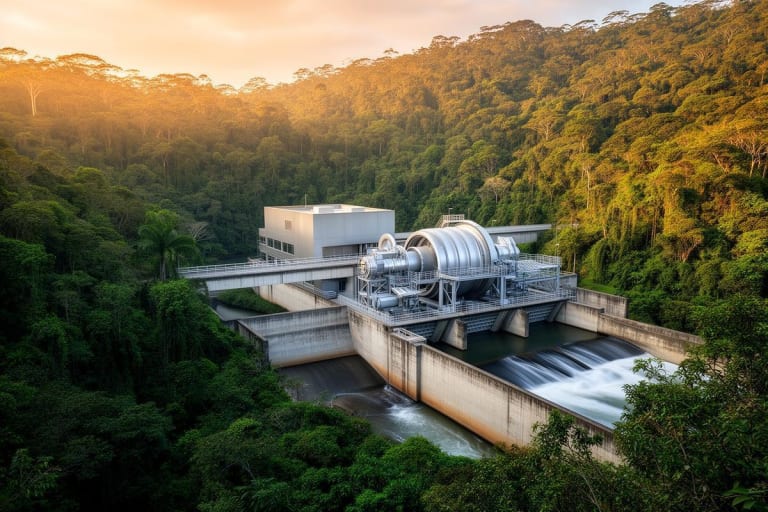 Âmbar Energia invests R$ 60 million in small hydropower plant, tripling generation capacity in Santa Catarina
READ MORE
Âmbar Energia invests R$ 60 million in small hydropower plant, tripling generation capacity in Santa Catarina
READ MORE
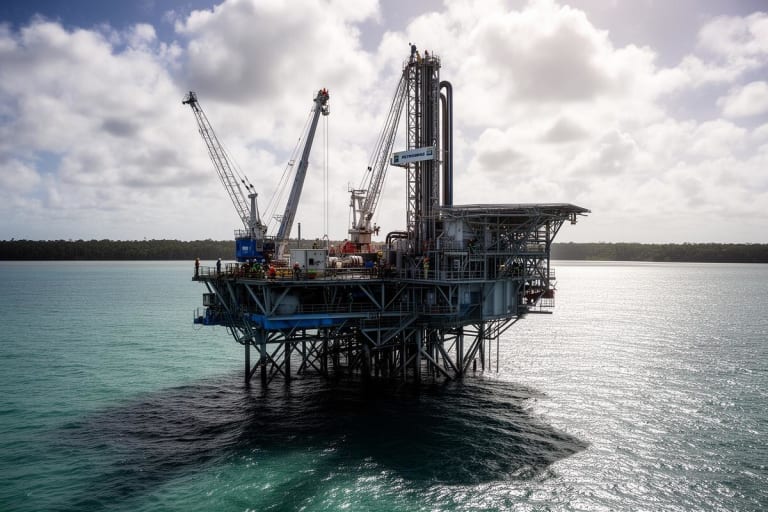 Petrobras cleared to drill three more exploration wells in the Foz do Amazonas basin
READ MORE
Petrobras cleared to drill three more exploration wells in the Foz do Amazonas basin
READ MORE
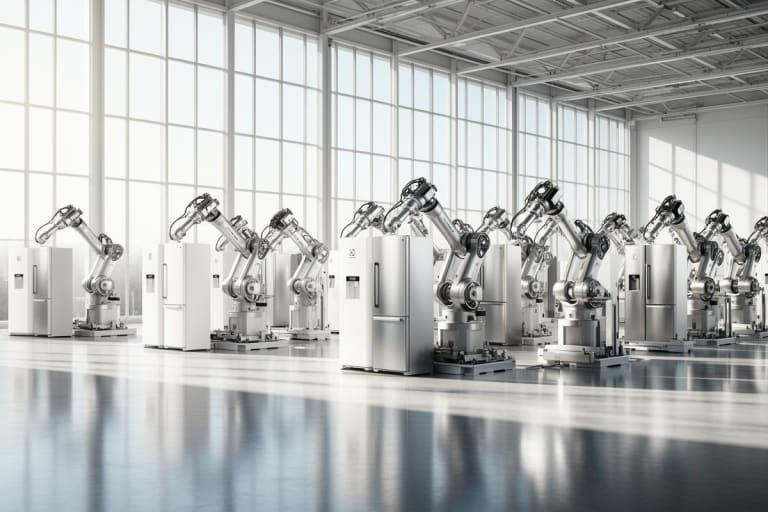 BNDES Invests R$ 300 Million in Electrolux’s Energy Efficiency Technologies
READ MORE
BNDES Invests R$ 300 Million in Electrolux’s Energy Efficiency Technologies
READ MORE