The debate surrounding the energy matrix for data centers in Brazil is heating up. The inclusion of natural gas as a low-emission source for data centers remains a point of contention between the Ministries of Finance and Mines and Energy.
The regulation of the Special Taxation Regime for Datacenter Services (Redata) is progressing amid intense discussions about which energy sources will be eligible for the promised tax incentives. The federal government aims to attract massive investments in the digital infrastructure sector, with expectations of figures in the trillions of Brazilian Reais. However, the requirement for facilities to prove the use of 100% renewable or low-emission electricity has generated significant disagreements.
At the heart of the issue is the definition of “low emission.” While the Ministry of Mines and Energy (MME) openly advocates for including natural gas within this scope, the Ministry of Finance has been pushing for the regulation to exclusively prioritize renewable sources, arguing against the inclusion of fossil fuels. This polarization has impacted the progress of the regulatory decree, which the market is eagerly awaiting.
The Dispute Over Natural Gas in Data Centers
The private natural gas sector has been actively seeking to unlock negotiations, holding meetings with stakeholders from the Ministry of Development, Industry, Trade, and Services (MDIC).
The possibilities on the table range from the complete exclusion of natural gas to its full acceptance, or even its acceptance conditioned on compensatory mechanisms such as carbon credits, the use of biomethane, and carbon capture and storage (CCS) technologies.
Another point under discussion is the use of natural gas as a backup power source during energy supply interruptions.
Sources close to the negotiations indicate that the exclusion of natural gas from the list of sources incentivized by Redata could create a form of market reservation for renewable energies, presenting additional challenges for the implementation of data centers, especially in the southern and southeastern regions of the country.
The expansion of digital infrastructure in Brazil represents an exponential growth factor in energy demand, opening a new front in the dispute over who will supply the energy for these data processing centers.
Growing Demand and Emerging Solutions
The impact of the growth of artificial intelligence (AI) on energy demand is a global reality. The MME has already recorded a significant volume of requests from data centers to connect to the Brazilian electricity grid, reflecting a worldwide trend. Global estimates indicate that energy consumption by AI servers is expected to double by 2030, with data centers projected to exceed 300 GW of installed capacity globally by 2036.
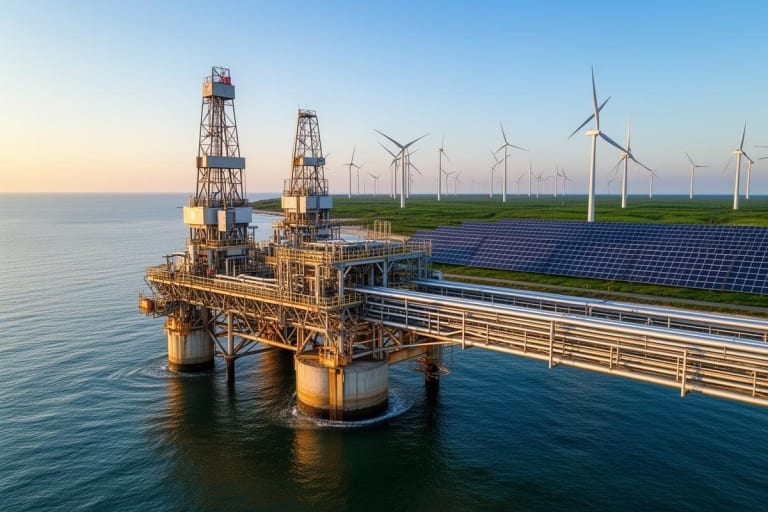
Even with major technology companies (big techs) investing in wind, solar, battery power, and even small nuclear reactors, natural gas remains a firm energy option on the radar. The main criticism of its inclusion as a “low-emission source” stems from the fact that it is a fossil fuel that emits greenhouse gases. However, emerging technologies aim to mitigate this impact.
Carbon capture is another promising solution, with the potential to reduce CO2 emissions from conventional thermal power plants by over 95%.
The use of natural gas-powered fuel cells, for example, has shown to release less CO2 compared to traditional combustion processes. There is also the prospect that these cells could, in the future, operate with 100% renewable hydrogen. An example of this application is American Electric Power‘s (AEP) agreement to deploy 1 GW of solid oxide fuel cells in AI data centers.
Carbon capture and storage (CCS) technology also presents an alternative. Projects like the one announced by Google in partnership with Broadwing Energy aim to permanently capture and store about 90% of the CO2 emissions from gas generators. However, the economic viability and scale of these projects depend on factors such as carbon pricing, financing policies, and CO2 transportation and storage infrastructure, which may require considerable time for development and large-scale implementation.