China consolidates global leadership in clean energy, surpassing the United States in investments and capacity amidst energy instability and rising demand from data centers.
China has been strengthening its dominant position in the clean energy sector, an advantage that is becoming more pronounced in the context of geopolitical conflict in the Middle East, fluctuations in oil and gas markets, and the increasing energy needs driven by the data center boom. A recent report, released last Tuesday (22) and published just before President Xi Jinping‘s first state visit to the White House in over a decade, highlights that the Asian giant accounts for the largest share of global investments in the manufacturing of clean energy technologies.
The study reveals that China holds 57% of all announced global investments for the production of clean technologies, significantly outperforming the United States in crucial areas such as investment, deployment, and exports of these innovations. This disparity has deepened even with restrictive policies from the US government, placing China in a strategic position ahead of the war in Iran and the explosive electricity demand from artificial intelligence data centers.
Recalibration Scenario and Strategic Advantage
The global clean energy market is undergoing an intense transformation phase. While China reaffirms its dominance, internal pressures from overcapacity are driving its companies to expand exports and seek new international investments. On the other hand, American companies are still seeking stability after a turbulent period, especially in 2025.
“We are in the midst of a clean economy recalibration. China still dominates, but concerns about overcapacity are pressuring Chinese companies to export more and seek investment opportunities abroad. Meanwhile, US companies are still trying to find their footing after a chaotic 2025,” stated Tom Taylor of Atlas Public Policy.
The pursuit of energy security is driving the adoption of clean technologies. This scenario benefits Chinese industries, which have been investing in the sector for decades, positioning them robustly against the volatility of global energy markets. Xi Jinping‘s visit to the United States underscores this asymmetry: China enjoys remarkable energy security, setting the pace in investments, exports, and deployment, while the United States faces challenges and rising costs.
Notable Disparity in Investments and Capacity
The report’s data is compelling. Since 2019, accumulated investments in the manufacturing of clean technologies in the United States total US$ 249 billion, a figure representing less than a quarter of the global total of US$ 1.19 trillion. Of this amount, US$ 673 billion are led by Chinese companies. In the first half of 2026 alone, China’s net investment was US$ 16.7 billion, more than three times the US$ 5.2 billion recorded in the United States during the same period.
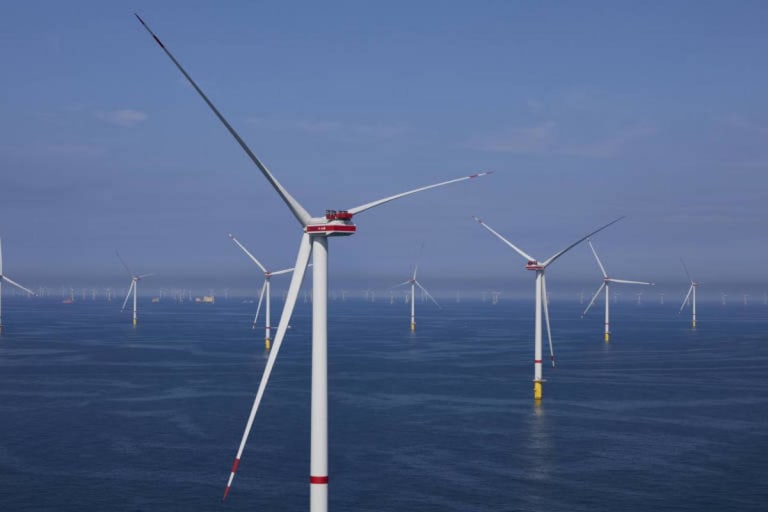
This advantage translates into strategic dividends. China is in a more resilient position to deal with the volatility of oil markets driven by the war in Iran, thanks to its leadership in clean energy. Internally, as of May 2026, the country accounted for 49% of the global installed solar capacity, 50% of wind capacity, and 63% of global electric vehicle (EV) sales – numbers that no other country approaches.
The Prominent Role of Solar Energy and Batteries
Solar and battery technologies were the only ones to register positive net investment in the first half of 2026, with US$ 4 billion and US$ 1.1 billion, respectively. A significant portion of this growth is driven by the global expansion of data centers. Some automakers, such as GM, Ford, and Honda, have redirected battery investments for EVs towards stationary energy storage to meet the growing demand from data centers.
While China and other countries require a percentage of the electricity consumed by their data centers to come from clean energy, the United States does not yet have an equivalent policy, relying primarily on gas turbines to power these facilities. It is important to note that global data on the manufacturing of stationary storage systems is still limited, suggesting that the true scale of worldwide storage expansion may be underestimated.
The Rise of Chinese Clean Energy Exports
China‘s share in clean energy exports has surged. In 2022, the country exported 68% of global solar components, 49% of lithium-ion batteries and their components, and 16% of EVs. By 2025, these numbers jumped to 74% for solar components, 61% for lithium-ion batteries, and 25% for EVs. This year, Chinese exports of solar products have already grown 60% annually, driven by global demand for energy alternatives.
The report’s authors highlight that these figures likely underestimate China’s true dominance, as Chinese companies increase the manufacturing of clean technologies outside of China to mitigate tariffs. Chinese EV exports nearly doubled, from US$ 24.1 billion in the first half of 2025 to US$ 43 billion in the same period of 2026. Globally, the adoption of electric vehicles continues to grow, with China heading towards a record in exports, while in the United States, EV sales saw a year-on-year drop of 27% by June 2026, coinciding with the end of a federal incentive.
China reaffirms its leading role in the global energy transition, consolidating a strategic advantage that is increasingly vital in a world marked by geopolitical uncertainties and the urgency for sustainable energy solutions. The report serves as a wake-up call for the United States and other economies, indicating the pressing need to accelerate investments and policies to keep pace with the clean energy revolution.