
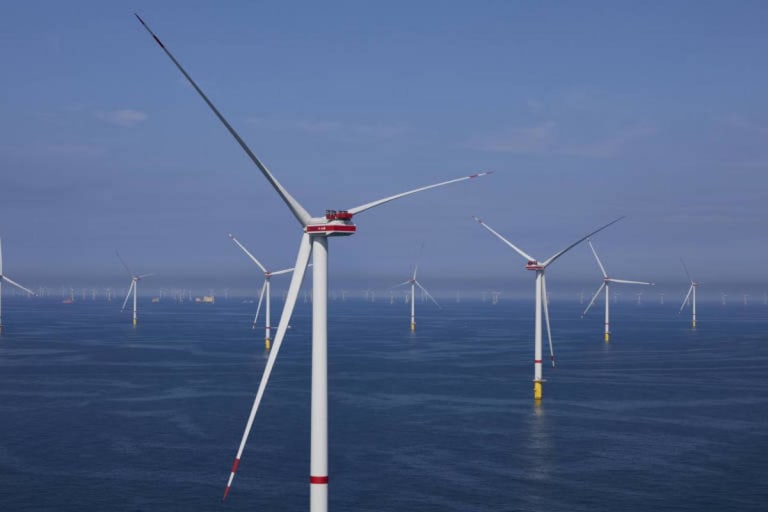
Accelerating the energy transition: The path to the 2030 climate target requires more than double the current expansion of renewables.
The global race to combat climate change faces a significant challenge: the expansion of renewable energy must more than double to reach the ambitious objective set for 2030. Although 2023 saw a record in the adoption of clean energy sources, the current pace is insufficient to meet global climate goals.
During COP28 in Dubai, more than a hundred nations pledged to triple the world’s renewable energy capacity by the end of this decade. This agreement reflects the urgency of decarbonizing the global economy and mitigating the effects of planetary warming. However, the latest data indicates that effective implementation is still falling short, demanding a collective and accelerated effort.
Installed Capacity and the 2030 Gap
A joint report, prepared by the International Renewable Energy Agency (IRENA), the COP31 presidency, and the Global Renewables Alliance, reveals that the total installed capacity of renewable energy reached 5.15 terawatts (TW) at the end of 2025. This figure is less than half of the 11.2 TW target stipulated for 2030.
To reach this level, the world would need to add an average of about 1,200 gigawatts (GW) of capacity annually by the end of the decade—a considerable jump from the little more than 690 GW added last year.
The electrification of various sectors is seen as a fundamental pillar for this transition. This implies replacing technologies that rely directly on burning fossil fuels, such as gas heating systems and gasoline vehicles, with cleaner electric alternatives. However, for this electrification to effectively contribute to combating climate change, the electricity generated must come primarily from renewable sources, such as solar and wind.
Energy Efficiency and Grid Investments: Critical Bottlenecks
Beyond the expansion of renewable capacity, energy efficiency and electrical grid infrastructure are critical points. Improvements in energy distribution and waste reduction are progressing at a slower pace than necessary. The energy efficiency improvement rate in 2025 was about 2%, below the 4% annual target set to fulfill the COP28 commitment.
Francesco La Camera, Director-General of the International Renewable Energy Agency, stated:
Renewables can still close the gap by 2030, but energy efficiency is falling behind. Electricity demand is growing faster than expected, and grid infrastructure has failed to keep pace.
Grid infrastructure, in particular, requires massive investments. Between 2026 and 2030, nearly $1 trillion annually is needed for grid modernization and expansion, a sum significantly higher than the $525 billion invested in 2025.
A Call for National Economic Action
Ben Backwell, CEO of the Global Renewables Alliance, underscores the need for governments to prioritize renewable energy as a national economic imperative. To achieve this, it is crucial to invest in expanding electrical grids, deploying energy storage systems, and the electrification of homes, transport, and industries.
The expectation is that COP31, hosted by Turkey, will deepen discussions on expanding electricity use across more sectors and evaluate the voluntary adoption of a new 2035 target: that 35% of total final global energy consumption comes from clean sources.
RELATED NEWS
 Germany Unveils He Dreiht, Its Largest Offshore Wind Farm, with 960 MW to Power 1.1 Million Homes
READ MORE
Germany Unveils He Dreiht, Its Largest Offshore Wind Farm, with 960 MW to Power 1.1 Million Homes
READ MORE
 New molecular refining technique promises to cut energy consumption in the oil industry
READ MORE
New molecular refining technique promises to cut energy consumption in the oil industry
READ MORE
 Marine biodiesel in Rotterdam outperforms conventional fuels following historic price drop and Middle East conflict
READ MORE
Marine biodiesel in Rotterdam outperforms conventional fuels following historic price drop and Middle East conflict
READ MORE