
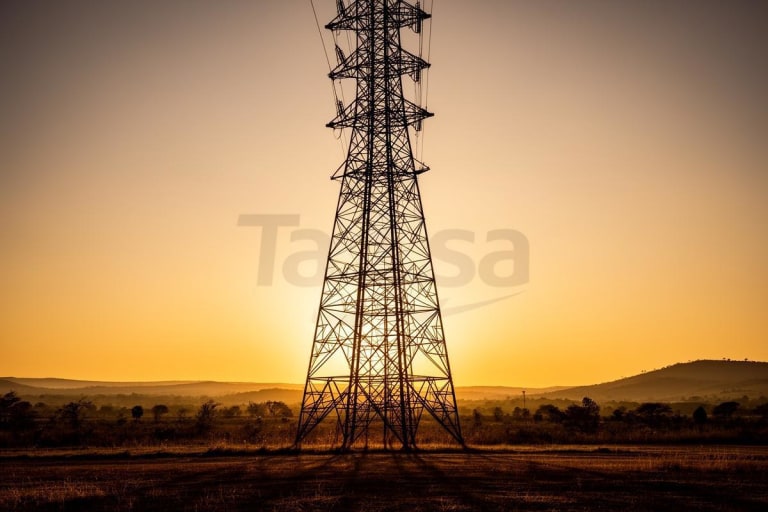
Taesa is preparing to navigate the expiration of key concessions, banking on new auctions, energy storage technologies, and increased climate resilience to sustain its growth in the Brazilian market.
Taesa, one of the giants in Brazil‘s energy transmission sector, is at a pivotal moment in its history. With several major concessions nearing their expiration dates, the company is bracing for an inevitable reduction in its Allowed Annual Revenue (RAP). Management is approaching this shift pragmatically while pursuing alternatives with the federal government to balance the financial equation of its past investments.
There is an expectation that an official decree defining the guidelines for handling these expiring contracts will be issued by the end of 2026. While maintaining an active dialogue with bodies such as the Ministry of Mines and Energy (MME), the Energy Research Office (EPE), and the National Electric System Operator (ONS) remains the priority, the company has not ruled out legal action if a consensus on fair asset compensation is not reached.
Expansion and efficiency strategies
To mitigate the revenue decline, Taesa remains active in seeking new business opportunities. The focus is on participating in auctions, strategic acquisitions—such as the recent incorporation of assets from Energisa—and continuous investment in reinforcing and improving the existing grid. Caution, however, dictates the pace: the company carefully analyzes its debt levels before committing to any new capital expenditure.
One of the most promising fields on the transmission company’s radar is energy storage. The company is evaluating its entry into the country’s first battery auction, scheduled for December. For the board of directors, this move is an organic transition for a firm that already possesses the technical capital required to lead innovations in the segment.
“There might be an interpretation that re-bidding is better for the consumer because it lowers tariffs. To an extent, that is true. There may be other ways to do this. We are already going to see a decline in company revenues, regardless of the chosen model. There is no expectation that [the RAP] will remain at current levels, whether through renewal or re-bidding.”
Resilience in the face of climate events
The impact of phenomena like El Niño has posed a new challenge for the power sector. Taesa has been heavily investing in contingency plans and meteorological monitoring to ensure the integrity of its towers and substations. However, the debate goes beyond preventive maintenance, touching on a core issue regarding the future of national infrastructure.
CEO Rinaldo Pecchio highlights a fundamental point for society: the balance between security and cost. Building structures capable of withstanding increasingly frequent severe storms requires significant financial investment.
The future of Taesa, therefore, is being shaped by the need to maintain financial stability while upholding the responsibility of operating a resilient network. With leverage under control and a clearly defined asset diversification strategy, the company is preparing to navigate the regulatory changes of the coming years without losing its prominent position in the Brazilian energy matrix.