
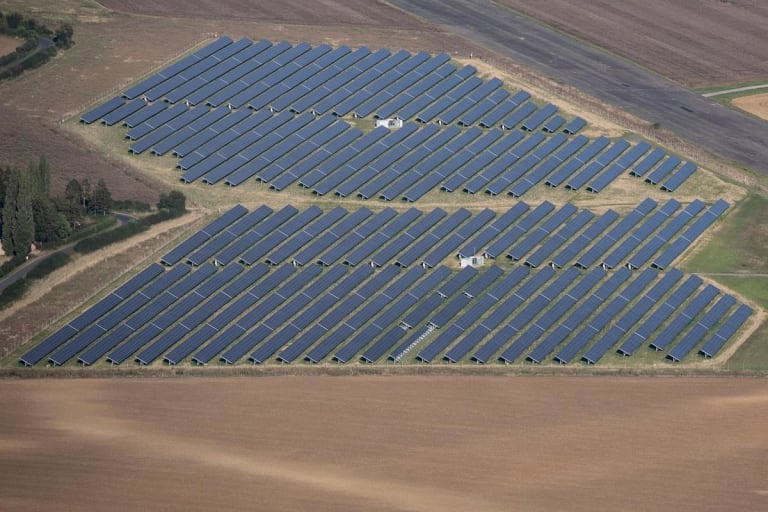
Brazil has slipped to fifth place in the global solar energy ranking, facing regulatory and macroeconomic challenges that slowed the expansion of the photovoltaic sector in 2025.
Brazil’s energy transition encountered a significant obstacle last year. According to the report Global Market Outlook For Solar Power 2026 – 2030, presented by SolarPower Europe during Intersolar Europe, the country left the group of the world’s four largest photovoltaic markets. With the addition of 14.5 GWp in 2025, Brazil now occupies fifth place, surpassed by giants such as China, India, the United States, and Germany.
This result represents a 23% decline compared to the 18.9 GWp recorded the previous year. The analysis, which included technical collaboration from ABSOLAR, reflects the combined contribution of large solar power plants and distributed generation systems, demonstrating that, despite the source’s relevance, external and internal factors have made it difficult to maintain the accelerated growth rate observed previously.
Barriers Hindering the Sector
The less-than-expected performance is attributed to a complex combination of factors. Among the main obstacles are restrictions on connecting new projects, justified by limitations in electrical grid infrastructure and power flow issues, in addition to cuts in renewable generation without proper compensation for investors.
The economic scenario also imposed additional difficulties. The high cost of capital, the instability of the U.S. dollar, and the increase in tariffs on the import of photovoltaic components have raised project costs, jeopardizing the viability of new installations nationwide.
The national electrical system has grown in renewable generation, but without corresponding investment in flexibility mechanisms, electricity storage, and load control.
Paths to Recovery
Even with the loss of position in the global ranking, solar power remains the second pillar of Brazil’s electricity matrix, totaling 70 GWac in operation. The sector has already accumulated investments exceeding R$ 305 billion and has been responsible for creating more than 2.1 million green jobs since 2012, solidifying its role as an economic and sustainability driver.
To reverse the current slowdown, ABSOLAR CEO, Rodrigo Sauaia, advocates for coordinated action among the Ministry of Mines and Energy, ANEEL, and ONS. The proposed agenda focuses on regulatory modernization, with an emphasis on the urgent implementation of energy storage auctions and the reduction of the tax burden on batteries, measures considered essential to ensure the grid can absorb the surplus clean energy produced by the country.