
Kenya has established itself as a global model for energy transition by more than doubling its access to the electricity grid in just ten years, driven primarily by renewable sources.
Kenya’s electrification journey is one of the most significant success stories of the last decade. Between 2013 and 2023, the nation surged from 37% coverage to an impressive 79%. According to data from the International Energy Agency (IEA), the country has laid out a solid roadmap to guarantee electricity for its entire population by 2030, now focusing on achieving universal service in rural and remote areas.
The effort to democratize energy goes beyond statistics. The social impact is immediate, with the electrification of basic health units, educational institutions, and small local businesses. The Last Mile Connectivity Project (LMCP) has been the operational arm of this strategy, integrating millions of citizens into the basic infrastructure and maintaining the pace of expansion with the goal of reaching hundreds of thousands of new households throughout 2024.
The leadership of solar and renewable energy
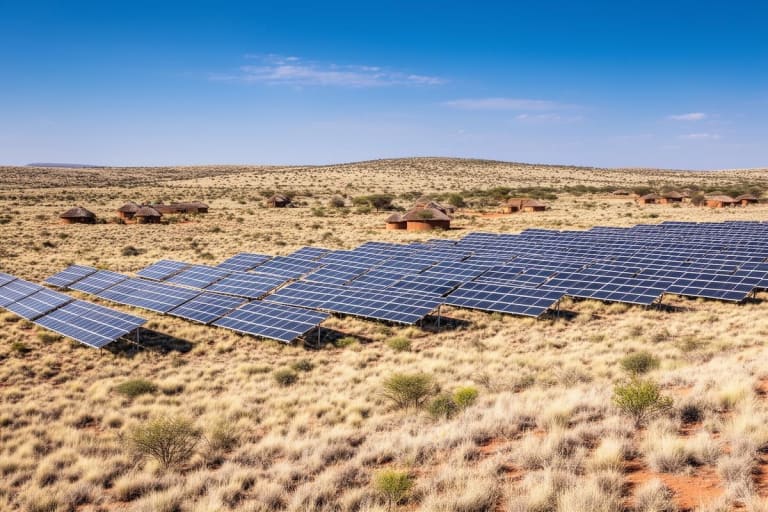
The Kenyan advantage lies in the intelligent integration of technologies. Rather than relying solely on the expensive and slow expansion of the conventional grid, the country is leading the adoption of small-scale solar systems. Currently, Kenya dominates three-quarters of the residential solar kit market in East Africa, allowing one in five households to operate independently or through mini-grids.
The country’s energy mix is now a prime example of sustainability, with nearly 90% of its electricity generated from clean sources. Geothermal, wind, and solar technologies form the central pillar of this system.
The Lake Turkana wind project, recognized as the largest facility of its kind on the African continent, exemplifies how the territory’s natural potential is converted into sustainable socioeconomic progress.
Beyond electricity: the focus on clean cooking
The commitment to decarbonization extends beyond light bulbs and motors. The government has intensified efforts to replace traditional cooking methods, which still rely on polluting fuels, with safer and cleaner technologies. The adoption rate for these practices jumped from 10% to 30% in just a few years, with an ambitious plan for full coverage set for 2028.
To ensure this growth remains sustainable, Kenya is redefining its National Energy Policy for the 2025-2034 decade. With new regulations approved in 2024, the state is encouraging private capital entry into the distribution sector, seeking to modernize grids to support the growing demand of a country that is increasingly positioning itself as a technological and sustainable hub in East Africa.