Africa’s explosion of solar energy is outpacing local governments’ monitoring capacity, creating a scenario of accelerated expansion that challenges the continent’s official energy planning.
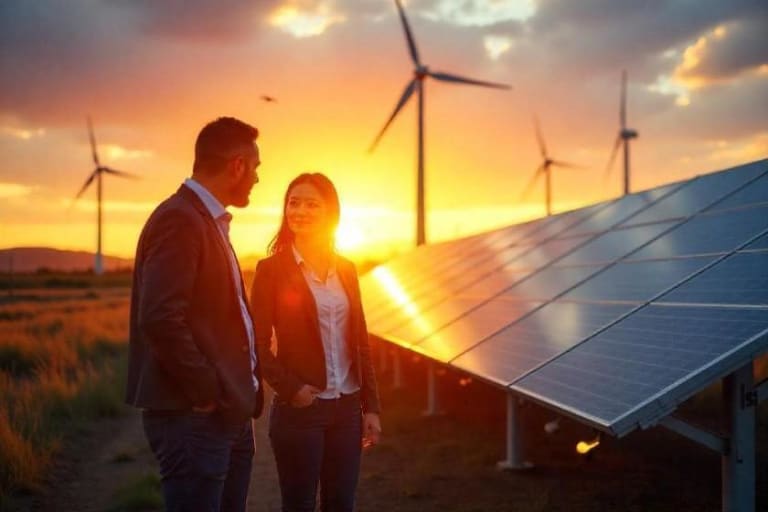
The energy transition on the African continent is gaining speed, leaving official statistics behind. According to a recent study conducted by the Ember think tank in partnership with the African Tech Futures Lab, the region is set to achieve its third consecutive record in solar capacity by 2026. The forecast indicates an impressive 45% jump compared to the previous period, with a projected installation of 17 GW of photovoltaic power this year alone.
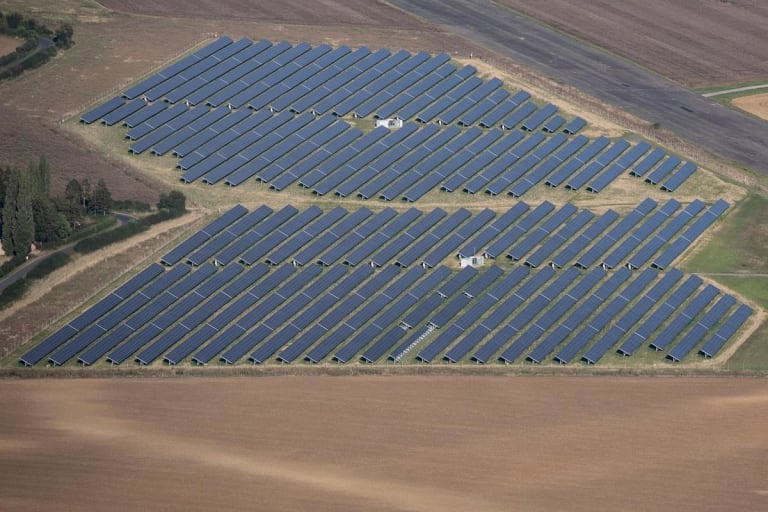
The driver of this change is distributed generation — systems installed in homes, businesses, and industries that operate independently of large centralized grids. This segment already accounts for about 75% of new solar projects. The data reveals significant geographic decentralization: 36 of Africa’s 54 countries are expected to reach record deployment volumes by 2026, with 19 nations showing annual growth exceeding 100%, notably Egypt, Zimbabwe, and the Democratic Republic of Congo.
The Statistical ‘Blind Spot’ Challenge
The rapid adoption of photovoltaic panels has become a challenge for state monitoring. The mapping was based on tracking equipment exports from China, assuming a 73% conversion rate to installation. This methodology exposes a structural weakness: most governments lack efficient mechanisms to monitor the progress of systems outside the main grid.
Currently, only 14 African countries provide data on distributed generation, and even in these cases, there are indications that official figures underestimate the reality.
Experts warn that while access to clean energy is becoming more democratic, the process is happening in a disorderly manner, out of alignment with national energy strategies. South Africa, historically the main importer of panels, is seeing its influence wane, now representing less than 20% of new installations, which demonstrates unprecedented market fragmentation on the continent.
Between Solar and Fossil Fuels
Photovoltaic advancements paint a promising future, but Africa’s energy reality remains complex and multifaceted. While solar energy advances in a decentralized manner, governments like Namibia’s continue to leverage global geopolitical instability to attract investments in oil and gas. The objective for these countries is to ensure internal energy security and expand regional export capacity.
This duality suggests that Africa is not moving towards a linear transition. The continent is experiencing a period of accelerated transition, where the urgency for affordable, renewable electricity collides with the desire to exploit fossil resources.
For the clean energy sector, the biggest challenge in the coming years will be to integrate this accelerated and often chaotic growth into public policies that can measure, regulate, and optimize the infrastructure already operating in practice.