Brazil’s first battery auction sparks debate: who will pay for the stored clean energy? Experts point to market solutions.
The imminent launch of Brazil’s first battery auction, scheduled for December, brings a crucial point for the advancement of clean energy into sharp focus: determining who will finance the essential energy storage infrastructure. This event, aimed at further integrating renewable sources into the National Interconnected System, is already generating intense debate within the electric sector regarding the fairest and most efficient way to fund these projects.
At the heart of the discussion, analysis from Pedro Rodrigues, a partner at CBIE (Brazilian Center for Infrastructure), highlights that the issue of costs has become the main obstacle even before the bidding process begins. How these investments will be remunerated is fundamental to ensuring the stability and growth of renewable generation in the country, preventing the advancement of sustainability from being stalled by financial impasses.
The Urgent Need for Storage
The massive expansion of sources like solar energy and wind energy, while vital for Brazil’s energy transition towards a more sustainable future, has introduced a challenge: the desynchronization between production and demand. Pedro Rodrigues emphasizes that batteries are the answer to this imbalance, offering the necessary flexibility to the electric sector.
He points to the phenomenon of curtailment, where in 2025, 20% of the energy that could have been produced by wind and solar power plants was ‘thrown away’ due to restrictions imposed by the ONS (National Electric System Operator), which was forced to cut energy generation to prevent a blackout.
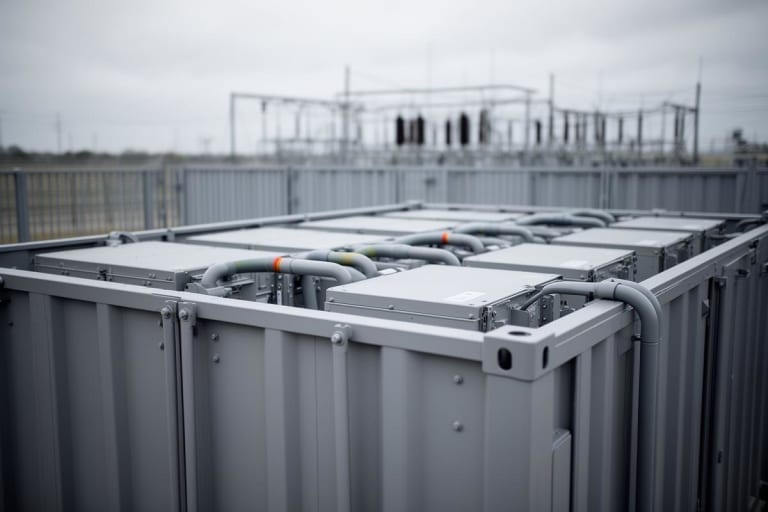
Energy storage systems allow surplus energy produced during periods of high supply and low demand to be stored and released when consumption increases. This not only minimizes waste but also enhances system agility, enabling batteries to be activated quickly to balance supply.
For Rodrigues, the very necessity of this auction highlights a gap in planning, which prioritized the construction of a robust renewable park without the concurrent development of the infrastructure and economic mechanisms to fully leverage it.
The Contracting Impasse and Cost Allocation
Law 15,269 of 2025 already stipulates that the costs of contracting batteries must be shared exclusively by energy generators. However, the legislation left the calculation method and which projects would be included open to interpretation.
The technical area of Aneel (National Electric Energy Agency) proposed that all generators contribute, but with varying percentages based on their operational flexibility. Aneel‘s suggestion divides plants into four groups, with the least flexible bearing 100% of the unit charge value, and the most flexible bearing 25%.
This proposal, however, faces strong opposition. Hydroelectric and thermoelectric generators argue that they already provide this flexibility to the system and are therefore not the cause of renewable energy curtailments. On the other hand, wind and solar energy companies reject the concentration of costs on their sources, fearing an impact on the viability of new projects.
The situation, as observed by Pedro Rodrigues, is already mobilizing the sector’s lawyers.
Even before it begins, the auction has brought back the electric sector’s favorite question: who pays the bill?
Stated Rodrigues, highlighting the dilemma.
The Market Solution for Financing
Given the impasse, Pedro Rodrigues proposes an alternative: a model where batteries are remunerated by the dynamics of the energy market. Instead of a coercive cost-sharing, storage systems could be charged when supply is high and prices are low, and discharged during periods of higher demand and elevated prices. The difference in values would be sufficient to finance the projects, incentivizing investment without overburdening a specific group of generators.
For this solution to work, Rodrigues stresses the need for hourly electricity prices to reach both generators and consumers more effectively. This natural economic signal would encourage storage during periods of excess supply and the return of energy to the grid during times of greatest need.
The bill can, indeed, be paid by the market, with the right price and incentive for those who store. What is not acceptable is paying for a planning failure, without price signals, deciding by shouting who to push the bill onto
Argued Rodrigues, reinforcing the view that the debate should go beyond simply choosing a payer group.
The discussion on the financing of the battery auction is crucial for the future of clean and sustainable energy in Brazil. Adopting a model that remunerates energy storage through the market, as suggested by Pedro Rodrigues, could be the key to ensuring the security and flexibility of the electric sector, while simultaneously promoting more efficient and fair investments.
The final decision will determine whether Brazil will have resilient energy infrastructure, driven by clear economic signals, or if it will continue to pay for planning failures through contested cost-sharing. As Rodrigues concludes, the distinction is clear:
In the market, the battery pays for itself. In cost-sharing, someone pays for the battery