The growing Artificial Intelligence “cloud” hides a significant environmental cost. Discover how data centers demand critical resources and the urgency for effective regulation for a sustainable future.
The digital infrastructure powering Artificial Intelligence (AI) and the global economy does not operate in a vacuum. Instead, it consumes colossal amounts of energy and water, generating an environmental impact that, according to experts, is invisible yet significant. Judge Vanessa Carolina Fernandes Ferrari, a doctor of civil law from the University of São Paulo (USP) and author of the book ‘Artificial Intelligence and Environmental Civil Liability: The Era of (In)sustainable AI’, has been an active voice in this debate, warning of the pressing need for stricter and more preventive regulation for data centers.
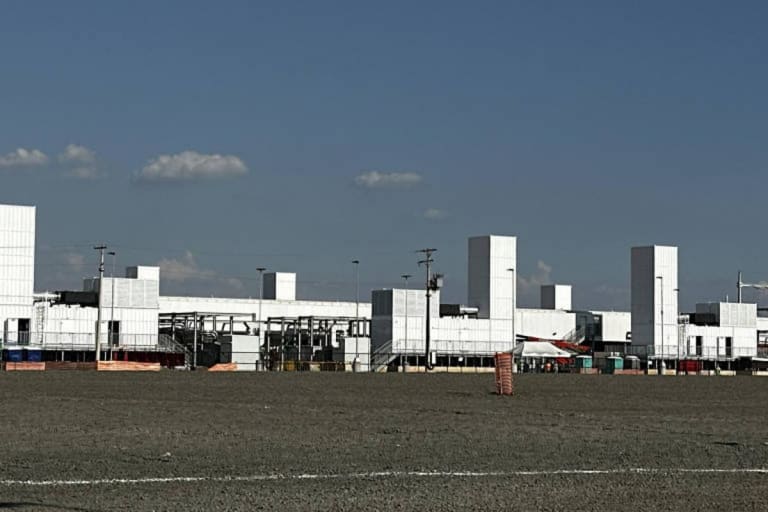
The discussion gains urgency as the world witnesses a boom in the construction of these mega-structures. The central point raised by Vanessa Ferrari is that, despite not emitting visible smoke like traditional industrial chimneys, data centers exert considerable pressure on the very assets that environmental law has always sought to protect: water resources for cooling, industrial-scale energy, land, and even the acoustic tranquility of communities.
Innovative International Approaches
In response to this reality, jurisdictions worldwide are already implementing innovative measures. In the United States, the governor of Pennsylvania established a differentiated licensing regime for data centers exceeding 25 megawatts of demand. Projects that make a prior environmental commitment to the state enjoy a faster approval process, while others follow a full review.
This model demystifies the idea that economic growth and environmental protection are mutually exclusive, offering agility as a reward for sustainability. The initiative also imposes transparency, prohibiting confidential agreements and requiring public reports on water and energy consumption.
On the other side of the globe, Australia has adopted an even more decisive approach. The Australian government has linked the very connection of data centers to the power grid to strict mandatory conditions. These include prioritizing the use of renewable energy, high water efficiency, the entrepreneur covering the infrastructure costs themselves, and strategic location away from residential areas.
These policies reflect the perception that waiting for damage before attempting to repair it is an ineffective and costly strategy, especially for an industry that, according to Australian projections, could jump from 3% to 13% of the country’s total electricity consumption in a decade.
Brazil’s Reality and the Cloud Dilemma
In Brazil, the current scenario presents a concerning contrast. While the Senate approved the Redata program, which offers tax incentives to attract data centers, environmental regulation is moving slowly. An investigation by Mongabay revealed that 68 connection requests for data centers were filed with the Ministry of Mines and Energy by December 2025.
Alarmingly, many of these proposed locations overlap with indigenous lands and quilombola territories undergoing regularization, raising serious questions about socio-environmental justice and land-use planning.
Recently, Conama (the National Council for the Environment) took an important first step by recognizing data centers as a potentially polluting activity. However, detailed regulation is still pending. Vanessa Ferrari criticizes the current model, stating:
Incentive without conditions is not industrial policy—it’s a double surrender, fiscal and environmental.
This observation highlights the risk of the country foregoing revenue and compromising its natural resources in the name of unbalanced development.
Paths to a Sustainable Policy in Brazil
The lessons from Pennsylvania and Australia offer a clear roadmap for Brazil. Pennsylvania’s expertise demonstrates that incentivizing faster licensing can be conditioned on robust environmental commitments, dispelling the false dichotomy between attracting investment and protecting the environment. The Australian approach, focused on grid connection, suggests a strategic control point.
In the Brazilian context, this “gateway” already exists: all large consumers undergo an access review governed by Aneel (the National Electric Energy Agency) and ONS (the National Electric System Operator). This single federal point of contact represents a unique opportunity to establish uniform environmental conditions nationwide.
Integrating criteria for water efficiency and the use of renewable energy into this process would be a significant advancement toward a cleaner and more sustainableenergy transition for the digital infrastructure sector.
Brazil’s Opportunity for Leadership in Digital Sustainability
Brazil finds itself in a strategic position. While Northern Hemisphere countries are already grappling with the challenge of regulating a largely established data center infrastructure, the growth cycle for this digital infrastructure in Brazil is just beginning. This initial phase presents a golden opportunity to implement proactive and well-designed regulations, avoiding the accumulation of future environmental liabilities.
Brazilian environmental law, with its strict liability for civil damages, does not forgive damage that has already occurred. Therefore, preventive action is crucial. For Vanessa Carolina Fernandes Ferrari, a system that only reacts after the damage has been done is already failing. It is imperative that the law anticipates the growth of the AI “cloud,” ensuring that technological advancement synonymous with a sustainable and environmentally responsible future for Brazil.