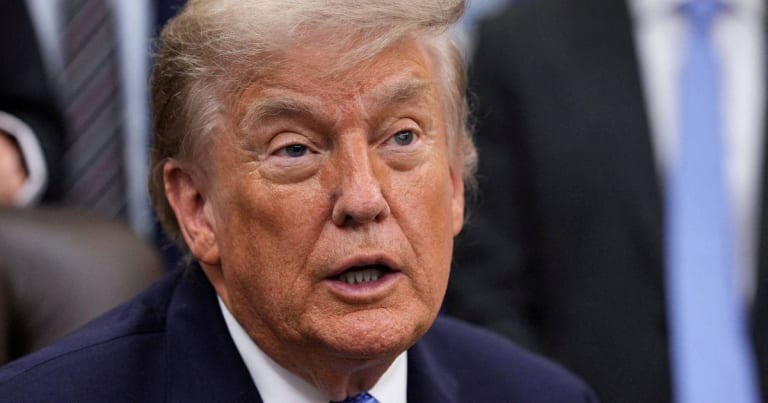
Former US President voices support for restricting diesel exports amid soaring prices.
Amidst fuel prices reaching historic highs, former U.S. President Donald Trump has declared his support for a ban on diesel exports. The statement comes at a strategic moment, with election campaigns underway for the November midterm elections, where energy policy is proving to be a sensitive issue for American voters.
The unprecedented surge in diesel prices, both in the United States and Europe, is a direct reflection of geopolitical tensions, including conflicts in Iran and Ukraine. These situations have significantly impacted the export flow from crucial producing nations like Russia, Saudi Arabia, and the United Arab Emirates, creating a bottleneck in the global market.
Impact on Prices and Elections
The proposal to restrict diesel exports from the country, advocated by Trump and several Republican candidates, directly aims to alleviate pressure on American consumers’ wallets. Proponents argue that the measure would be crucial to ensuring domestic supply and curbing inflation affecting essential goods, from food to other products.
The former president’s rhetoric echoes the sentiment of some politicians running for Congress. Senator Dan Sullivan, for example, argued in a statement that American diesel should prioritize U.S. families, especially with winter approaching. Senator Ashley Hinson and Representative Mike Rogers have also spoken in favor of government action to control prices.
Divergent Positions and Energy Sector Warnings
Despite the public support from Trump and parts of the Republican party, the idea of banning diesel exports is not unanimous and raises significant concerns within the energy sector. Experts and officials warn that such a measure could generate unintended side effects.
Energy Secretary Chris Wright expressed skepticism, indicating that a ban could result in a buildup of diesel on the U.S. Gulf Coast. This, in turn, would lead refineries to reduce their overall production, negatively impacting the availability of other fuels, such as gasoline. He emphasized the need to increase supply, not restrict it, to stabilize prices.
Energy Secretary Chris Wright expressed skepticism, indicating that a ban could result in a buildup of diesel on the U.S. Gulf Coast. This, in turn, would lead refineries to reduce their overall production, negatively impacting the availability of other fuels, such as gasoline. He emphasized the need to increase supply, not restrict it, to stabilize prices.
“If you start putting barriers on flows, you rapidly reduce production, and you have less supply. We need more supply, not less.”
Other prominent figures, such as Interior Secretary Doug Burgum and Todd Staples, president of TXOGA (Texas Oil & Gas Association), share this view. They argue that a ban could trigger retaliatory actions from exporting countries, harm domestic jobs, and put U.S. allies in a vulnerable position, forcing them to rely on sources like China and Russia to meet their energy needs.
The Complexity of Energy Geopolitics
The discussion on diesel exports fits into a complex global context, marked by conflicts and the pursuit of energy security. Europe, in particular, faces a structural diesel shortage and relies heavily on American exports. A restriction on this flow, even if temporary, could have an impact considered “damaging to some key U.S. allies,” according to Jim Mitchell, director of oil analytics at the consultancy Wood Mackenzie.
In conversations with Ukrainian President Volodymyr Zelenskiy, Trump also mentioned Ukrainian attacks on Russian refineries, acknowledging their impact on diesel production. The search for a solution to the conflict in Ukraine was cited as an agenda item for both leaders, indicating the interconnection between energy security and global geopolitical stability.