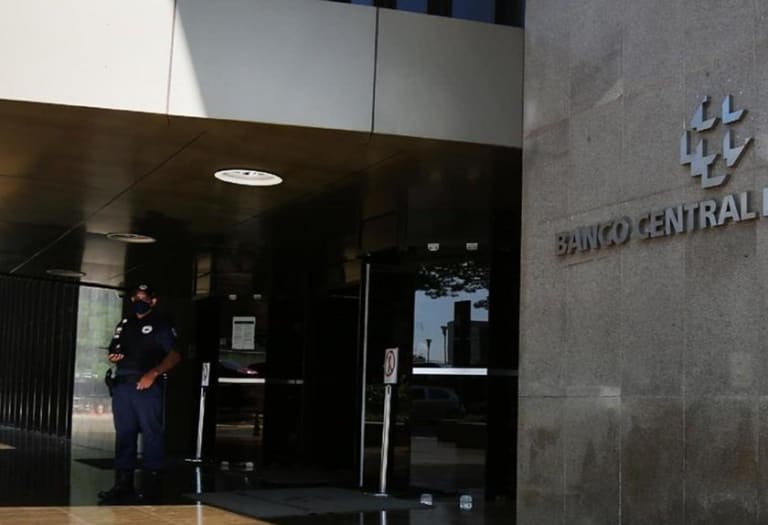
Financial market reacts to electoral announcement and Ibovespa closes higher.
Thursday (17) was marked by volatility in Brazilian financial markets. Despite an optimistic opening, the main stock market index, the Ibovespa, initially fell by 1.24%, reaching 183,242.27 points. The instability was driven by a series of factors, including the release of electoral polls, interest rate decisions in the United States and Brazil, and a government announcement that generated apprehension.
At the center of attention was the 15% adjustment to the Bolsa Família program, announced just weeks before the first round of elections. The minimum benefit was raised from R$600 to R$691 per family, with the average increasing to R$777.
This measure, considered by economists like André Galhardo, chief economist at Análise Econômica, a “very bad message for the market” and “purely electoral” in nature, intensified concerns about the fiscal scenario.
For many investors, fiscal issues remain a watershed in evaluating future political scenarios, making assets more sensitive to announcements that could impact public spending.
However, the market managed to reverse its losses. By the end of the trading session, the Ibovespa closed with a gain of 0.24%, finishing at 185,992.03 points. The spot dollar, on the other hand, fell by 0.23%, quoted at R$5.1393.
In parallel, international markets showed a positive scenario. American stock exchanges, known as Wall Street, recorded significant gains. This movement was favored by falling oil prices and a decrease in U.S. Treasury yields (Treasuries).
Oil, after a period of uncertainty linked to Middle East tensions, closed the day lower. Brent crude in London fell 0.95% to US$104.82, and WTI in the U.S. declined 0.51% to US$101.91, reflecting diplomatic signals and the resumption of supply by Saudi Arabia.