
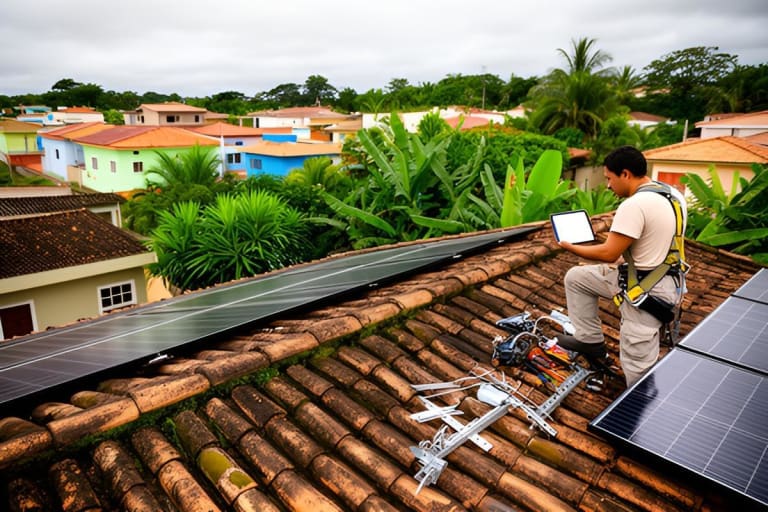
The solar energy market in Brazil is undergoing a transition in 2026, marked by a slowdown in the installation of traditional photovoltaic panels and a strong rise in batteries and the infrastructure for electric vehicles.
The distributed generation (DG) sector started 2026 at a slower pace, reflecting a significant contraction in new connections and the import of photovoltaic modules. According to the Distributed Energy Solutions Strategic Study, prepared by Greener, the country reached 53 GW of installed capacity by June. However, the volume added in the first six months of the year was 3.97 GW, a 23% decline compared to the same period last year.
The slowdown affected projects of different sizes in distinct ways. While minigrid projects saw a 33.7% drop in added capacity, microgeneration remained almost unchanged, with only a 0.8% decline. In the commercial sector, companies face double challenges: although the average monthly budget requests rose to 25 per company, the conversion rate stalled at 18%. High interest rates, banking credit restrictions, and fierce price competition continue to limit the closing of new deals domestically.
Operational challenges and rising import costs
The supply chain also contracted sharply. Imports of domestically manufactured solar panels totaled 5.5 GWp in the first half of the year, a 48% drop from 2025 levels. This decline was driven mainly by centralized generation, which fell 82%. Despite the overall volume decline, tax costs continue to weigh on company budgets, with a 25% Import Tax being the main impact factor on equipment value.
Another operational hurdle that gained prominence was power flow reversal, a problem affecting 38% of the country’s solar integrators. Although the resolution rate for these incidents improved to 50%, half of the cases remain unresolved by utilities. Meanwhile, the market is dealing with a shift in consumption patterns: the residential segment has expanded its share and now accounts for 65% of installed capacity, driven by the pursuit of savings on electricity bills.
Diversification with Batteries and Electric Mobility
Faced with a decline in conventional systems, companies in the sector are finding new growth avenues in the sale of hybrid solutions and urban mobility. Energy storage with batteries emerges as the primary alternative to ensure supply reliability and protect critical loads. A study by Greener shows that 86% of integrators already market hybrid systems, driven mainly by consumers’ search for energy autonomy and continuity of activities amid grid instability.
The consumer’s priority has shifted; the quest for reliability and protection against power interruptions has become the main driver for adopting storage systems in the country.
At the same time, the expansion of the electric vehicle fleet — which reached 837,000 units — has spurred the charging infrastructure market. Currently, 63% of integrators already operate vehicle chargers, primarily serving condominiums and commercial establishments. This diversification move is complemented by growth in operation and maintenance (O&M) services, solidifying a scenario where technical and commercial adaptation has become essential for survival and growth in the Brazilian energy market.