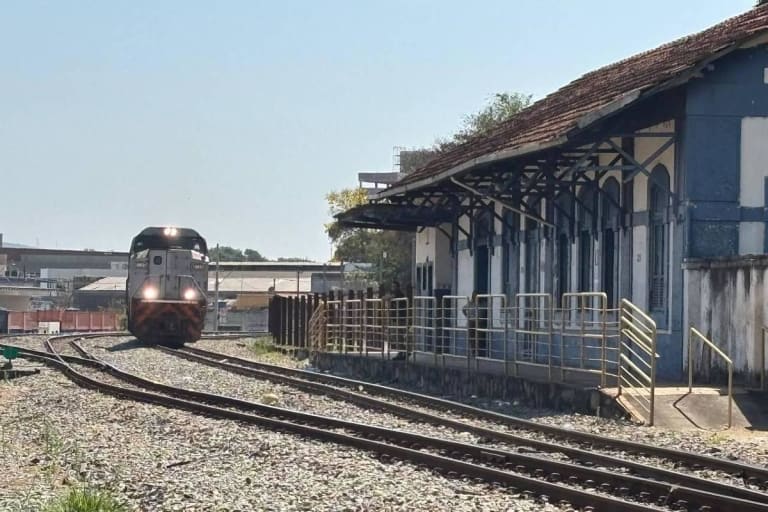
The implementation of semi-autonomous driving systems on VLI trains has surpassed efficiency targets, cutting diesel consumption by 8% and reinforcing the company’s commitment to sustainability.
VLI, a major player in the rail logistics sector, has achieved significant results in optimizing its operations by adopting semi-autonomous driving technologies.
The initiative, which is part of the company’s decarbonization strategy, recorded an average 8% reduction in diesel fuel use across its primary freight corridors.
The gains were observed especially along the routes connecting Tocantins to the Port of Itaqui, on the North-South Railway, and the corridor linking Espírito Santo to the Port of Santos.
The performance exceeded the operator’s initial estimates, cementing the effectiveness of applied intelligence within Brazil’s rail network.
Technology driving energy efficiency
The solution, which has been scaling up over the past three years, operates via advanced software that takes control of acceleration, braking, and speed maintenance once the train reaches 8 km/h.
The system analyzes train dynamics and track conditions in real time to calculate the most efficient driving method.
“The tool adjusts crucial trip parameters, ensuring that the optimized driving plan reduces fuel waste without compromising the operational flow of the railways.”
Between May 2024 and July 2025, the system was used in approximately 60% of the company’s trips.
This intensive use resulted in saving 4 million liters of diesel, highlighting the central role of digitization in pursuing lower-carbon freight operations.
Commitment to sustainable transport
The success of semi-autonomous driving is one of VLI‘s key pillars for making freight transport more sustainable.
In addition to driving technology, the company invests in larger trainsets and more resilient track structures to increase load capacity, alongside conducting technical studies for the future adoption of ethanol as a fuel for its trains.
The impact of this technology goes beyond immediate operational cost reductions.
By optimizing fossil fuel consumption, the company positions itself at the forefront of the energy transition in Brazil’s transportation sector.
With the continuous improvement of digital tools, energy efficiency levels are expected to reach even higher plateaus in the coming years, strengthening green logistics nationwide.