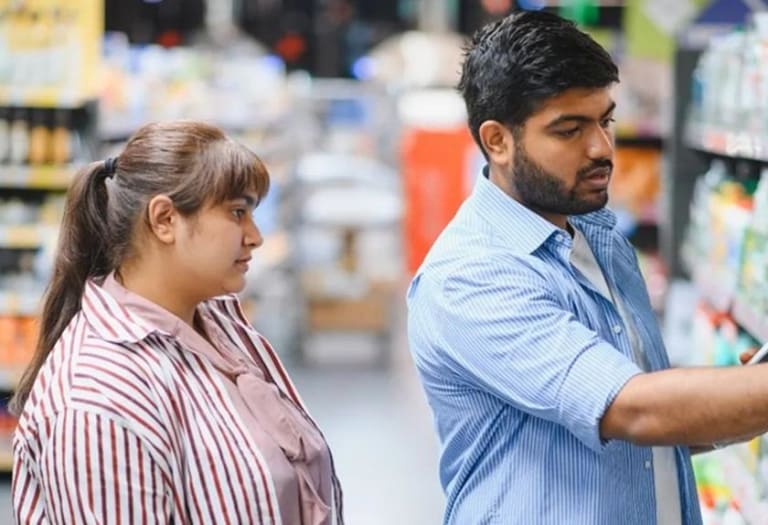
Brazilian physical retail demonstrated surprising resilience, showing customer traffic growth during the pre-election periods of 2018 and 2022, defying expectations of a downturn.
Traditionally, the lead-up to presidential elections is associated with economic uncertainty, prompting many sectors to anticipate a potential slowdown in consumer spending. However, a recent study by Seed Digital offers a different perspective on Brazilian physical retail, revealing a growth trend during the last two election cycles.
The analysis indicates that, contrary to expectations, presidential elections did not deter consumers from visiting street stores and shopping malls, highlighting the sector’s notable robustness even during periods of intense political activity. This finding reshapes the understanding of the direct impact of the election calendar on purchasing behavior.
Consumer Resilience in Election Years
The figures presented by Seed Digital are clear: in September 2018, customer traffic in physical retail saw a 5% increase compared to the same period the previous year. Four years later, in September 2022, this expansion was even more significant, reaching 7.8% compared to 2021.
This positive trend was not limited to September alone. The week preceding the first round of voting also maintained its upward momentum, with an increase of 3.6% in 2018 and 3.3% in 2022. These figures reinforce the notion that people continued to frequent commercial establishments, even amidst a heightened political climate.
The CEO of Seed Digital, Sidnei Raulino, commented on the significance of these results for the sector:
The collected data significantly contribute to tempering the idea that the uncertainty inherent in election periods tends to paralyze consumption in the final stretch of campaigns.
Analysis of Indicators
The detailed data confirms the strength of retail in the pre-election months:
- In September 2018, consumer traffic grew 5% compared to 2017.
- In September 2022, there was a 7.8% increase compared to 2021.
- In the weeks leading up to the first round of voting, growth was 3.6% (2018) and 3.3% (2022).
It is important to note, however, that results for the month of October showed variations. While in 2018 there was a 2.9% increase in customer traffic, in 2022 the month recorded a 3.6% decrease.
Future Prospects for Retail
Although Seed Digital’s data serves as a valuable historical reference for future electoral contests, such as in 2026, the company issues a crucial warning: these numbers are not predictive. The main message is that the retail sector should avoid anticipating scenarios of downturn or excessive pessimism based solely on the election calendar.
The resilience observed in recent cycles suggests that consumer behavior may be more complex and less susceptible to paralysis due to political factors than previously thought. Understanding these nuances is essential for companies to plan their strategies more assertively, without succumbing to generalized perceptions that do not always hold true in practice. The lesson is clear: the sector must focus on adaptability and innovation, regardless of the political landscape.