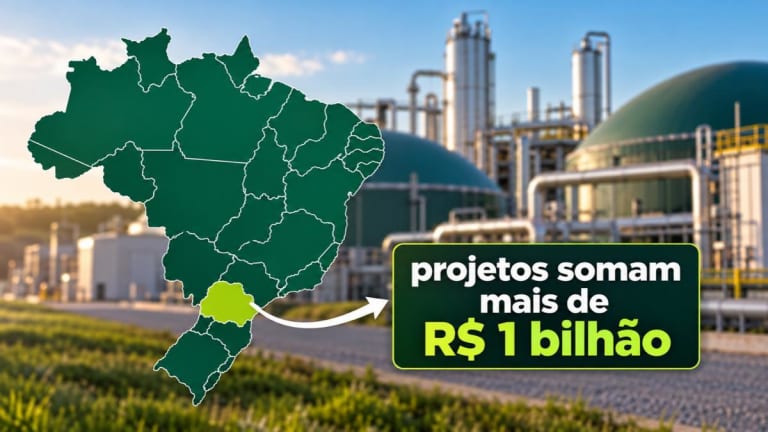
Paraná is consolidating its commitment to energy transition with a biomethane project portfolio exceeding R$1 billion, focusing on integration between producers and large corporate consumers.
The renewable energy sector in Paraná has just received a strategic boost with the alignment of billion-dollar investments targeting the biomethane value chain. During the 7th Meeting of the Biogas and Biomethane Committee, held in October in the capital of Paraná, Supen (General Superintendence of Energy Management) brought together producers and companies with high energy demand, aiming to convert agro-industrial waste into low-carbon fuel.
This move reflects a clear state strategy: transforming environmental liabilities — such as waste and biomass — into a viable energy source for both industrial processes and road freight transport. With accumulated investments surpassing R$1 billion, the plan extends beyond production to include the necessary infrastructure for piped gas distribution.
From Farm to Industry: The Biomethane Cycle
The valorization of biomethane is not just an environmental issue but a pillar of economic competitiveness. For the Superintendent of Energy Management, Sandro Vieira, converting agro-industrial waste offers a unique decarbonization opportunity for Paraná’s industry. The idea is to create a market where surplus raw material from rural activities is converted into a high-value-added fuel.
“Converting these materials into higher value-added biomethane with decarbonization characteristics represents an opportunity for the development of Paraná’s energy sector.”
Connecting Supply and Demand
For the project to be efficiently implemented, the state government has promoted direct dialogue between the public sector and private companies. Representatives from AESA, CRJ Logística, and Renault Geely do Brasil participated in the meeting, sharing their operational needs and technical challenges for energy matrix transition. This interaction is crucial to ensure that the distribution infrastructure is designed to practically meet the consumption profiles of industries and transport companies.
Coordination and Next Steps
Beyond technical feasibility, discussions advanced on regulatory and market issues, such as the implementation of Biomethane Guarantees of Origin Certificates (CGOBs), conducted in partnership with Block-C. ABiogás (Brazilian Association of Biogas and Biomethane) also integrates this ecosystem, working directly to remove bottlenecks that hinder the sector’s scaling.
The Coordinator of Natural Gas, Biofuels, and Renewable Hydrogen at Supen, Thiago Olinda, emphasizes that the government’s role is to act as a facilitator. The expectation is that this institutional coordination will translate projected investments into real infrastructure works, strengthening Paraná‘s position as a renewable energy hub in the country and paving the way for an increasingly sustainable industrial economy.