
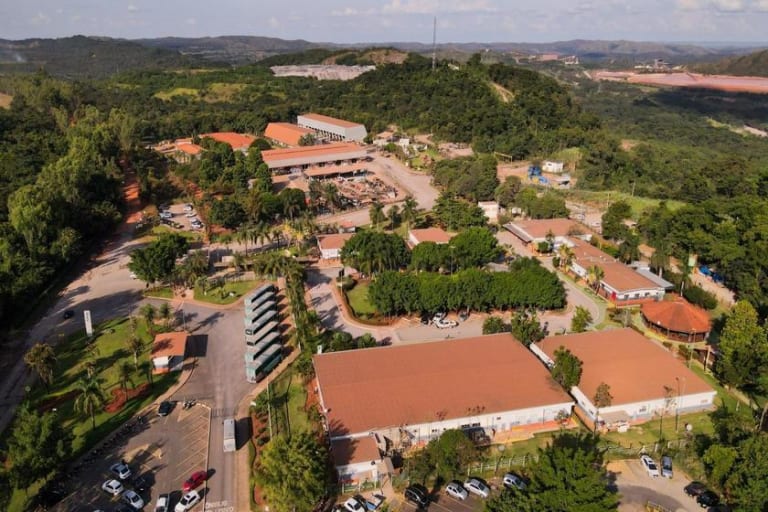
Nexa clinched first place in the Ibram Good Mining Practices Award by optimizing water pumping in its underground mine in Vazante (MG), saving R$ 10.8 million through energy efficiency.
The pursuit of clean energy and more sustainable processes is reshaping the daily operations of large industries in Brazil. A notable example of this evolution comes from the mining sector, where technological innovation and smart resource management go hand in hand to reduce environmental impacts and operating costs.
In this transformative landscape, Nexa achieved a significant milestone by winning first place in the Good Mining Practices Award, presented by the Brazilian Institute of Mining (Ibram). The recognition crowns a pioneering operational flexibility initiative that redefined the use of electric power in one of the world’s largest underground structures.
The most important aspect of the achievement lies in the company’s ability to align mining safety with the fluctuations of the free energy market. By shifting consumption to lower‑cost periods, the company demonstrates that sustainability and profitability can move together in modern industry.
Strategy and Savings at the Vazante Mine
Implemented in 2024, the innovative strategy involved pumping water in the underground zinc mine when electricity was cheapest and easing the system during peak hours. This flexibility reduced regulated costs and expanded arbitrage opportunities in the Electricity Commercialization Chamber (CCEE).
The project emerged from the integration of Energy Management, Mine Operations, Engineering, Electrical Maintenance, Information Technology, and Data Science. Participation in the Ibram award—evaluating 216 submissions nationwide—consolidated the success of a methodology aimed at generating sustainable and scalable financial impacts.
Impressive Results and Massive Flow
As a direct reflection of the new strategy, the Vazante plant, located in the Northwest of Minas Gerais, recorded an average 20% reduction in peak energy procurement. This resulted in an impressive financial savings of R$ 10.8 million for the unit.
It is worth noting that the plant houses the world’s second‑largest water pumping station. Comprising 12 structures, it boasts an impressive flow capacity of 16.8 thousand cubic meters per hour, making the supply of electric power an absolutely critical factor for the continuity of operations.
Strategic Vision and Intelligent Management
Unit general manager Thiago Nunes stated:
This project emerged from the intersection of mining operational knowledge and the intelligence of the energy market, allowing the pumping system to move from being merely an operational asset to playing a strategic role in energy management. By modulating the pumps and leveraging the storage capacity of the reservoirs, we were able to ensure operational safety, avoid exposure to peak energy cost periods, and foster a culture shift based on efficiency, innovation, and sustainability.
The initiative gained even more relevance due to the mine’s electro‑intensive profile, where depth requires continuous ventilation and drainage. The adaptation optimizes resource use and strengthens the company’s global decarbonization goals.
Daily Regulation and Water Control
Operational modulation is carried out daily through the strategic opening and closing of pumps, monitoring electricity prices. The process uses the concept of a temporary horizontal reservoir created in mined voids, which essentially functions as a hydraulic battery.
Between 6 p.m. and 9 p.m., when the Difference Settlement Price (DSP) reaches its highest levels, the reservoir is filled to the maximum and several pumps are shut down. As prices subsequently fall, the cycle is reversed in a controlled manner, ensuring safety with a statistical reliability margin of 95%.
Technological Advancement and Artificial Intelligence
The project stood out for achieving high performance without requiring massive investments in physical infrastructure. The initiative’s evolution now moves toward its third phase, which includes the implementation of Artificial Intelligence (AI) algorithms for autonomous decision‑making.
This new phase will process complex variables in real time, such as market prices, reservoir levels, and inflow rates, further boosting the energy efficiency of the operation.
The award to Nexa underscores an irreversible trend in the industrial sector: deep integration of technology, market intelligence, and energy transition. Initiatives like the one at the Vazante mine demonstrate that the future of mining inevitably hinges on sustainable innovation, paving the way for other operations to replicate similar models of resource conservation and financial optimization in the coming years.