The financial market reacted to the recovery of oil companies and banks, boosting the Ibovespa, while oil prices dropped following relief in Middle East exports.
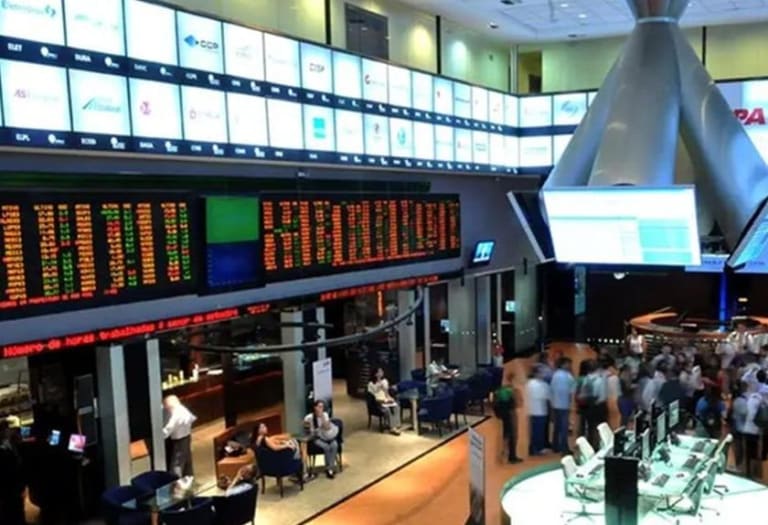
The Brazilian capital market experienced a day of intense financial activity, closing with the Ibovespa in positive territory after overcoming moments of instability. The recovery was sustained by value gains in strategic corporate assets.
At the same time, the global fuel and energy market recorded significant international fluctuations. Falling oil prices ultimately guided the performance of major companies traded on the stock exchange.
In addition to global operational and geopolitical factors, investors remain focused on national electoral polls, which indicate a tight presidential race.
Stock Market Performance and Market Trends
The country’s benchmark stock index ended the session up 0.46%, reaching 183,832.61 points. The result was driven by the performance of Petrobras shares and major banks.
On the other hand, mining company Vale posted a decline of over 2% during the session, weighing on the index. In the foreign exchange market, the spot dollar dipped slightly by 0.18%, trading at R$ 5.2170.
Pressure on International Oil Prices
In the international arena, oil futures contracts closed sharply lower. Price relief came after signs of resumed shipments through the East-West pipeline in Saudi Arabia and the normalization of flow in the Gulf.
Data from the consulting firm Kpler indicate that oil shipments in the Gulf region reached 80% of pre-war levels.
On the ICE exchange in London, Brent crude for December delivery fell 1.71% to $96.16 per barrel. On the Nymex, WTI crude for November dropped 3.48%, closing at $89.38 per barrel.
The balance between global energy supply and local political volatility will continue to drive investor sentiment. Economic agents remain attentive to presidential polling between Lula da Silva and Flávio Bolsonaro, a decisive factor for projections in the coming months.