A milestone in Brazilian engineering, the Henry Borden Power Plant celebrates its centennial, reaffirming its strategic importance for the national power system by combining technological modernization, operational resilience, and a historical legacy fundamental to São Paulo’s industrial development.
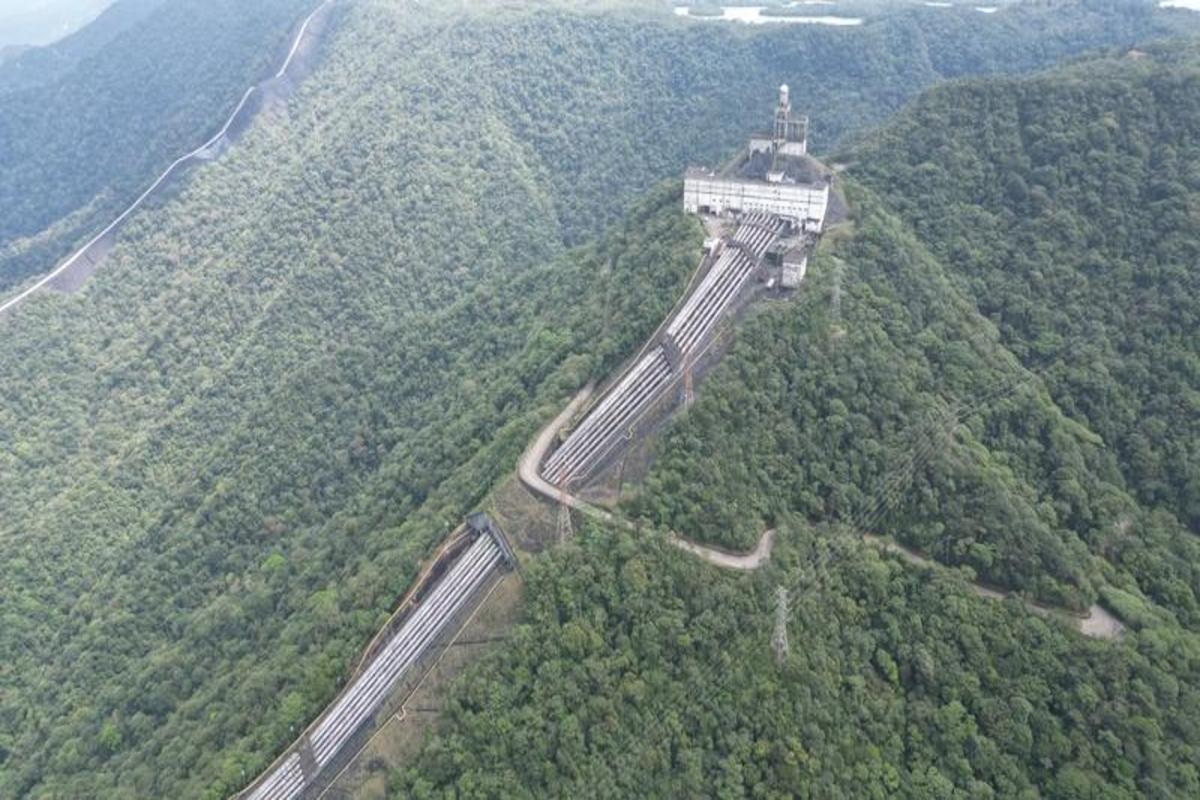
Exactly a century ago, Brazil witnessed one of the greatest achievements in national engineering: the start of operations at the Henry Borden Power Plant. Strategically located in Cubatão, the facility was designed to master the steep drop of the Serra do Mar coastal range and meet the growing demand of the São Paulo industrial hub. What began as a bold infrastructure vision in 1926 consolidated itself as a supporting pillar for the country’s economy.
Today, as it turns 100, the power plant evolves from being merely a historical symbol to positioning itself as an essential asset for the energy transition. With an installed capacity of 889 MW, the complex has undergone extensive modernization processes, ensuring its full adaptability to the demands of a market that increasingly requires renewable sources and operational flexibility.
Technology and resilience in the Serra do Mar
The complex consists of external and underground powerhouses, the latter being an architectural milestone excavated directly into the rock of the Serra do Mar. The use of Pelton turbines allows the plant to make optimal use of the region’s head of water, maintaining high-efficiency performance.
The unit’s relevance to the National Interconnected System (SIN) is demonstrated by its black start capability. In moments of supply instability, Henry Borden possesses the resilience needed to restart its operations without external power support, in addition to delivering its maximum capacity in just 15 minutes, serving as a strategic battery for the country.
Investments and continuous modernization
Emae (Empresa Metropolitana de Águas e Energia), the plant’s operator since 1998, has directed robust investments to ensure the asset’s longevity. Since 2019, more than R$ 338 million has been invested in upgrading the generating units, focusing initially on the underground section, with expansion plans for the external unit.
Rafael Strauch stated:
“Since 2019, we have allocated R$ 338 million to Henry Borden, mainly to upgrade the generating units of the underground plant. Our next challenge is to advance the modernization of the units at the external plant,” says Rafael Strauch, CEO of the company.
These efforts are already bearing fruit: in mid-2026, the plant reached a 92% rolling average availability, demonstrating that a century-old infrastructure can play a leading role in the era of digital technology and sustainable energy.
Cultural preservation and industrial memory
To celebrate the centennial milestone, the Henry Borden Cultural Space was inaugurated, a project integrating memory, education, and innovation. The initiative, carried out in partnership with the Fundação Energia e Saneamento, offers the public an immersive experience through the plant’s trajectory, using virtual reality and inclusive accessibility features.
Claudinéli Moreira Ramos stated:
“The Henry Borden Cultural Space transforms the plant’s centennial memory into an experience of knowledge, education, and appreciation of industrial heritage. Designing this new space was an opportunity to connect energy history with new technologies and bring the public closer to the people and stories that are part of this legacy,” says Claudinéli Moreira Ramos, Executive Director of FES.
Discover the full story of this milestone at: centenariohenryborden.emae.com.br
The plant’s role in the energy future
The longevity of the Henry Borden Power Plant serves as a lesson on the importance of adaptable infrastructure projects. While the 20th century focused on industrialization, the 21st century demands a more flexible and integrated power grid. The plant’s ability to reinvent itself ensures that the Serra do Mar remains a source of progress and energy security for São Paulo and all of Brazil.
The unit’s journey is a reminder that success in the power sector depends as much on engineering robustness as it does on the continuous ability to innovate and integrate technologies to meet the economic and climate challenges of future generations.