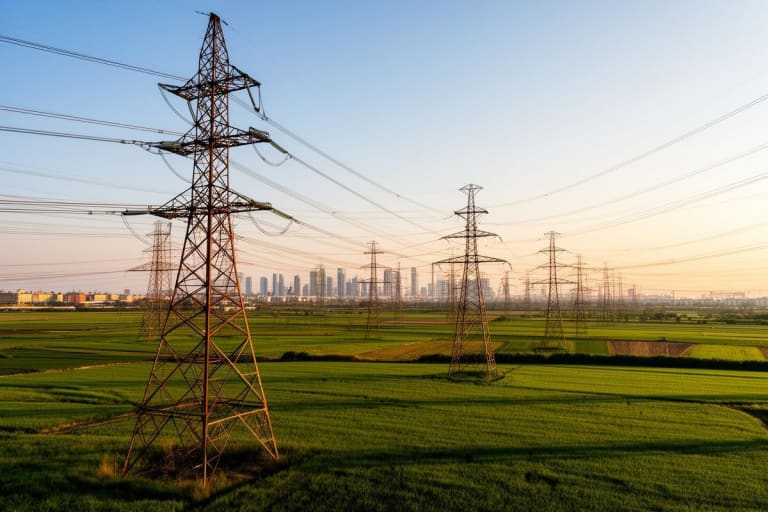
Over 900,000 customers in Rio Grande do Sul are facing power outages due to heavy rains. Weather alerts and the influence of El Niño point to a challenging scenario.
Recent heavy rains lashing Rio Grande do Sul have caused widespread concern and disruption, leaving more than 900,000 utility customers without electricity this Monday. The situation, affecting several regions of the state, highlights the vulnerability of infrastructure in the face of extreme weather events. Families and businesses are facing significant interruptions to their daily routines as utility companies work to restore services.
The most critical aspect of the news is the vast scale of the power outages, an alarming figure that underscores the intensity of the storms. With forecasts indicating continued adverse weather conditions, full restoration of service may be a lengthy and complex process, directly impacting the local population and economy.
Impact on various regions of Rio Grande do Sul
The electricity utility companies operating in Rio Grande do Sul are reporting significant numbers of customers without power.
According to the latest update from CEEE Equatorial, approximately 2,000 utility units were without electricity, with the city of Pelotas leading the list of those affected, totaling more than 90,000 impacted customers and 346 service interruptions.
In Rio Grande, the situation is equally severe, with about 70,000 people without power and 135 units affected. In the capital, Porto Alegre, more than 48,000 customers are facing power outages, with 440 reported incidents.
RGE, another major utility in the state, reported that approximately 314,000 customers in its coverage area were without power. The hardest-hit areas under its responsibility include Canoas, in the Greater Porto Alegre region, as well as the Vale do Sinos and Vale do Taquari regions. The scale of the power cuts reflects the intensity of the heavy rains and strong winds hitting the state.
Weather alerts and spring forecast
The National Institute of Meteorology (Inmet) has issued a high-danger alert for storms in areas of Rio Grande do Sul. The forecast warned of rainfall exceeding 60 millimeters per hour or 100 millimeters per day, with winds above 100 km/h and the possibility of hail.
The state Civil Defense also reinforced warnings, alerting to heavy and intense rain between São Pedro do Sul and Santa Maria, with a very high risk of flooding. These weather alerts were crucial in preparing the population, although the intensity of the events exceeded expectations in some locations.
With the official start of spring this Tuesday, September 22, at 9:05 PM (Brasília time), the weather forecast points to the strong influence of the El Niño phenomenon. According to Climatempo, the season is expected to record rainfall above average across Southern Brazil, with frequent storms. In Rio Grande do Sul, the highest volumes are expected in the north and northwest regions, potentially bringing temperatures below average due to excess cloud cover, rain, and the presence of cold air of polar origin.
Future impact and service recovery
The persistence of extreme weather and the influence of El Niño suggest that Rio Grande do Sul may continue to face challenges related to electricity supply and natural disaster management in the coming weeks and months.
In Porto Alegre, the forecast called for rain throughout the day and night, with temperatures between 16°C and 24°C, 59.9 mm of rain, and wind gusts of up to 65 km/h. This scenario highlights the complexity of fully restoring the electricity service.
Recovery of power infrastructure will require a continuous effort from utilities and authorities, focusing not only on immediate repairs but also on long-term resilience in the face of climate change. The impact of the rains on the lives of the people of Rio Grande do Sul is immense, and the return of electricity is a fundamental step toward normalizing activities and ensuring the safety and well-being of the population.