
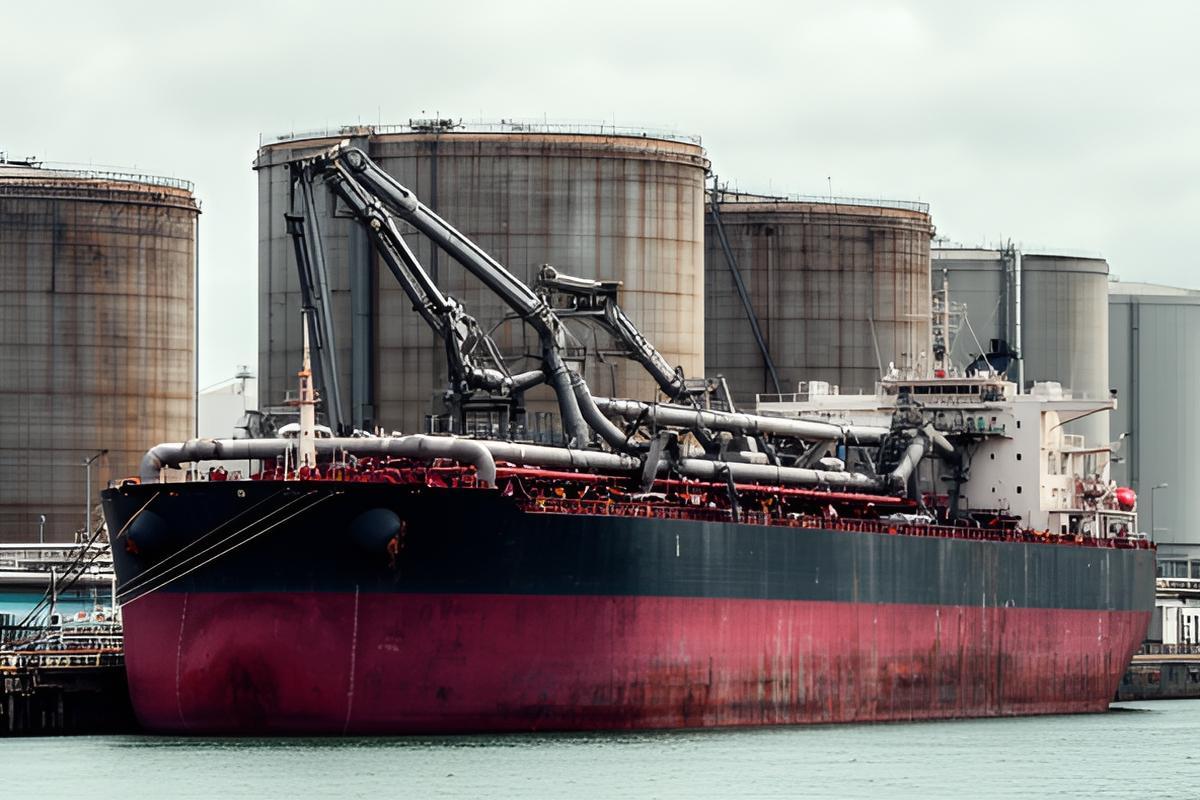
The federal government plans to eliminate the 12% tax on oil exports in 2027, citing the tax’s regulatory nature and the expected stabilization of global prices.
The federal administration has taken a significant step in signaling its mid‑term energy and fiscal policy. Planning Minister Bruno Moretti indicated that the 12% rate applied to oil exports is tied to geopolitical conditions, projecting its removal from 2027 onward. The decision reinforces the Palácio do Planalto view that the measure is a market‑control tool, not a permanent revenue source.
Currently, the tax remains in force to mitigate the impact of oil volatility on the domestic market, a situation worsened by the Middle East conflict. While the Brent crude price stays at high levels—such as the recent $93 per barrel—the tax acts as a mechanism to enable fuel subsidies, ensuring stable diesel and gasoline prices for the end consumer.
The regulatory nature and fiscal impact
The government’s 2027 strategy is clear: remove the tax from the budget plan. According to the administration, because the tax has a regulatory character, it should not be included in the calculation base for mandatory expenses, such as the federal health floor. This interpretation aims to separate extraordinary revenues from permanent budget commitments of the Union.
Bruno Moretti stated:
“Since this is a tax that, in fact, does not have a revenue-collecting nature, it makes sense to remove it, but for next year, the impact on health is zero for a simple reason: there is no provision for the export tax in the 2027 budget law.”
Context and industry resistance
The measure, initially implemented in March and extended by Gecex-Camex until the end of this year, has been a point of friction with the major oil companies operating in Brazil. The sector criticizes the tax for raising export costs and reducing investment predictability. The Ministry of Finance, however, maintains that extending its validity is essential to ensure domestic supply in an unstable global environment.
With the fiscal adjustment bill currently under consideration in the National Congress, the government aims to fine‑tune its revenues through 2030, seeking to shield the budget from external commodity‑linked fluctuations. The expectation is that, once international prices normalize in 2027, the government will have the political and economic leeway to end the levy, thereby closing one of the most controversial chapters of recent energy policy.