The publication of the first Federal Natural Gas Auction is viewed by the chemical industry as a strategic opportunity to expand access to the input, diversify supply, and strengthen the sector’s competitiveness by 2027.
The release of the notice for the first Federal Natural Gas Auction opens a new front to expand Brazilian industry’s access to the input and strengthen the competitiveness of sectors intensive in clean energy and raw materials. This assessment comes from the Brazilian Chemical Industry Association (Abiquim), which advocates for complementary measures to stimulate competition, improve infrastructure, and ensure appropriate economic and regulatory conditions for the industrial use of natural gas.
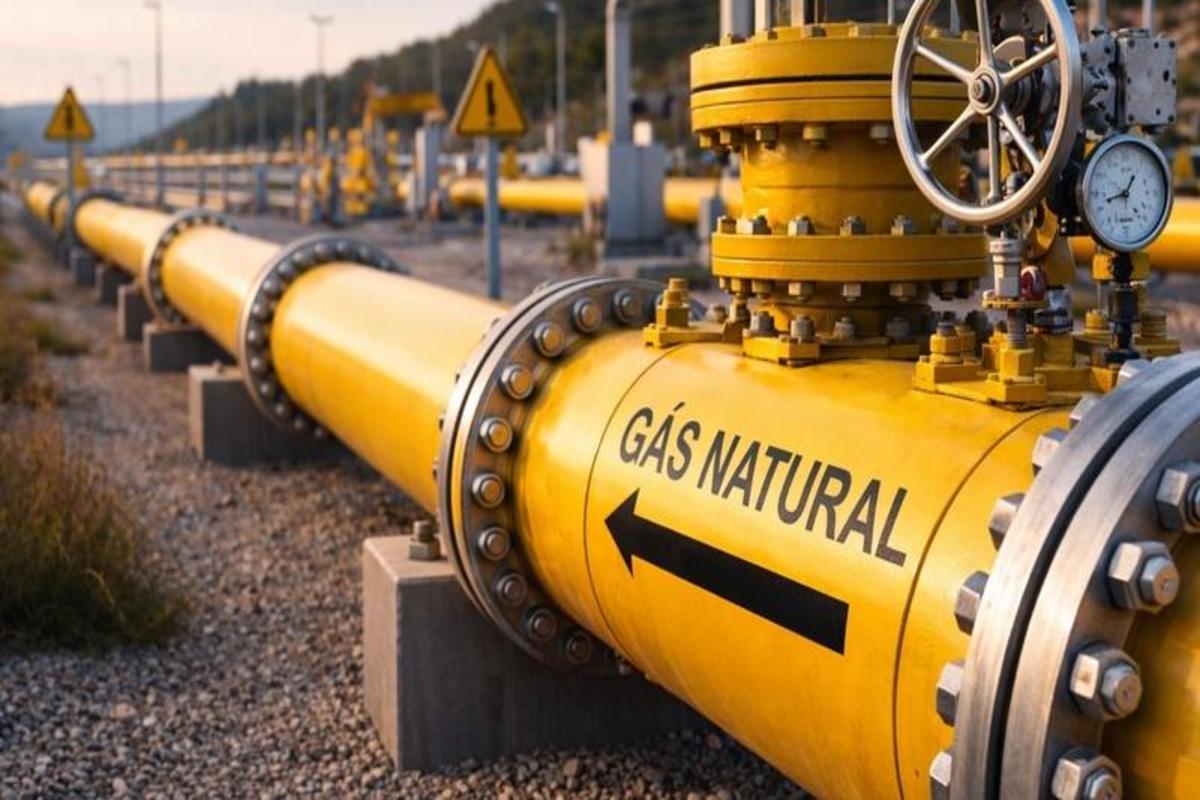
Published by Pré-Sal Petróleo (PPSA), the notice provides for the offering of up to 1.1 million cubic meters per day, distributed across 110 lots. The tender represents a major milestone for the country’s gas market, creating new prospects for supplies directed at domestic companies.
Auction Details and Offer for Industry
The auction will be held via the electronic platform of the Electric Power Commercialization Chamber (CCEE) and is intended exclusively for Brazilian companies classified as basic industries. Of the total offered, 35 lots are specifically targeted at the chemical and petrochemical sectors.
These segments use the input both as an energy source and as an essential raw material for the production of nitrogen fertilizers, methanol, thermoplastic resins, industrial gases, and various chemical intermediates that are fundamental to the national economy.
The Chemical Sector’s View
In 2025, consumption of the resource by the Brazilian chemical industry approached 7.1 million cubic meters per day. For sector leaders, the tender is just the first step toward a deeper structural transformation in the energy and production matrix.
André Passos Cordeiro stated:
The auction is an important opportunity to expand the industry’s supply alternatives and advance the opening of the natural gas market. However, competitiveness depends on a broader agenda involving effective supply, competition, infrastructure, and regulatory conditions capable of allowing gas to reach industry at competitive prices.
Among the priorities advocated by the association are the expansion and diversification of supply, non-discriminatory access to essential infrastructure, and the expansion of flow, processing, transportation, and storage capacity for natural gas.
Challenges and Next Steps
Abiquim also reinforces the need to valorize the input’s liquids, such as ethane, propane, and butane, which hold high value for the petrochemical chain. Efficient integration between natural resources and productive demand is seen as vital for sustainable growth.
André Passos Cordeiro declared:
Brazil needs to turn its availability of natural resources into industrial production and added value. This requires integrating gas supply with infrastructure and productive demand, featuring predictable rules and conditions that encourage investment in the country rather than limiting the development potential of industrial chains.
The sector’s guidelines are aligned with the Strategic Agenda for the Chemical Industry, which treats competitive infrastructure as a core element for development. The expectation is that the progressive opening of the market will bring greater stability, attract new investments, and boost Brazil‘s economic and energy sustainability in the coming years.