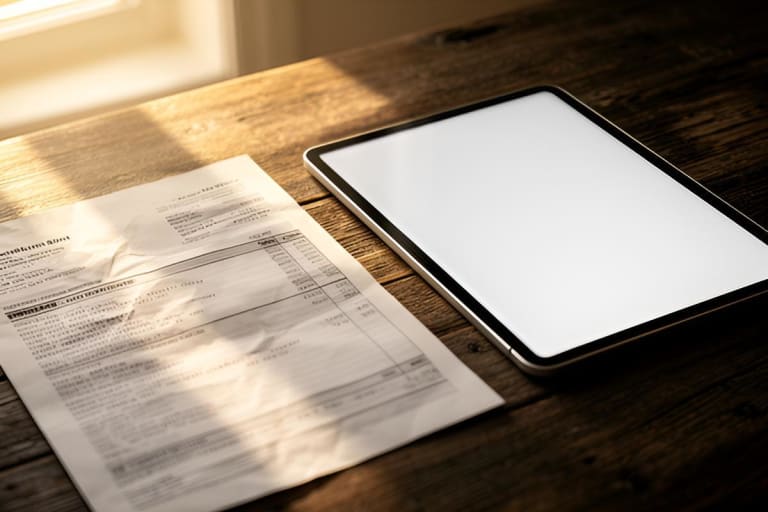
The imminent opening of the free energy market requires Brazilian consumers to learn how to decipher their complex electricity bills to fully benefit from future freedom of choice.
For millions of Brazilians, the monthly electricity bill remains a mystery that is difficult to solve.
Although the bill shows the final amount due, the composition of that total—which involves a series of taxes, surcharges, and tariffs—remains opaque to most households and small businesses.
This lack of transparency creates a cycle of uncertainty.
Without knowing exactly what drives cost increases, consumers tend to simply react to the final price, unable to identify which of their consumption habits or appliances are the true culprits behind their budget woes.
The Challenge of Transparency in the Power Sector
The need for greater clarity has become urgent given the current economic landscape.
According to data from Aneel (the Brazilian Electricity Regulatory Agency), the average tariff impact in 2026 reached 9.4%.
This growing burden on budgets makes it essential for users to have access to tools that translate technical data into strategic insights.
Technology plays a crucial role in this transformation.
The use of smart meters and digital platforms allows for real-time monitoring of consumption, ending the dependence on waiting for the bill to arrive to understand spending.
This predictability is essential for those seeking efficiency and financial control.
“Freedom of choice will be a significant advancement, but it will only be fully effective when people understand what they are paying for each month.”
Freedom of Choice and the Free Energy Market
The outlook for Brazil’s power sector points to a structural shift with the opening of the Free Energy Market to low-voltage consumers.
Under Decree No. 13,097/2026, starting in November 2027, industries and businesses will be able to choose their energy suppliers, a move that will be extended to households in 2028.
However, the competitiveness brought about by this opening will only be beneficial if the consumer is prepared.
Comparing supply proposals requires self-awareness: users will need to master their own consumption profiles and understand the difference between the cost of energy, grid usage, and sectoral charges.
Aneel, therefore, takes on an educational role, responsible for guiding the public through this transition.
Awareness should not happen only at the moment of migration, but rather be built as a solid foundation of prior knowledge.
The future promises a more mature relationship between citizens and electricity.
By treating information as an integral part of the system’s infrastructure, Brazil is paving the way for freedom of choice to effectively translate into savings and the intelligent use of energy resources.