EDF Power Solutions is consolidating its presence in the Brazilian market with the inauguration of a remote management center in Rio de Janeiro, reaching the milestone of 1 GW under control.
The energy transition is gaining new operational momentum in Brazil. EDF Power Solutions, a subsidiary of French giant EDF, has officially opened its first System Operations Center (SOC) in Latin America, strategically located in Rio de Janeiro. The initiative marks a paradigm shift in how the company oversees its complex renewable generation portfolio.
By centralizing real-time monitoring, the company is moving away from fragmented management in favor of a unified, technological vision. This new hub allows strategic data to be integrated into daily plant operations, optimizing asset performance and mitigating operational risks in a landscape where efficiency is a competitive differentiator.
Technology and agility in the electricity sector
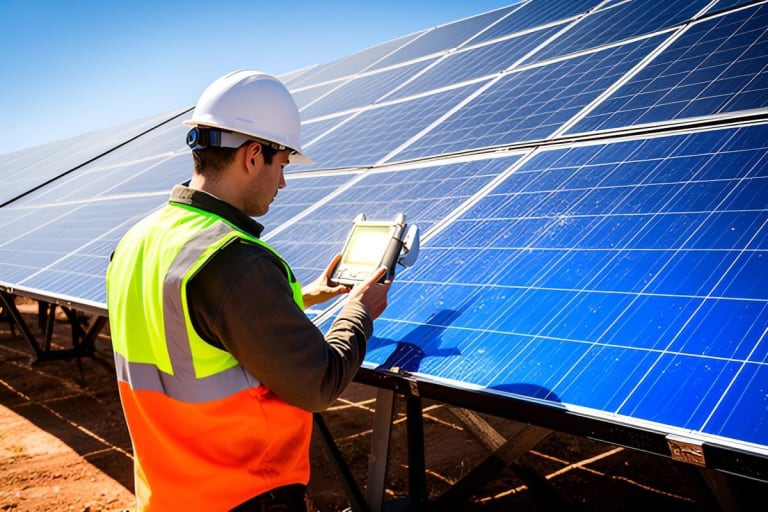
The project, which began taking shape in March, reached a crucial milestone in August when the Pirapora photovoltaic plants (MG) were fully integrated into the system. With the inclusion of the Sinop (MT) and Dardanelos (MT) hydroelectric plants, the center already manages more than 1 GW of installed capacity.
This modernization is not only technical, but also fundamental to the company’s organizational culture in the face of market fluctuations.
“This is an important achievement that brings competitiveness and aligns strategy with operations, at a time of greater complexity in the market and the Brazilian power system”
highlights Luísa Moreira, the company’s operations lead in the country. According to the executive, the ability to respond remotely is a one-way street to ensuring the security and profitability of clean energy ventures.
Heading toward 2.1 GW of capacity
The outlook for EDF Power Solutions is ambitious. The organization’s schedule projects that by the end of 2026, all of its assets—including wind farms, solar plants, and transmission lines—will be monitored by the new SOC.
With this expansion, the installed capacity under remote management will jump to 2.1 GW. Currently, the company maintains a diverse geographical footprint, with active projects in states such as Bahia, Mato Grosso, Minas Gerais, Rio de Janeiro, and Paraíba. By investing in digitalization and centralized control, EDF reinforces its commitment to the national energy transition, preparing its infrastructure for the challenges of an increasingly decentralized and interconnected system.