
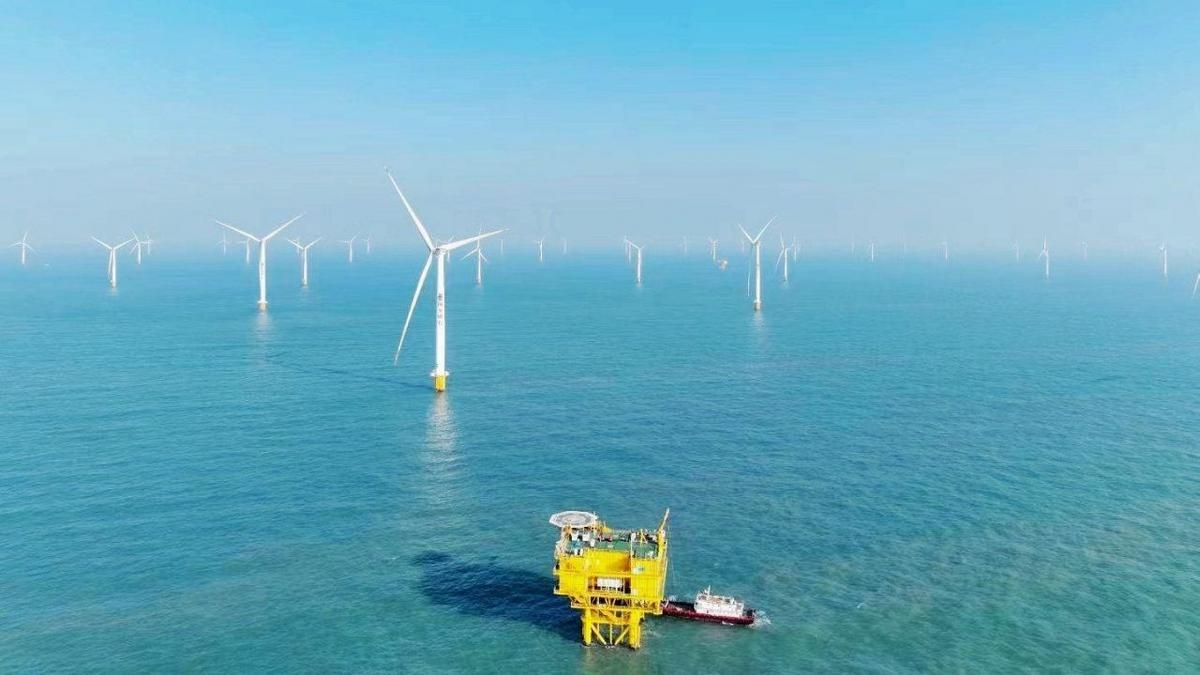
Vattenfall has signed agreements with the Denmark Energy Agency to develop the Hesselø and Holmsland offshore wind farms, adding 1.8 GW to power 1.8 million homes by 2032.
Denmark has taken a decisive step to solidify its leadership in the European energy transition by formalizing the development of two large offshore wind complexes. The initiative calls for adding at least 1.8 gigawatts (GW) of capacity to the grid by 2032.
The project will be led by Swedish company Vattenfall, which signed a formal agreement with the Denmark Energy Agency on November 4, 2026. The signing confirms the outcome of the competition held in the second half of that year.
Once fully operational, the structures located in the North Sea and the Kattegat Strait will have the capacity to meet the electricity demand of more than 1.8 million Danish and European households.
Strategic location and project capacity
The new offshore complexes were designed for distinct geographic regions along the Danish coast. The Hesselø park will be situated north of the namesake island, in the Zelândia region, with a guaranteed minimum capacity of 800 megawatts (MW) and potential to reach 1,200 MW.
Meanwhile, the Holmsland plant—formerly known by the technical name Nordsøen Midt—will be positioned in the North Sea, in front of Hvide Sande. This installation will have a minimum installed capacity of 1,000 MW.
The combination of the two projects will reach 1,800 MW under ideal operating conditions. The final number of generating turbines and the selection of industrial suppliers will be refined in the upcoming engineering phases.
Financial structure and competitive auction
Proposals submitted by Vattenfall outperformed competitors by offering the lowest prices per megawatt-hour (MWh) sold. Reference tariffs were recorded at 504 Danish kroner for the Holmsland project and about 542 kroner for the Hesselø plant.
The adopted model provides a contract for difference (CfD) with a validity of twenty years from the start of operation. This mechanism gives investors predictability by balancing market price fluctuations with state‑mandated compensations.
The government set maximum financial support limits at 15.7 billion crowns for Holmsland and 21.9 billion crowns for Hesselø, protecting the public budget from excessive costs.
The director said:
“Signing the contracts formalizes the commitments made in the tender and allows us to move forward with detailed environmental impact studies and feasibility assessments.”
Sector Resumption After Regulatory Adjustments
The success of the 2026 tender marks the recovery of Denmark’s offshore wind market. In 2024, the country faced a tough scenario when a round of tenders closed without receiving any bids from private operators.
Faced with initial commercial disinterest, authorities revised the guidelines in 2025 to offer a more flexible and attractive package, adding 2.8 GW of investment opportunities with reduced risk guarantees.
The updated guidelines also imposed stringent environmental commitments. The rules require solutions for recycling turbine blades and explicit measures to protect marine biodiversity in the Hesselø area.
Infrastructure and Operational Experience
Vattenfall already has extensive experience building and operating wind farms in the region. The company manages five Danish offshore parks, such as Horns Rev 3 and Kriegers Flak, generating 6.5 TWh annually.
To integrate the new power production into the onshore grid, the Danish state operator Energinet conducts technical studies of the seabed. The connection will require an extensive network of submarine cables and substations.
The company’s international expansion includes parallel fronts in European waters, such as the Nordlicht project in Germany and the Zeevonk venture in the Netherlands.
Although the agreements were formalized by executives Anne Mette Traberg and Adrian Lübbert, the actual start of maritime works still depends on environmental licensing and the final investment decision.
The adherence to the schedule set for the end of 2032 will decisively strengthen Europe’s clean energy mix, reducing the region’s dependence on fossil fuels.