Brazil solidifies its global leadership in clean energy, with an electricity matrix composed of 90% renewable sources, drastically surpassing the world average. The data was revealed during the Smart Energy 2026 conference in Curitiba.
Brazil has reaffirmed its role as a protagonist in the global energy transition. Recent data presented by the Energy Research Company (EPE) during Smart Energy 2026, which concluded last Wednesday (23rd) in Curitiba, confirms that the country possesses one of the most sustainable grids on the planet.
While the world seeks alternatives to decarbonize its economies, Brazil is already reaping the benefits of decades of investment in clean sources.
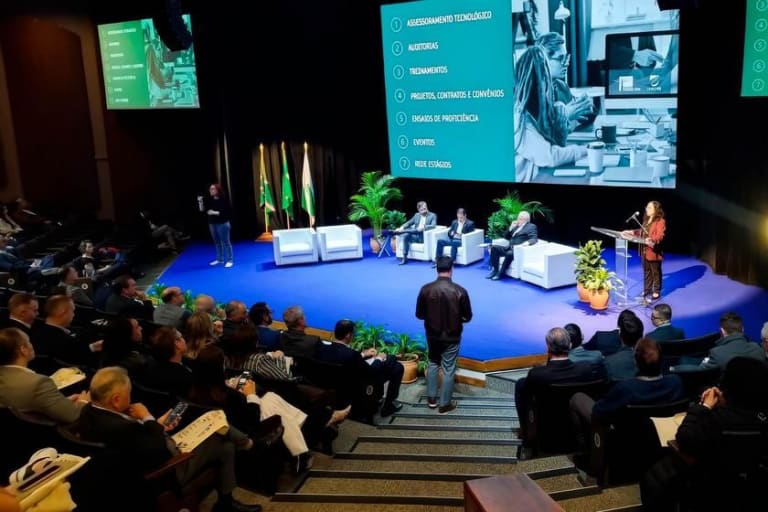
The event, held at the Campus da Indústria of the Fiep System, brought together specialists and managers to discuss the next steps in sustainability. The conference’s highlight was the comparison between Brazil’s infrastructure and the global average, underscoring that the country operates with an efficiency rate three times higher than many developed nations.
Leadership in Renewable Electricity Matrix
The numbers presented by EPE are significant: approximately 90% of the electricity produced in Brazil comes from renewable sources, a level far above the global average, which hovers around 35%.
When analyzing the total energy matrix—which includes fuels and other forms of consumption—Brazil reaches 50% of renewable sources, while the rest of the world remains close to 14%.
Thiago Ivanoski, Director of Electric Energy Studies at EPE, stated:
Brazil is a world reference in renewable energy sources. Other countries want to reach where we are.
Public Policies and Matrix Diversification
Brazil’s success is attributed to a consistent trajectory of public policies. The diversification of the matrix, which includes the strength of hydropower, the advancement of wind energy, and the accelerated growth of solar energy, has been essential.
Furthermore, the strategic use of biofuels, such as ethanol and biodiesel, has significantly increased the participation of sustainable sources in the transportation sector.
Iramar Severiano, Superintendent Director of the Paraná Technology and Metrology Network, highlighted:
It was a very productive event, with the participation of many stakeholders in this energy transformation the country is experiencing. The topics were relevant and keep us attentive to maintaining the competitiveness of national industry and the sustainability of our energy grids.
Infrastructure and the Electric Mobility Challenge
Another fundamental pillar pointed out by specialists was the expansion of the energy transmission grid, which grew from 125,000 kilometers in 2016 to 182,000 kilometers in 2025. This infrastructure ensures the integration of different generating sources across the national territory, guaranteeing system stability.
However, the future demands new perspectives. With the rise of electric vehicles, the electricity sector faces the challenge of meeting a growing and accelerated demand.
The need to monitor the impact of this consumption on the system is the next major step to ensure the country maintains its sovereignty and energy efficiency, consolidating Brazil as a model for a low-carbon economy.